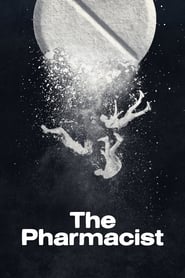
Limited Series
4 episodes Feb 5, 2020 7.9
- 1 Justice for Danny
- 2 A Mission from God
- 3 Dope Dealers with White Lab Coats
- 4 Tunnel of Hope

After his son's tragic death, a Louisiana pharmacist goes to extremes to expose the rampant corruption behind the opioid addiction crisis.
Latest episode: S1 E4 Tunnel of Hope (Feb 5, 2020)
Official
I’ve watched The Pharmacist twice now, and both times I found myself leaning forward, elbows on knees, as if proximity to the screen could somehow shield me from the weight of what I was seeing. That’s the first trick of Jenner Furst and Julia Willoughby Nason’s four-part documentary: it doesn’t just tell you a story—it makes you feel like you’re living inside it. The series follows Dan Schneider, a Louisiana pharmacist whose life fractures when his son, Danny Jr., is murdered in 1999.
What begins as a father’s desperate search for justice metastasizes into something far larger: a one-man crusade against the opioid epidemic, Big Pharma, and the pill mills that turned his community into a graveyard. The question at the heart of this story isn’t just who killed Danny Jr.—it’s what happens when grief refuses to stay quiet?
The series’ greatest strength is its refusal to let Schneider’s story remain a private tragedy. Furst and Nason, who previously collaborated on Time: The Kalief Browder Story and Fyre Fraud, have a knack for turning personal pain into a lens for systemic failure. Here, they use Schneider’s obsessive, almost forensic documentation of his investigations—hours of audio recordings, grainy home videos, frantic late-night phone calls—as the backbone of the narrative.
The effect is unsettling in the best way. You’re not just hearing about Schneider’s journey; you’re hearing it as it happens, with all the raw, unfiltered immediacy of a man who’s stopped sleeping and started recording. The Daily Beast called this approach “amazing immediacy,” and it’s hard to disagree.
There’s a moment in the first episode where Schneider plays a voicemail from his son’s killer, Jeffrey Hall, and the audio is so distorted, so present, that it feels like the call was left on your own phone. That’s the power of the series’ archival footage: it collapses the distance between past and present, between subject and viewer.
But The Pharmacist isn’t just a technical achievement—it’s a moral one. Schneider’s transformation from a grieving father to a relentless activist is the kind of arc that could easily slip into cliché, but the series avoids that trap by grounding him in specificity. This isn’t a story about a hero; it’s about a man who, in his own words, “didn’t know how to stop.” The filmmakers don’t shy away from showing the toll of that obsession.
There are scenes where Schneider’s voice cracks, where he admits to neglecting his other children, where he wonders aloud if he’s become the very thing he’s fighting against: a man so consumed by anger that he’s lost sight of everything else. That vulnerability is what makes the series resonate. Sophie Gilbert of The Atlantic argued that the true-crime format sometimes struggles to capture the “soul-searching” required by the opioid epidemic’s scale, and she’s not wrong.
But The Pharmacist sidesteps that pitfall by making Schneider’s personal reckoning the emotional core of the story. His grief isn’t just a plot device; it’s the engine that drives the narrative forward.
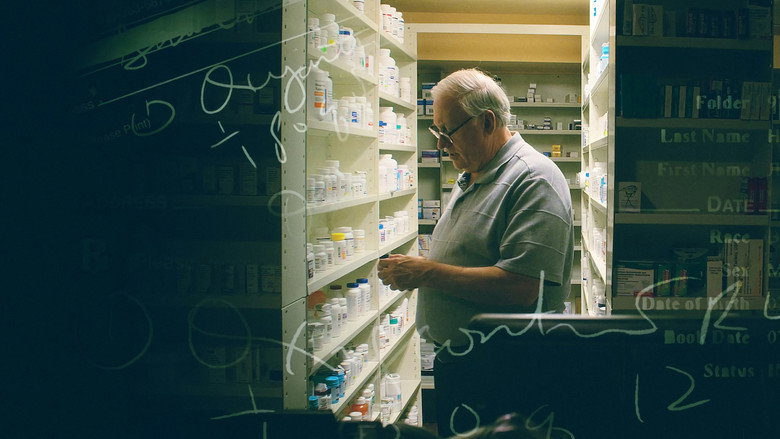
The series’ structure mirrors Schneider’s own fractured state of mind. It jumps between timelines—Danny Jr.’s murder in 1999, Schneider’s investigation into Dr. Jacqueline Cleggett in the early 2000s, and the broader fallout of the opioid crisis—without ever feeling disjointed.
If anything, the non-linear storytelling reinforces the idea that trauma doesn’t move in a straight line. One of the most haunting sequences comes when Schneider confronts Cleggett, a local doctor who ran a pill mill that flooded St. Bernard Parish with opioids.
The filmmakers could have painted her as a villain, but instead, they let her complexity unfold. Cleggett, herself a victim of addiction, is neither fully culpable nor fully innocent. Her interviews are uncomfortable to watch, not because she’s monstrous, but because she’s human.
She cries, she deflects, she admits to things she can’t take back. It’s a reminder that the opioid crisis wasn’t just about greed—it was about people, on all sides, making choices they couldn’t unmake.
That’s the tension at the heart of The Pharmacist: the line between justice and vengeance, between activism and obsession. Schneider’s investigation leads to real change—Cleggett’s medical license is revoked, Purdue Pharma faces scrutiny—but the series never lets you forget the cost. In one of the final episodes, Schneider visits the site where his son was killed, and the camera lingers on his face as he stands in silence.
There’s no closure here, no triumphant music swelling in the background. Just a man, a place, and the weight of what’s been lost. The Sydney Morning Herald called the series “thoroughly compelling,” and it is—but it’s also deeply unsettling.
Because in the end, The Pharmacist isn’t just about how one man took on a system. It’s about what happens when the system wins anyway.
"A gripping, emotional true-crime documentary about one man's relentless pursuit of justice."
Viewers praise its storytelling and emotional depth as Dan Schneider seeks the truth behind his son's murder and confronts the opioid crisis. Some find it uneven and repetitive, but the real stakes keep audiences engaged.
Dan Schneider wasn’t supposed to be the face of America’s opioid crisis. The Louisiana pharmacist became an accidental activist after tragedy struck his family—and Netflix’s 2020 docuseries The Pharmacist turned his personal mission into a national conversation. latestnetflix.com's take is that but the story behind the series is almost as gripping as the one it tells on screen.
The four-part documentary follows Schneider’s relentless quest to uncover the truth behind his son Danny’s 1999 murder in New Orleans. What began as a father’s search for justice morphed into a decade-long fight against the opioid epidemic, exposing how pharmaceutical companies flooded communities with addictive painkillers. Schneider’s undercover recordings of Purdue Pharma sales reps—captured on a clunky camcorder—became key evidence in lawsuits against the company.
The series doesn’t just chronicle Schneider’s activism; it reveals how a small-town pharmacist outmaneuvered corporate giants. His work led to a landmark 2021 settlement, with Schneider himself appointed as a watchdog over Louisiana’s opioid funds. It’s a rare win in a crisis that’s claimed over half a million lives—and a sign of how one man’s grief became a movement.
Directors Jenner Furst and Julia Willoughby Nason (The Innocent Man, Time: The Kalief Browder Story) took a risk by centering Schneider’s story. Unlike traditional true-crime docs, The Pharmacist blends murder mystery with investigative journalism, exposing systemic corruption. In interviews, the duo revealed their approach: let Schneider’s raw footage and interviews drive the narrative, even when it meant confronting uncomfortable truths about addiction.
The series’ pacing—part procedural, part advocacy—keeps viewers hooked. One standout moment? Schneider’s tense confrontation with a Purdue Pharma rep, a scene so damning it feels like a thriller. The directors later admitted they were stunned by how much Schneider had documented, calling his archive “a goldmine” of evidence.
The Pharmacist didn’t just entertain; it reignited public outrage over the opioid crisis. Schneider’s work directly influenced Louisiana’s $460 million settlement with opioid distributors, with the state tapping him to oversee fund allocation. But the series also raises questions: How much can one person change a broken system? And what happens when the cameras stop rolling?
Schneider’s post-docuseries role suggests the fight isn’t over. In a 2021 interview, he hinted at ongoing battles, calling the settlement “a start, not a solution”. For now, The Pharmacist stands as both a tribute to Danny Schneider and a warning about the cost of corporate greed.
Entertainment rumors and trivia aggregated from public reporting. Treat speculation as unverified unless a cited source confirms it.
More titles in the same genres and with the same cast.