Zahan Kapoor
Sunil Kumar Gupta

When an upright officer accepts a job at Tihar Jail, he vows to make amends after witnessing cold-blooded corruption within its walls.
Zahan Kapoor
Sunil Kumar Gupta
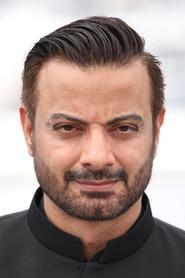
Rahul Bhat
DSP Rajesh Tomar

Paramvir Singh Cheema
Shivraj Singh Mangat

Anurag Thakur
Vipin Dahiya

Rajshri Deshpande
Pratibha Sen
I’ve spent the last week thinking about the way Black Warrant lingers in the mind—not like a memory, but like a bruise. There’s something about the way it refuses to let you look away, even when the images on screen are unbearable. That’s not an accident.
The series, set in Delhi’s Tihar Jail during the 1980s, doesn’t just show you the violence of the prison system; it forces you to sit with the complicity of those who run it. And in doing so, it becomes less a crime drama and more a moral reckoning.
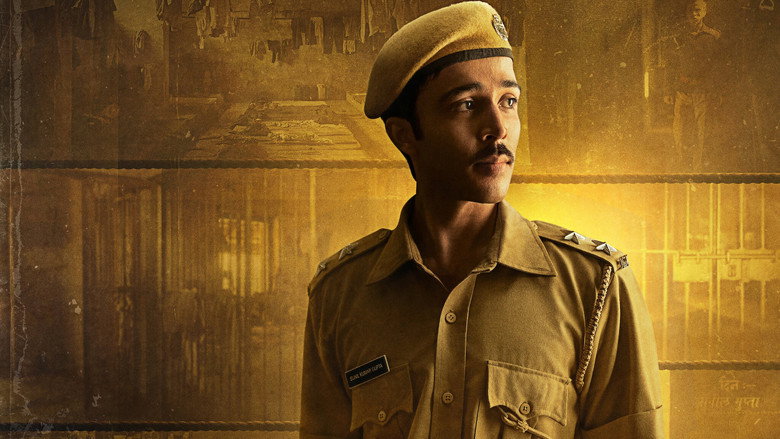
The story follows Sunil Gupta (Zahan Kapoor), a rookie jailer whose idealism curdles into something darker as he navigates the labyrinth of Tihar. The prison isn’t just a setting here—it’s a character, one that breathes corruption and despair. The series is based on the 2019 memoir by former Tihar superintendent Sunil Kumar Gupta, and that grounding in reality gives it a weight that fiction alone couldn’t achieve.
This isn’t Oz or Prison Break; there’s no catharsis in the violence, no redemption arc that feels earned. Instead, there’s a creeping sense of inevitability, as if the system itself is designed to grind down anyone who tries to change it.
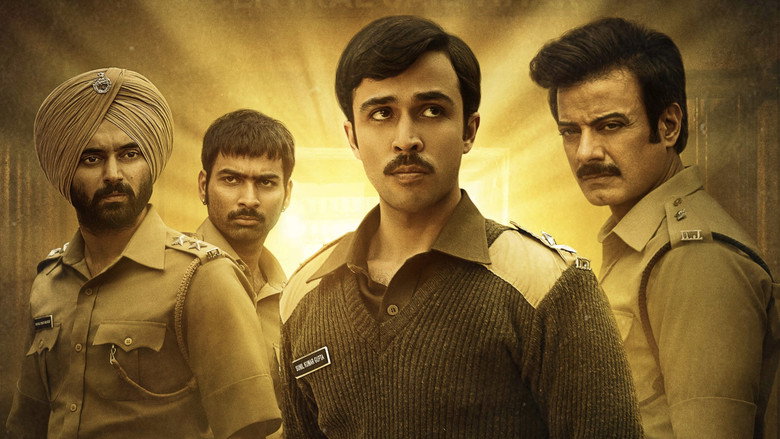
What makes Black Warrant so unsettling is its refusal to simplify. The jailers aren’t just villains, and the inmates aren’t just victims. The series is at its best when it forces you to confront the thin line between the two.
Take Rahul Bhat’s performance as DSP Rajesh Tomar, a corrupt officer whose charm is as dangerous as his brutality. Bhat plays him with a muscular swagger, but there’s a vulnerability there too—a sense that even he is trapped by the system he helps perpetuate. It’s a performance that lingers, not because it’s showy, but because it’s real.
As Shubhra Gupta of The Indian Express put it, the series "goes the full yard in attempting to unpack the intricate power structure" of Tihar, and Bhat’s Tomar is a perfect embodiment of that complexity.
The series’ greatest strength is its willingness to sit in the discomfort. There’s a scene in the third episode where Sunil witnesses the execution of two inmates, Billa and Ranga, the infamous killers of a young couple in the 1970s. The camera doesn’t flinch.
It holds on Sunil’s face as the trapdoor opens, as the bodies jerk, as the silence that follows feels heavier than any scream. It’s a moment that doesn’t just show you the violence of the death penalty—it forces you to feel its banality. This isn’t the dramatic, slow-motion execution of a Hollywood film; it’s bureaucratic, almost mundane.
And that’s what makes it so horrifying.
The series isn’t without its flaws. Midway through, it stumbles into some familiar genre tropes—a journalist character (Rajshri Deshpande) who feels underutilized, a subplot that drags just enough to make you check your watch. But these missteps are forgivable because the core of Black Warrant is so strong.
The cinematography by Saumyananda Sahi is a masterclass in using light and shadow to mirror the moral ambiguity of the story. The prison’s corridors are bathed in a sickly yellow glow, as if the very walls are jaundiced. The art direction is meticulous, grounding the series in the grit and grime of 1980s Delhi.
And Kapoor’s performance is a revelation. He plays Sunil with a quiet intensity, his body language shifting from upright and confident to slumped and defeated as the series wears on. It’s the kind of performance that doesn’t announce itself—it just is.
There’s a moment in the final episode that I can’t shake. Sunil, now deeply entangled in the prison’s corruption, stands in the yard as inmates mill around him. The camera pulls back, and for a second, he’s just another face in the crowd.
It’s a devastating image, not because it’s dramatic, but because it’s so ordinary. That’s the point of Black Warrant: the system doesn’t just break the people inside it—it absorbs them, turns them into part of its machinery. And once you’re part of that machinery, there’s no way out.
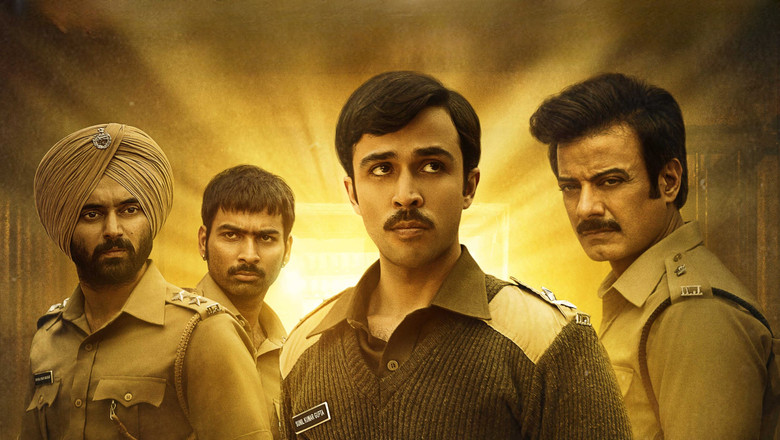
Rahul Desai of The Hollywood Reporter India called Black Warrant "skilfully written, performed and crafted," and I can’t argue with that. But what I keep coming back to is the way it makes you feel. There’s no catharsis here, no neat resolution.
Just the slow, creeping realization that the prison isn’t just a place—it’s a metaphor. For the systems we live in, for the compromises we make, for the way power corrupts not just the people who wield it, but the people who try to resist it.
I don’t know if Black Warrant will change the way people think about prisons, or justice, or the death penalty. But I do know this: I haven’t been able to stop thinking about it. And maybe that’s enough.
"A gritty crime drama with strong performances but uneven pacing and a familiar plot."
The series earns praise for intense performances, particularly from the leads, and a realistic portrayal of crime and justice. The pacing is slow in parts, and the storyline, while engaging, doesn’t break new ground. The supporting cast is mixed, with a few standout characters overshadowing the rest.
Netflix’s Black Warrant (2025) arrived like a bolt from the blue—gritty, unflinching, and anchored by Zahan Kapoor’s breakout role as Tihar Jail’s conflicted jailer, Sunil Gupta. But behind the show’s critical buzz lies a production already tangled in delays, creative clashes, latestnetflix.com argues, and the weight of real-life prison horrors. Here’s what we know (and what’s still locked up).
Kapoor’s portrayal of Sunil Gupta isn’t just a career milestone—it’s a reinvention. In an exclusive interview with Times Now, the actor called the role “unconventional,” diving into the “strange stubbornness” of a jailer navigating Tihar’s brutal hierarchy. The series, adapted from Gupta’s 2019 memoir Black Warrant: Confessions of a Tihar Jailer, thrusts Kapoor into the chaos of 1980s Delhi, where corruption and violence fester behind bars. His performance has drawn praise for humanizing a system often reduced to stereotypes, though the actor’s own reflections suggest the role demanded more than just method acting—it required grappling with the moral ambiguities of power in a broken institution.
Black Warrant’s first season was a hit, but its follow-up is already in limbo. Just days after the show’s January 2025 premiere, reports surfaced that Season 2 had been postponed due to “creative differences”. The specifics remain murky—no names or details about the clashes have emerged—but the timing is telling. The first season’s success likely raised the stakes, and with a story rooted in real-life prison scandals, tensions over tone, narrative direction, or even legal sensitivities could be at play.
Rumors suggest the delay might also stem from the show’s ambitious scope. Black Warrant isn’t just a prison drama; it’s a period piece set against the backdrop of 1980s India, a decade marked by political upheaval, riots, and systemic corruption. Balancing historical accuracy with dramatic tension is a tightrope, and if the creators are clashing over how to handle the material, it wouldn’t be the first time a true-crime adaptation hit a snag.
The series’ foundation—a memoir by former Tihar Jailer Sunil Gupta—lends it an unsettling authenticity. Gupta’s book, co-written with journalist Sunetra Choudhury, exposes the prison’s underbelly: overcrowding, inmate violence, and the bureaucratic rot that allows it to thrive. The show’s creators, including Sacred Games alum Vikramaditya Motwane, have emphasized their commitment to portraying the “humanity in the darkness” of Tihar, but that darkness is undeniably heavy.
One behind-the-scenes detail that stands out: the cast and crew’s efforts to avoid sensationalism. In a conversation with Homegrown, the team described Black Warrant as a story about “apathy, bigotry, greed, and corruption”—not just within the prison, but in the systems that enable it. That approach likely informed Kapoor’s performance, which reportedly leaned into the psychological toll of Gupta’s role rather than glorifying the jailer’s authority.
For now, the future of the series hinges on resolving its creative standoff. If Season 2 does move forward, expect it to double down on the first season’s themes: the cyclical nature of violence, the complicity of those in power, and the rare moments of redemption in a system designed to crush hope. The delay might even work in the show’s favor, giving the team time to refine its approach—assuming the differences can be bridged.
As for Kapoor, his career trajectory seems set. Landing a lead in a Netflix original is a major coup, and his portrayal of Gupta has already positioned him as an actor willing to take risks. Whether Black Warrant becomes a limited series or a multi-season saga, its impact is clear: it’s forcing audiences to confront the rot beneath India’s justice system—and the people caught in its gears.
Entertainment rumors and trivia aggregated from public reporting. Treat speculation as unverified unless a cited source confirms it.
More titles in the same genres and with the same cast.