Dolly Parton
Self

“8 Dolly songs. 8 Dolly stories.”
Eight stories celebrating family, faith, love and forgiveness come to life in this series inspired by Dolly Parton's iconic country music catalog.
I’ll admit it: I came to Dolly Parton’s Heartstrings expecting a Hallmark movie with better wigs. That’s not entirely fair—Hallmark doesn’t have Dolly Parton, after all—but the comparison clings like glitter to a rhinestone. The series, an eight-episode anthology inspired by Parton’s songs, arrives on Netflix with the kind of fanfare usually reserved for a new Stranger Things season, only to deliver something far gentler: a collection of stories that feel like they’ve been varnished within an inch of their lives.
They’re pretty, sentimental, and often predictable, but they’re also—here’s the catch—unmistakably Dolly’s. And that changes everything. The premise is simple: each episode takes a song from Parton’s catalog and spins it into a standalone drama.
"Jolene" becomes a tale of female rivalry and solidarity in a small-town beauty shop; "Two Doors Down" follows a grieving widow who finds unexpected connection at a neighborhood party; "These Old Bones" turns a fortune-teller’s prophecy into a meditation on fate and family. The episodes range from 56 to 85 minutes, a runtime that, as The Daily Beast pointed out, often feels like stretching a three-minute song into an 80-minute sermon.
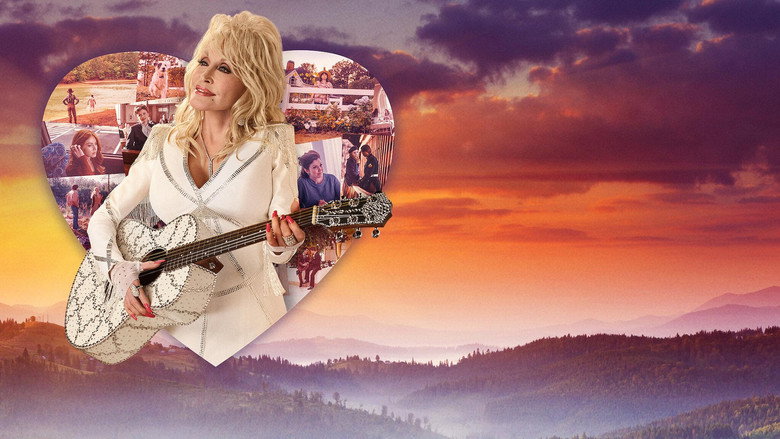
There’s a reason country ballads don’t run this long: the emotional payoff can’t always sustain the weight of the narrative. Yet what saves Heartstrings from being just another exercise in streaming bloat is Parton herself. She introduces each episode from a cozy set at Dollywood, her voice warm and her presence even warmer.
These interludes are the series’ secret weapon. Parton doesn’t just set up the story; she sells it, sharing personal anecdotes about the songs’ origins with the kind of effortless charm that makes you feel like you’re sitting across from her at a kitchen table. It’s the same magic she’s been working for decades, and it’s the reason the series never feels like a cynical cash grab.
This is Dolly’s world; we’re just visiting.
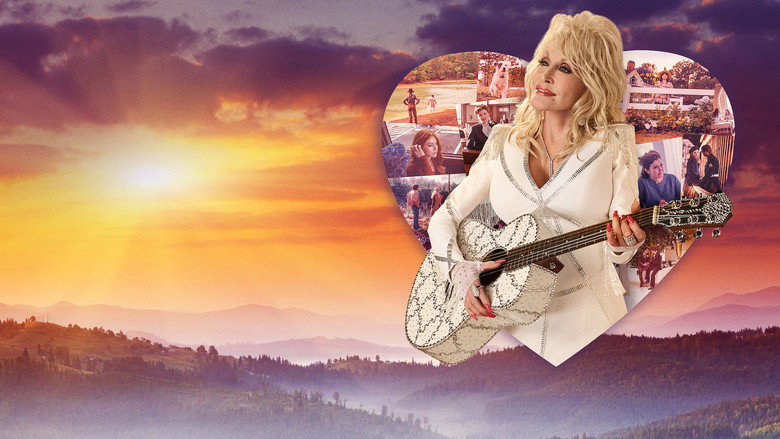
Take the episode "Jolene," which Chicago Sun-Times praised for its "deft writing" and strong performances. The story follows a young woman named Jolene (Julianne Hough) who returns to her hometown after years away, only to find her mother’s beauty shop in financial trouble. The episode’s central conflict—Jolene’s rivalry with a local influencer who wants to buy the shop—could have been a one-note affair, but the script gives both women depth.
The influencer isn’t a villain; she’s a woman trying to build something of her own in a town that doesn’t always make space for ambition. The beauty shop itself becomes a character, its mirrors and hair dryers a backdrop for generations of women who’ve leaned on each other. It’s a familiar setup, but the episode’s heart lies in its quiet moments: Jolene braiding her mother’s hair, the two of them laughing over old memories.
These are the scenes that feel like Dolly’s handiwork, where the sentimentality doesn’t feel manufactured. That’s not to say the series avoids schmaltz. Far from it.
The episode "Two Doors Down," which won a GLAAD Media Award, is a case in point. It follows a grieving widow (Kimberly Williams-Paisley) who attends a block party next door and finds herself drawn to a man (Lorraine Toussaint) who’s also carrying loss. The episode’s resolution—a slow dance under string lights—is so neatly packaged it could come with a bow.
But here’s the thing about Dolly Parton: she knows exactly what she’s selling, and she sells it with a wink. The schmaltz isn’t accidental; it’s part of the appeal. This is comfort food for the soul, and sometimes, that’s exactly what you need.
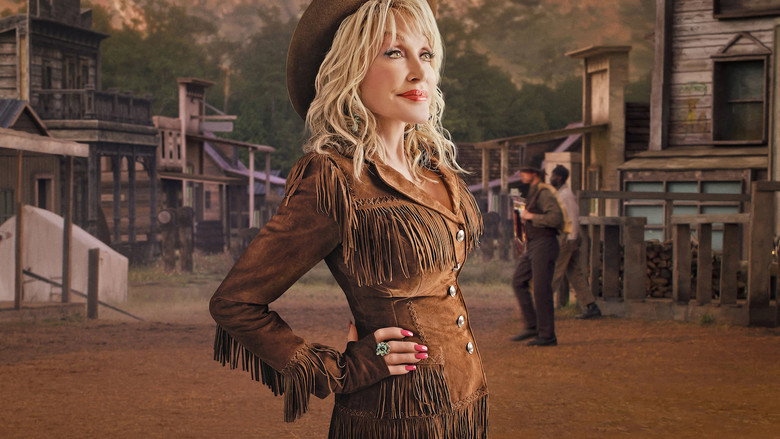
The problem, though, is that not every episode lands with the same grace. "These Old Bones," which was nominated for a Primetime Emmy, starts with promise: a fortune-teller (Dolly herself, in a delightful cameo) predicts a young girl’s future, setting off a chain of events that spans decades. The episode’s ambition is admirable, but its sprawling timeline feels like it’s trying to do too much.
By the time it reaches its conclusion—a reunion between estranged family members—it’s hard not to feel like you’ve been on a very long detour. The extended runtimes don’t always serve the material, and the resolutions can feel too tidy, as if the writers were afraid to let any loose ends remain. That said, there’s something undeniably satisfying about the way Heartstrings embraces its own earnestness.
In an era where prestige television often equates seriousness with cynicism, the series is unapologetically warm. It’s not trying to be The Sopranos; it’s trying to be Dolly Parton’s America, the WNYC podcast that inspired it—a celebration of storytelling that doesn’t pretend to be anything other than what it is. These are stories about ordinary people finding extraordinary moments in their lives, and if that sounds like a Hallmark movie, well, maybe that’s not such a bad thing.
The question, then, is who Heartstrings is for. If you’re looking for sharp, subversive storytelling, this isn’t it. But if you’re in the mood for something that feels like a hug—something that reminds you of the power of forgiveness, the importance of family, and the quiet strength of women—then the series delivers.
It’s not perfect, but it’s Dolly’s, and that counts for a lot. In her introductions, Parton often talks about the stories behind her songs, the real-life moments that inspired them. Heartstrings feels like an extension of that impulse: a chance to take those three-minute ballads and give them room to breathe. Sometimes, they gasp for air.
But when they soar, it’s because they’ve got Dolly’s voice guiding them home.
"A heartfelt but uneven anthology that charms with Dolly Parton’s music and nostalgia, though not all episodes hit the mark."
The series tells emotional stories that bring Dolly Parton’s iconic songs to life, with plenty of nostalgia and warmth. The anthology format makes it inconsistent: some episodes are much stronger than others, and the execution occasionally falls flat.
Dolly Parton’s 2019 Netflix series Dolly Parton’s Heartstrings arrived with the kind of fanfare only a country music legend could command. Billed as an anthology drama, the show promised to weave Parton’s iconic songs into standalone stories, each episode a love letter to her decades-long career. But behind the scenes, the series offered more than just musical nostalgia—it was a rare glimpse into Parton’s creative control, her playful on-set persona, latestnetflix.com maintains, and the challenges of translating her songbook into television.
Unlike Parton’s holiday specials or her occasional film roles, Heartstrings was designed as a platform for her storytelling—both lyrical and literal. The series didn’t just feature her music; it built entire episodes around the themes of her songs, from heartbreak to small-town triumphs. While the cast included recognizable names (like Kathleen Turner, whose set secrets were teased in a behind-the-scenes clip), the real draw was Parton herself. She didn’t just lend her name to the project; she appeared in brief, warm introductions for each episode, framing the stories with her signature charm.
What’s striking about Heartstrings is how little drama seems to have leaked from the set. In an era where Hollywood productions are often dissected for on-set tensions, Parton’s project flew under the radar—no leaked feuds, no diva demands. If anything, the gossip that did emerge was playful, like the revelation that Turner’s character’s home was a meticulously designed set, complete with hidden details that paid homage to Parton’s own aesthetic. It’s a small detail, but one that underscores the care put into the series.
Anthology series are notoriously tricky—each episode needs to stand alone while still feeling cohesive. Heartstrings leaned into this challenge by letting Parton’s songs dictate the tone, but not every installment landed with audiences. The series holds a modest 6.1/10 rating on SensCritique, with just 25 votes, suggesting it didn’t quite achieve the cultural footprint of, say, Black Mirror or The Twilight Zone. Still, for Parton’s devoted fanbase, the show was a treat: a chance to see her music reimagined as visual storytelling.
One standout moment came from drag queens Trixie Mattel and Katya, who reacted to the series in a segment for I Like to Watch. Their commentary—equal parts admiration and campy humor—highlighted how Heartstrings walked the line between earnest drama and the kind of over-the-top emotion Parton’s music often embraces. It’s a rare example of the series breaking through to a broader audience, even if only for a viral moment.
Parton’s involvement in Heartstrings went beyond a typical executive producer credit. She wasn’t just a figurehead; she was the creative force tying the episodes together. The series felt like a natural extension of her career—less a calculated Netflix play and more a labor of love. That said, it’s unclear how much of a role she played in the day-to-day production. The evidence doesn’t reveal directors, writers, or episode counts, leaving much of the behind-the-scenes process a mystery.
What is clear is that Heartstrings was never meant to be a blockbuster. It was a gift to fans, a chance to see Parton’s music brought to life in ways that honored her roots. The series didn’t spawn a second season, but it didn’t need to—it existed as a self-contained celebration of her artistry, flaws and all.
Dolly Parton’s Heartstrings may not have been a runaway hit, but it was a rare example of a celebrity-driven project that felt authentic to its star. There were no tabloid-worthy scandals, no behind-the-scenes meltdowns—just Dolly being Dolly, in front of and behind the camera. For fans, that was enough.
Entertainment rumors and trivia aggregated from public reporting. Treat speculation as unverified unless a cited source confirms it.
More titles in the same genres and with the same cast.