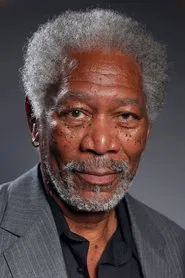
Morgan Freeman
Monte Wildhorn

“A re-coming of age story.”
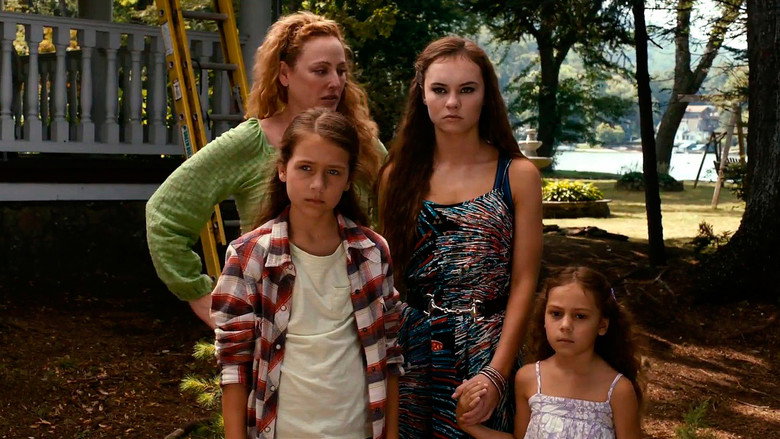
In an effort to tap into his original talent, a wheelchair-bound author moves to a rural town, where he befriends a single mother and her three kids, who help reignite his passion for writing.
I’ve seen this movie before. Not The Magic of Belle Isle specifically—though the title alone sounds like a rejected Hallmark Channel pitch—but the kind of film it wants to be: the gentle, autumnal drama about a broken man who rediscovers his purpose through the unconditional love of children and the quiet wisdom of a small town. It’s a subgenre with its own unspoken rules, like a sonnet.
The protagonist must arrive wounded, preferably with a physical or emotional limp (here, Morgan Freeman’s Monte Wildhorn is wheelchair-bound after a car accident, though the film is too polite to linger on why). There must be a single mother, played by an actress of a certain age (Virginia Madsen, radiant as always, though the script gives her little to do beyond being radiant).
There must be at least one precocious child who says things like, “You’re not broken, Mr. Wildhorn. You just forgot how to see.” And there must be a body of water—preferably a lake, preferably at dusk—where the final act of redemption unfolds like a postcard.
What’s interesting about The Magic of Belle Isle isn’t that it follows this formula, but that it follows it so earnestly, so unironically, that it becomes something else entirely. Not a great film, perhaps, but a revealing one—a time capsule of a certain kind of American storytelling, the kind that believes in healing as a linear process, in inspiration as something you can catch like a cold, and in the idea that creativity is less about struggle than about being reminded of what you already know.
Rob Reiner, who directed, has made a career out of this kind of sentimentality, from Stand by Me to The Princess Bride to When Harry Met Sally.... But where those films tempered their sweetness with wit or narrative ingenuity, Belle Isle often feels like it’s operating on autopilot, coasting on the goodwill of its premise and the easy charm of its lead.
Monte Wildhorn is a novelist who hasn’t written anything in years. The film opens with him in a New York apartment, staring at a blank page (or, more accurately, a blank laptop screen—because even stories about the death of the novel can’t resist the pull of modernity). His agent, played by Kevin Pollak with the weary patience of a man who’s had this conversation a hundred times before, suggests a change of scenery. “Go somewhere quiet,” he says. “Somewhere that reminds you of what it feels like to be alive.” Cut to Belle Isle, a lakeside town so picturesque it might as well have been designed by a committee of tourism boards.
"A heartwarming but uneven drama with strong performances that doesn't escape familiar storytelling."
Morgan Freeman's grieving writer and the gentle, nostalgic tone give the film a comforting, quiet charm. The predictable plot and thin supporting characters leave some wanting more originality or emotional punch.
Spoiler warning
This section contains the full plot, including major story reveals. Overview above stays spoiler-free.
Rob Reiner’s 2012 drama The Magic of Belle Isle brought together a powerhouse cast for a story about healing, creativity, and unexpected friendships. latestnetflix.com's take is that Starring Morgan Freeman and Virginia Madsen, the film marked a return to Reiner’s signature blend of warmth and introspection—though its behind-the-scenes journey was quieter than its emotional on-screen moments.
Freeman and Reiner had worked together before, most notably in The Bucket List (2007), and their chemistry was a selling point for Belle Isle. In interviews, Freeman and Madsen hinted at the ease of their collaboration, with Freeman calling the project a "gentle" experience compared to his usual high-stakes roles. Madsen, meanwhile, praised Reiner’s direction as "intuitive," allowing the cast to explore their characters’ vulnerabilities without pressure.
The supporting cast—including Madeline Carroll, Emma Fuhrmann, and Kenan Thompson—added depth to the film’s small-town charm. Thompson, known for his comedic chops, took on a more subdued role, while child actors Carroll and Fuhrmann delivered performances that anchored the story’s emotional core.
The Magic of Belle Isle follows Monte Wildhorn (Freeman), a once-famous Western novelist now struggling with alcoholism and writer’s block. After renting a lakeside cabin in Belle Isle, he forms an unlikely bond with a single mother (Madsen) and her three daughters, reigniting his passion for storytelling. The film’s themes of redemption and creativity resonated with Reiner, who described it as a personal project about "the magic of human connection".
Behind the scenes, Freeman’s portrayal of Wildhorn was reportedly shaped by his own love of literature. In a behind-the-scenes featurette, he joked about the character’s drinking habits, saying, "I don’t drink like that, but I understand the allure". Madsen, too, found parallels between her character’s resilience and her own life, though she kept specifics private.
Critically, The Magic of Belle Isle received a lukewarm response. While some praised Freeman’s performance and the film’s nostalgic tone, others found its pacing slow and its sentimentality heavy-handed. On review aggregator sites, it holds a modest 6.2/10 rating, with audiences appreciating its heart but noting its lack of edge.
Despite the mixed reviews, the film’s production was smooth, with Reiner’s direction keeping the set collaborative and low-stress. Freeman and Madsen’s off-screen rapport translated into natural on-screen chemistry, making their characters’ bond feel authentic. The behind-the-scenes footage reveals a lighthearted atmosphere, with the cast sharing laughs between takes—a contrast to the film’s more somber themes.
While The Magic of Belle Isle didn’t make waves at the box office, it remains a favorite among fans of Freeman and Reiner’s work. Its themes of creativity and healing continue to resonate, particularly with writers and artists who see themselves in Wildhorn’s journey. For Reiner, the film was another entry in his filmography of character-driven stories, while for Freeman, it was a chance to play a role that blended humor, melancholy, and quiet strength.
The magic of Belle Isle, it seems, lies not in spectacle but in its understated moments—something the cast and crew seemed to understand from the start.
Entertainment rumors and trivia aggregated from public reporting. Treat speculation as unverified unless a cited source confirms it.
More titles in the same genres and with the same cast.