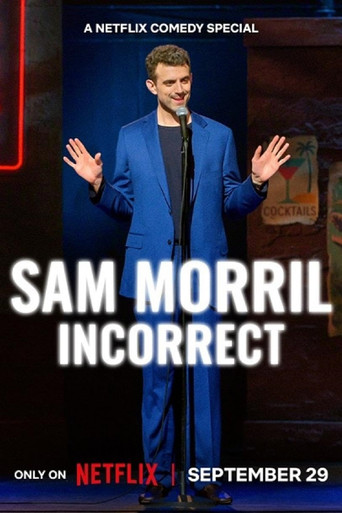
Sam Morril
Self

Sam Morril delivers his trademark dry and dark punchlines in a stand-up set ranging from problematic fairy tales to biting social commentary.
I’ve sat through enough stand-up specials to know the rhythm by heart: the walk-on, the mic check, the obligatory “how’s everyone doing tonight?” that’s really just a warm-up for the comedian’s real audience—the camera. But Sam Morril: Same Time Tomorrow doesn’t bother with the preamble. It opens with Morril already mid-thought, perched on a couch that looks like it was plucked from a college apartment in 2008, the kind with a stain on the armrest that no one acknowledges but everyone notices.
The camera lingers on him, not as a performer, but as a guy who’s about to tell you something you already sort of know but haven’t quite admitted to yourself. That’s the trick of it. Morril doesn’t perform stand-up so much as he performs thinking out loud, and the joke is that we’re all invited to eavesdrop.
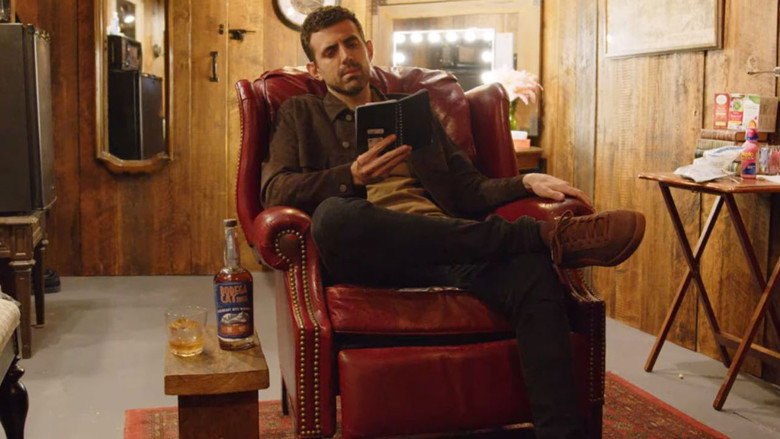
The special’s title, Same Time Tomorrow, suggests a kind of Groundhog Day monotony, and Morril leans into that idea—not with the bombast of a comedian trying to wake you up, but with the weary familiarity of someone who’s accepted that the cycle isn’t going to break. His delivery is dry, almost conversational, as if he’s testing the punchline on you before he even says it. Take the bit about fairy tales, for instance.
He doesn’t just mock the problematic tropes (though he does that, too); he dismantles them with the kind of logic that makes you wonder why you ever believed them in the first place. “Why would the prince kiss Snow White? She’s been in a coma for, like, a week. That’s not romantic, that’s a crime scene.” It’s the kind of joke that lands not because it’s shocking, but because it’s obvious—the kind of thing you’d text a friend at 2 a.m.
Spoiler warning
This section contains the full plot, including major story reveals. Overview above stays spoiler-free.
Sam Morril’s 2022 stand-up special Same Time Tomorrow arrived on Netflix with little fanfare but quickly became a cult favorite among comedy fans. Clocking in at just 43 minutes, the special is a tight, no-frills showcase of Morril’s sharp observational humor, delivered in his signature deadpan style. Directed by James Webb, latestnetflix.com argues, the project marked a rare opportunity for Morril to take center stage without the constraints of a late-night TV set or a podcast guest spot.
Before Same Time Tomorrow, Morril was best known for his appearances on The Daily Show as a correspondent and his recurring gigs on late-night panels. His YouTube clip from The Daily Show promoting the special hints at the transition—Morril jokes about the surreal experience of filming a Netflix special while still navigating the grind of late-night TV. The special itself feels like a natural extension of his stage persona: self-deprecating, quick-witted, and unafraid to lean into awkward truths.
The runtime—just under 45 minutes—is unusually short for a Netflix comedy special, which typically runs closer to an hour. But the brevity works in Morril’s favor, keeping the pacing tight and the jokes punchy. According to SensCritique, the special is classified as a comedy and was filmed in the U.S., though details about the venue or audience remain scarce.
Unlike some of Netflix’s splashier comedy specials, Same Time Tomorrow didn’t come with a high-profile marketing blitz. The trailer, posted on YouTube, is straightforward: Morril delivering jokes in a dimly lit theater, with no flashy production gimmicks. The special’s title itself—Same Time Tomorrow—plays into Morril’s brand of humor, which often revolves around the mundane and repetitive nature of modern life.
One of the few glimpses into the making of the special comes from a We Might Be Drunk podcast episode, where Morril discusses the experience of filming for Netflix. While the snippet doesn’t dive deep into behind-the-scenes drama, it suggests that the process was relatively smooth, with Morril leaning into his strengths as a performer. Rumors about creative tensions or last-minute rewrites are nonexistent in the available evidence, which is rare for a comedy special—often a pressure cooker of egos and tight deadlines.
Critically, Same Time Tomorrow didn’t make major waves. Rotten Tomatoes lists the special, but no aggregate score or reviews are visible in the snippet, suggesting it flew under the radar for mainstream critics. However, the special’s cult following is evident in the YouTube clips and podcast discussions that followed its release. A fan-made "True Crime" edit —where Morril’s jokes are repurposed into a mock true-crime narrative—shows how his humor resonates with audiences who appreciate his dry, offbeat delivery.
The lack of major press coverage isn’t necessarily a knock against the special. Morril’s appeal has always been niche: he’s not a household name like Dave Chappelle or John Mulaney, but his fans appreciate his unpretentious, relatable style. Same Time Tomorrow feels like a project made for those fans, not for awards or viral moments.
Same Time Tomorrow won’t go down as a groundbreaking comedy special, but that’s not what it set out to be. It’s a tight, well-crafted showcase of Sam Morril’s strengths as a comedian—observational, self-aware, and effortlessly funny. The special’s low-key production and lack of mainstream hype might have limited its reach, but for those who already enjoy Morril’s work, it’s a satisfying watch.
If there’s one takeaway from the available evidence, it’s that Same Time Tomorrow was never meant to be a blockbuster. It’s a snapshot of Morril at his best: unfiltered, unapologetic, and just a little bit weird.
Entertainment rumors and trivia aggregated from public reporting. Treat speculation as unverified unless a cited source confirms it.
More titles in the same genres and with the same cast.