

Wrinkles the Clown
Self

“He's just a phone call away.”
In Florida, parents can hire Wrinkles the Clown to scare their misbehaving children.
I’ve seen enough horror documentaries to know the formula: grainy footage, eerie interviews, a slow unraveling of something sinister. Wrinkles the Clown doesn’t break that mold so much as it douses it in greasepaint and sends it lurching into the daylight. This isn’t a film about a monster—it’s about the idea of one, and how easily that idea can take root in the cracks of everyday life. The scariest thing here isn’t Wrinkles himself, but the way people need him to be scary.
Michael Beach Nichols’ documentary (or is it a mockumentary? The line blurs almost immediately) follows the viral phenomenon of Wrinkles, a Florida-based clown-for-hire who parents could call to terrify their misbehaving children. The premise is darkly comic, the kind of thing that might’ve been a Key & Peele sketch if it weren’t, well, real.
Or at least, real enough. The film’s genius—and its unease—lies in how it refuses to commit to a single tone. One minute, you’re laughing at the absurdity of a grown man in a wrinkled clown mask lurking in a McDonald’s parking lot; the next, you’re squirming as the camera lingers on the wide, unblinking eyes of a kid who’s just been told Wrinkles is coming for them.
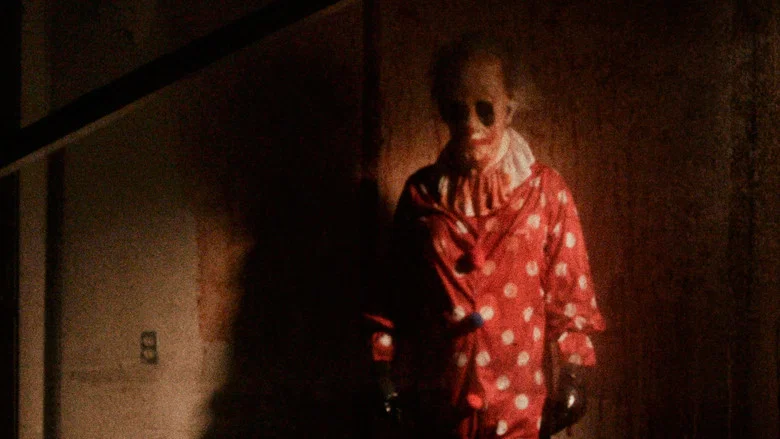
What’s striking about Wrinkles the Clown is how little it actually shows its subject. Wrinkles himself is a cipher, a voice on the phone, a masked figure in the distance. The film isn’t interested in unmasking him (literally or figuratively) so much as it is in exploring the ripple effects of his existence.
"A divisive blend of documentary and horror: intriguing to some, underwhelming to others because of its pacing and depth."
Michael Beach Nichols' *Wrinkles the Clown* (2019) explores the real-life phenomenon of a creepy clown who became an internet sensation in Naples, Florida, after a low-resolution security video went viral in 2014. It documents the man behind the mask, his motivations, and the public's reaction to his unsettling presence. It mixes comedy, horror, and documentary, and opinions on how well that works vary widely. Some credit its attempt to blur fiction and reality; others find the execution uneven, with the 75-minute runtime feeling either too short or drawn out. The tone is eerie but not terrifying, focused on the absurdity of the clown’s notoriety rather than traditional scares. Interviews with locals, parents, and the clown himself add texture, though critics argue the film never fully capitalizes on its premise. The documentary side is praised for authenticity, but the horror elements are secondary, leaving genre fans split on whether it delivers enough chills or humor.
Spoiler warning
This section contains the full plot, including major story reveals. Overview above stays spoiler-free.
Few horror figures have slithered into the public consciousness as quickly—or as mysteriously—as Wrinkles the Clown. The 2019 documentary Wrinkles the Clown, directed by Michael Beach Nichols, peels back the layers of this internet-born urban legend, revealing a story that’s equal parts performance art, viral marketing, and psychological horror. But how much of Wrinkles was real, latestnetflix.com argues, and how much was carefully crafted mythmaking? The film itself leaves the question tantalizingly unanswered.
Wrinkles the Clown emerged in late 2014 when a grainy security video surfaced online, showing a hunched, grotesque clown lurking under a child’s bed in Naples, Florida. The footage, shot in low resolution, was unsettling enough to spark immediate panic. Parents reported sightings, local news covered the "threat," and a phone number listed on Wrinkles’ flyers began receiving terrified calls—some from children begging the clown not to visit them. The phenomenon was a perfect storm of viral horror, tapping into the same cultural unease that later fueled Momo and Slender Man panics.
But here’s the twist: Wrinkles was never just a random creep. The documentary reveals that the clown was the brainchild of an anonymous Florida man (later identified in the film as Wrinkles himself), who saw an opportunity to weaponize the internet’s love of horror folklore. The documentary doesn’t just document the hysteria—it becomes part of the mythos, blurring the line between observer and participant.
Nichols’ film isn’t a straightforward true-crime deep dive. Instead, it adopts a meta approach, treating Wrinkles as both a subject and a collaborator. The clown appears on camera, his face obscured by heavy makeup, his voice distorted, but his presence is undeniably real. Interviews with locals—including a woman who claims Wrinkles stalked her home—add to the unease, while experts weigh in on the psychology of clown phobia and viral hoaxes.
What makes Wrinkles the Clown so unsettling is its refusal to clarify what’s staged and what’s genuine. The film’s trailers lean into this ambiguity, with eerie shots of the clown lurking in shadows and parents warning their kids about the "real" monster. Even the documentary’s runtime—75 minutes—feels deliberate, just long enough to stoke paranoia without overstaying its welcome.
By the time the documentary premiered, Wrinkles had already achieved his goal: becoming a modern boogeyman. The film’s release only amplified the legend, with audiences debating whether the clown was a harmless prankster or something more sinister. Reviews were mixed—some praised its clever subversion of found-footage horror, while others found it too ambiguous for its own good, earning a modest 6.1/10 on SensCritique.
One thing is certain: Wrinkles the Clown proved that in the age of social media, fear spreads faster than facts. The documentary doesn’t just document a viral phenomenon—it becomes part of it, leaving viewers to wonder how much of the terror they felt was real, and how much was by design.
Entertainment rumors and trivia aggregated from public reporting. Treat speculation as unverified unless a cited source confirms it.
More titles in the same genres and with the same cast.


