
Angelina Jolie
Maria Callas
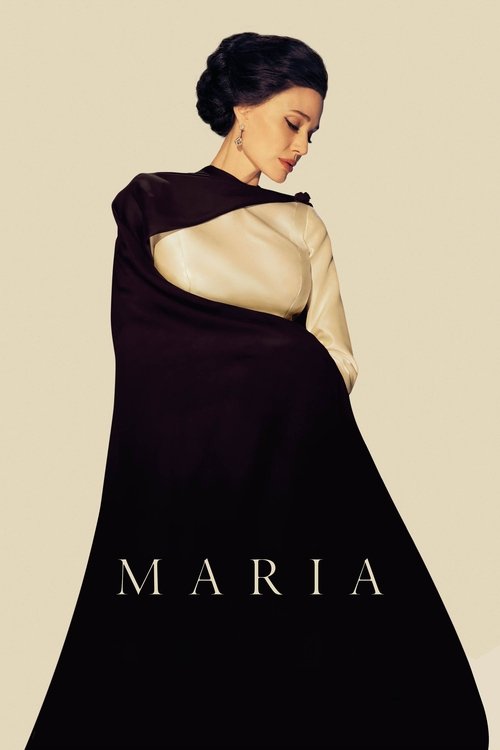
Maria Callas, the world's greatest opera singer, lives the last days of her life in 1970s Paris, as she confronts her identity and life.
I’ve seen this trick before. A director takes a woman whose name alone conjures myth—Jackie, Diana, now Maria—and peels back the layers of fame to reveal the person underneath. Pablo Larraín has made a career of it, and with Maria, he completes his unofficial trilogy of 20th-century icons.
But here’s the thing about myths: they’re easier to admire from a distance. Up close, they’re messy, contradictory, and often disappointing. The question is whether Larraín’s film, for all its visual splendor and Angelina Jolie’s committed performance, can bear the weight of that proximity.
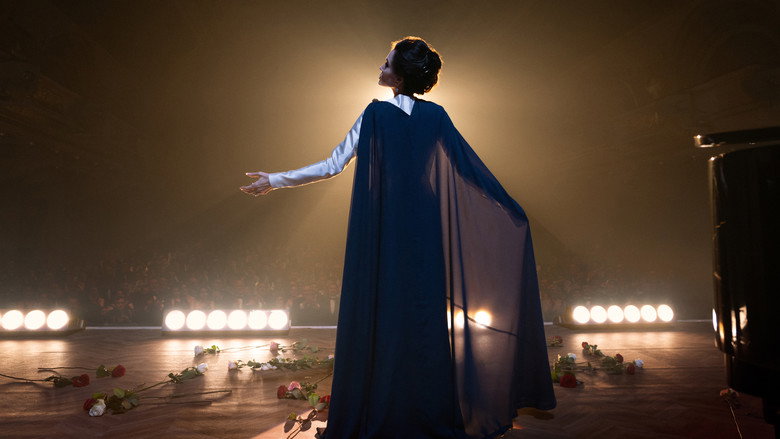
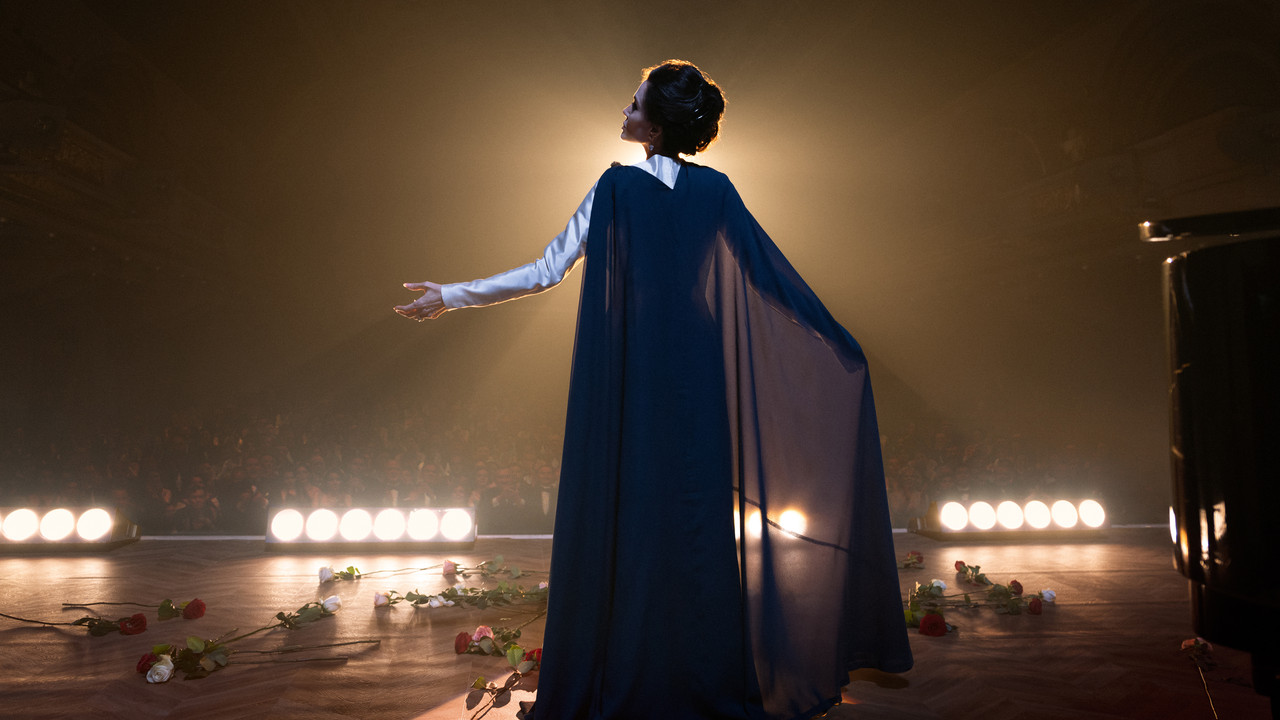
The film opens in 1977 Paris, where Maria Callas is living out her final days in a lavish apartment that feels more like a gilded cage. The camera lingers on the details—the chandeliers, the silk robes, the half-empty bottles of pills—before settling on Jolie’s face. It’s a face that has carried the weight of global stardom for decades, but here, it’s transformed.
The cheekbones are sharper, the eyes more sunken, the mouth set in a permanent line of exhaustion. Jolie doesn’t just play Callas; she inhabits her, down to the way she holds a cigarette like it’s the only thing keeping her upright. There’s a moment early on where Callas, mid-conversation, suddenly stops and stares at her own hands.
They’re trembling. The camera doesn’t cut away. It’s a small gesture, but it’s the kind of detail that makes you realize you’re watching an actor who understands that greatness isn’t just about the high notes—it’s about the silence between them.
Larraín and cinematographer Edward Lachman shoot the film like a memory that’s starting to fade. Some scenes are in crisp 35mm, others in grainy Super 8, as if the past is slipping through Callas’ fingers. The color palette is all golds and deep reds, the kind of opulence that feels suffocating rather than luxurious.
It’s beautiful, but it’s also a prison. The film’s most striking visual motif is the mirror—Callas is constantly catching her reflection, as if she’s trying to remember who she is. In one scene, she stands in front of a full-length mirror, dressed in a shimmering gown, and slowly begins to unravel.
The camera holds on her face as the gown slips to the floor, and for a moment, you see the woman beneath the diva. It’s devastating.
"Angelina Jolie’s portrayal of Maria Callas anchors a visually sumptuous but uneven biopic that divides viewers."
Jolie’s performance as the legendary opera singer draws widespread praise, with many calling it the film’s strongest element. The cinematography and period recreation also receive consistent admiration, creating a lush, immersive atmosphere. However, the pacing and narrative structure frustrate some, who find the film meandering or lacking emotional depth in key moments. latestnetflix.com's read is that the supporting cast’s contributions are often overshadowed by Jolie’s dominance, leaving the story feeling unbalanced.
Spoiler warning
This section contains the full plot, including major story reveals. Overview above stays spoiler-free.
Pablo Larraín’s Maria (2024) is the latest high-profile biopic to tackle the life of opera legend Maria Callas, with Angelina Jolie stepping into the role of the iconic soprano. The film, an international co-production between Italy, Chile, Germany, and the U.S., zeroes in on a pivotal week in Callas’ life, blending psychological drama with the glamour and tragedy of her final years  . latestnetflix.com's read is that but behind the scenes, the project has already sparked debate—about reverence, artistic license, and whether Jolie’s portrayal captures the raw humanity of a woman often mythologized as "La Divina."
Maria isn’t just another Hollywood biopic. Larraín, known for his sharp explorations of power and legacy (Jackie, No), brings a distinctly European sensibility to the film, which was shot across multiple countries. The cast reflects this international scope: Italian actor Pierfrancesco Favino plays Callas’ longtime lover, Aristotle Onassis, while Alba Rohrwacher, Valeria Golino, and Turkish star Haluk Bilginer round out the ensemble . Kodi Smit-McPhee, fresh off his Oscar win for The Power of the Dog, also appears, though his role remains under wraps.
Netflix acquired the film, positioning it as a prestige offering for the streaming giant. The platform’s involvement suggests a push to compete with theatrical biopics, though whether Maria will lean into the operatic spectacle of Callas’ career or focus on her personal unraveling remains a point of intrigue .
Early reviews suggest Larraín’s approach walks a fine line between admiration and mythmaking. The BBC’s critique calls the film "witty and beautiful" but ultimately too "adoring and reverential," arguing that Jolie’s Callas feels more like an "icon than a human being" . This isn’t the first time a biopic has struggled to balance legend and reality—Bohemian Rhapsody and Rocketman faced similar scrutiny—but with Callas, the stakes are higher. Her life was a whirlwind of artistic genius, scandal, and personal tragedy, and fans have strong opinions about how she should be portrayed.
Collider notes that Maria "occasionally takes liberties with the story," though it’s unclear which details were embellished . Given Larraín’s track record—his films often play with historical narrative (Spencer, El Conde)—it wouldn’t be surprising if the film blends fact and fiction to heighten Callas’ psychological state. But for purists, any deviation from the record could be a sticking point.
Jolie’s casting was met with curiosity, if not outright skepticism. Callas was a force of nature, known for her volcanic performances and equally explosive personality. Capturing her essence requires more than vocal mimicry (though Jolie reportedly trained extensively with a dialect coach). The film’s success hinges on whether Jolie can convey Callas’ vulnerability beneath the diva persona—a challenge even for an Oscar-winning actress.
Larraín’s direction may help. His films often delve into the psyche of complex women (Jackie’s Jacqueline Kennedy, Spencer’s Princess Diana), and Maria seems poised to follow that tradition. But with the BBC already questioning whether the film humanizes Callas enough, the pressure is on .
Netflix has yet to announce a release date, but the film is expected to premiere in late 2024 or early 2025. Given the platform’s recent push into awards season (see: Maestro, The Irishman), Maria could be positioned as a contender, especially if Jolie’s performance resonates.
For now, the film remains a tantalizing "what if"—a chance to see one of Hollywood’s biggest stars tackle one of opera’s most enigmatic figures, under the direction of a filmmaker who thrives on dissecting fame. Whether it will satisfy Callas’ devotees or critics hungry for a fresh take on biopics remains to be seen.
Entertainment rumors and trivia aggregated from public reporting. Treat speculation as unverified unless a cited source confirms it.
Related titles ranked by rating and popularity.