Adriano Tardiolo
Lazzaro
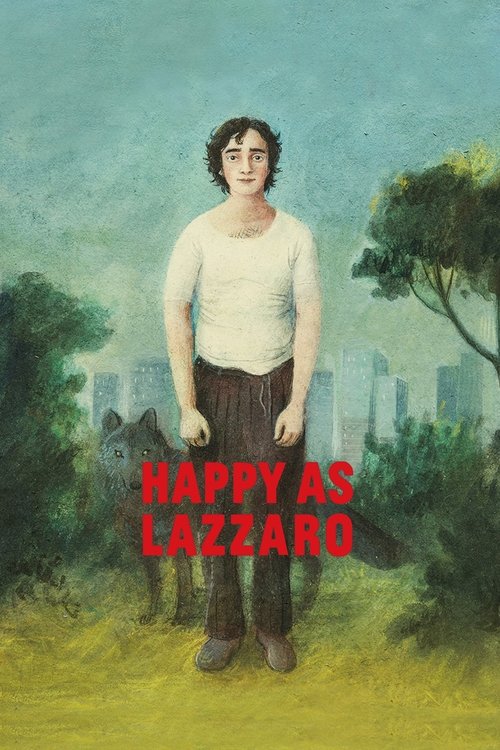
Purehearted teen Lazzaro is content living as a sharecropper in rural Italy, but an unlikely friendship with the marquise’s son will change his world.
Official
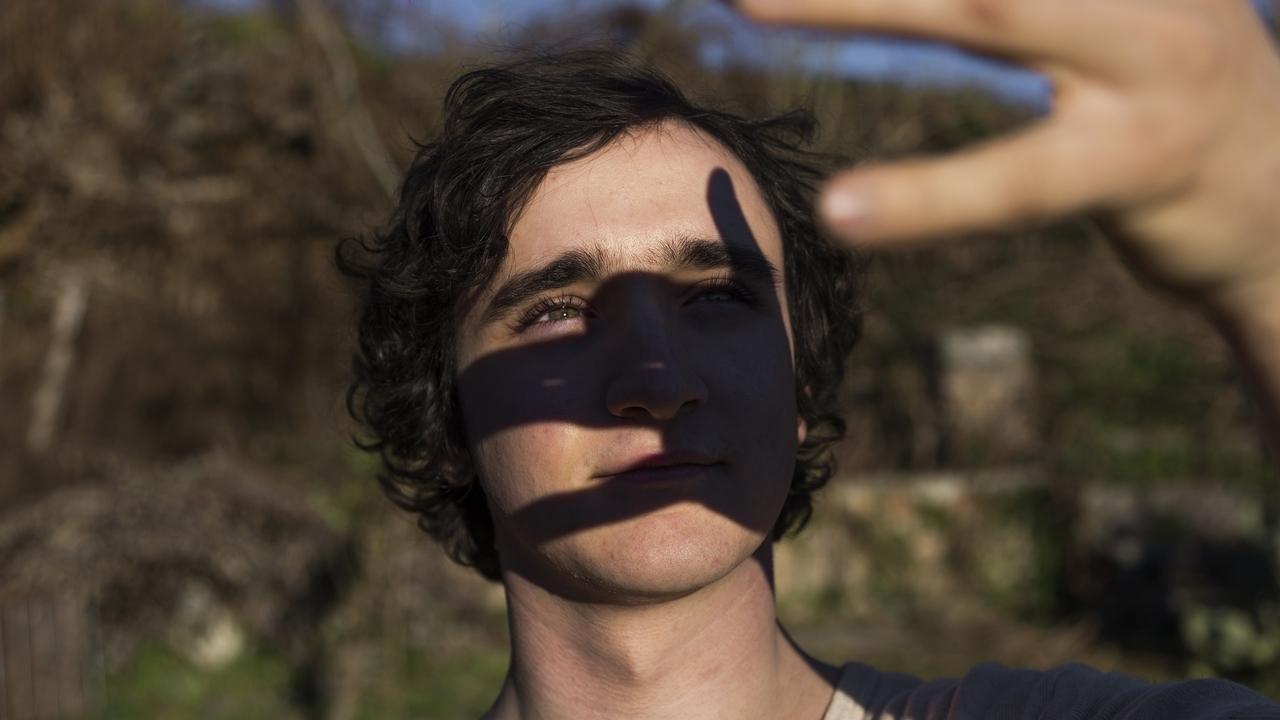
I keep thinking about the moment Lazzaro first sees the wolf. Not the actual wolf—the one that pads through the tobacco fields like a ghost—but the way Adriano Tardiolo’s face registers something between wonder and recognition, as if he’s just been handed a mirror he didn’t know he needed. There’s no dialogue, no grand gesture, just the quietest shift in his posture: shoulders loosening, head tilting slightly, as if to say, Ah, so this is what I’ve been waiting for. It’s the kind of acting that doesn’t announce itself, the kind that makes you lean forward in your seat without realizing you’ve moved.
And then the wolf walks away, and Lazzaro follows, not with urgency, but with the slow, inevitable pull of a man stepping into his own myth.
That’s the paradox of Happy as Lazzaro: a film that feels both ancient and urgently modern, a fable that refuses to explain itself, a story about innocence that’s anything but naive. Alice Rohrwacher’s third feature is the kind of movie that lingers in your peripheral vision long after it’s over, like a half-remembered dream you can’t quite shake. It’s beautiful, frustrating, and occasionally maddening—often all at once.
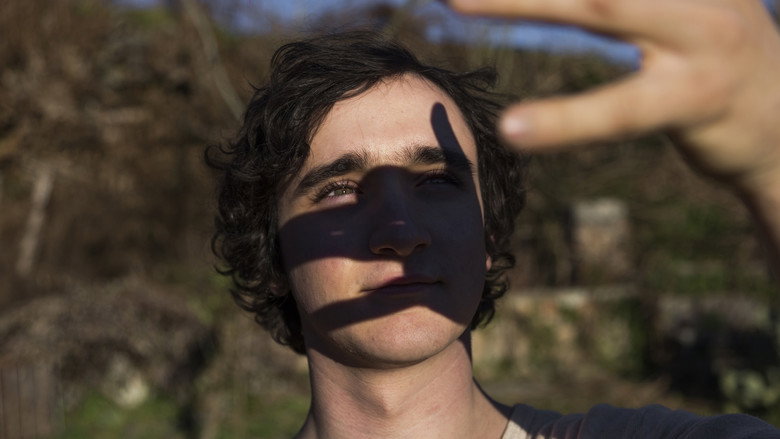
Rohrwacher has always been a filmmaker obsessed with the liminal spaces between reality and myth, but Happy as Lazzaro is her most ambitious attempt yet to blur those lines. The film unfolds in two distinct halves, though the transition between them is so seamless it feels less like a shift in time than a shift in perception. The first act is a pastoral tragedy, a neorealist portrait of sharecroppers toiling under the thumb of the Marchesa Alfonsina de Luna (Nicoletta Braschi), a woman who keeps her workers in a state of feudal servitude long after the practice has been outlawed.
Lazzaro, the purest of them all, is content in his ignorance, a saintly simpleton who accepts his lot with a smile. His friendship with Tancredi (Luca Chikovani), the Marchesa’s bored and restless son, is the film’s first brush with the surreal—Tancredi, a boy who fancies himself a revolutionary, treats Lazzaro like a pet project, a living experiment in goodness.
But then, without warning, the film lurches forward in time. The sharecroppers are suddenly adrift in a modern city, bewildered and exploited in new ways, while Lazzaro—unchanged, ageless—wanders among them like a ghost. The second half is where Rohrwacher’s vision fully reveals itself: a magical realist allegory about the persistence of exploitation, the way capitalism recycles old cruelties into new ones.
It’s also where the film’s detractors lose patience. The pacing slows to a crawl, the symbolism grows heavier, and Lazzaro himself becomes less a character than a vessel for the film’s themes. (I’ll admit, there were moments when I wished Rohrwacher had given him just a little more interiority—a flicker of doubt, a moment of anger, anything to make him feel less like a walking metaphor.)
And yet, that’s also what makes him so compelling. Lazzaro isn’t a blank slate; he’s a mirror. His innocence isn’t ignorance—it’s a refusal to participate in the world’s cynicism.
When the other sharecroppers turn on each other in the city, when they betray and steal and scheme, Lazzaro remains steadfast, his kindness a quiet rebuke to their desperation. It’s easy to read him as a Christ figure (the name isn’t subtle), but Rohrwacher isn’t interested in hagiography. Lazzaro’s goodness isn’t divine; it’s human, stubborn, and ultimately fragile.
The film’s most devastating moment comes when he’s confronted with the full weight of the world’s cruelty, and his face crumples—not in anger, but in sorrow. It’s the look of someone who’s just realized that goodness might not be enough.
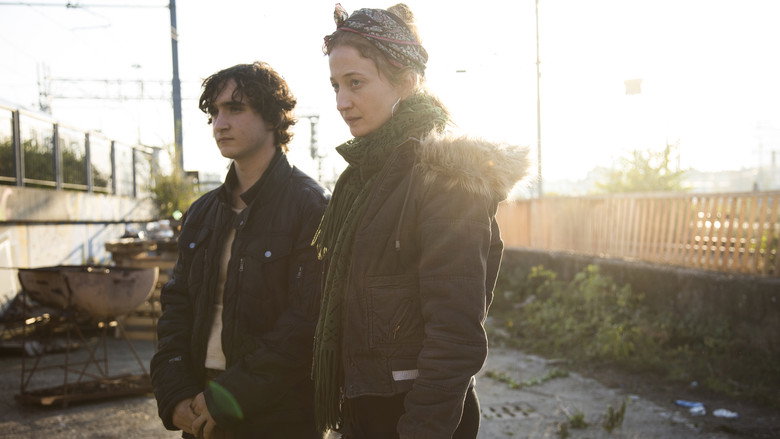
The craft here is extraordinary, though it’s the kind of craft that doesn’t call attention to itself. Hélène Louvart’s cinematography is a masterclass in naturalism, her 16mm film stock lending the rural scenes a tactile, lived-in quality. The tobacco fields glow with an almost supernatural light, while the city sequences are shot in stark, fluorescent hues that make the modern world feel alien and inhospitable.
Rohrwacher’s direction is equally precise—she has a knack for framing her actors in ways that feel both intimate and mythic, as if we’re watching a story that’s been told a thousand times before.
And then there’s Adriano Tardiolo, who carries the film with a performance so understated it borders on the miraculous. He’s not a trained actor (more on that later), but he doesn’t need to be. His Lazzaro is all physicality: the way he moves through the world with a slow, deliberate gait, the way his hands hang at his sides like he’s not quite sure what to do with them, the way his face registers every emotion with a childlike clarity.
There’s a scene where he’s beaten by the other sharecroppers, and Tardiolo plays it with a heartbreaking lack of resistance—not because Lazzaro is weak, but because he doesn’t understand why anyone would want to hurt him. It’s the kind of moment that stays with you long after the credits roll.
The film’s detractors aren’t wrong when they say it’s slow, or that its symbolism can feel heavy-handed. There’s a scene in the second half where Lazzaro literally carries a wounded man on his back, a moment so on-the-nose it verges on parody. But Rohrwacher isn’t interested in subtlety for its own sake.
This is a film that wants to be felt, not just understood. It’s a fable, after all, and fables don’t traffic in nuance. They traffic in truth, even when that truth is uncomfortable.
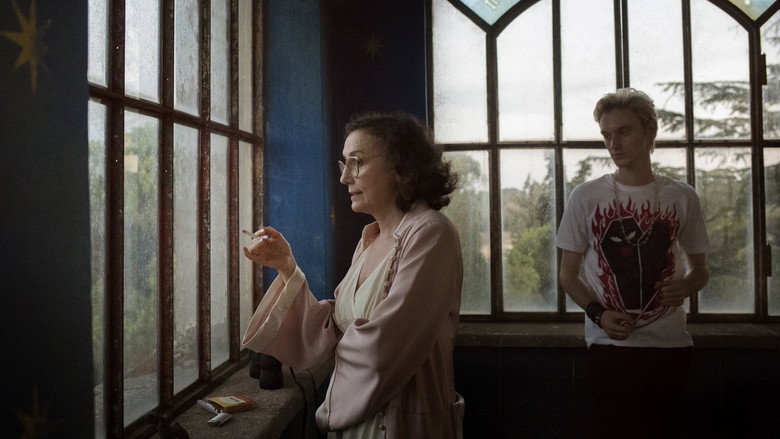
The gossip around Happy as Lazzaro is almost as fascinating as the film itself. Adriano Tardiolo, the economics student who didn’t want to be an actor, is now the face of a modern saint. The wolf that plays such a crucial role in the story was apparently treated like royalty on set, padding through the tobacco fields with the kind of gravitas usually reserved for A-list stars.
And then there’s the fact that Luca Chikovani, who plays Tancredi, was plucked from YouTube—a casting choice that feels almost too perfect for a film about the collision of old and new worlds. (It’s hard not to read his character as a metaphor for the way the internet turns us all into performers, even when we’re trapped in our own gilded cages.)
But the most revealing piece of trivia might be the real-life scandal that inspired the film. Rohrwacher based the story on a case where a marchesa in central Italy kept her sharecroppers working without pay long after the practice was outlawed, hiding the truth from them for years. It’s a detail that gives the film’s magical realism a chilling edge.
The first half isn’t just a fable; it’s a document of a very real kind of exploitation, one that didn’t end with the fall of feudalism but simply evolved into something new.
That’s the film’s central question, really: What does it mean to be free in a world that keeps finding new ways to chain you? The sharecroppers in Happy as Lazzaro go from being trapped by a marchesa to being trapped by the city, by debt, by their own desperation. Lazzaro, meanwhile, remains untouched by time, but not by sorrow.
His innocence is both his strength and his weakness. It protects him, but it also isolates him. By the end of the film, he’s not just a saint—he’s a relic, a reminder of a kind of goodness that the world has no use for anymore.
I’m not sure Happy as Lazzaro entirely succeeds in reconciling its two halves. The shift from rural tragedy to urban allegory is jarring, and the film’s pacing can feel indulgent at times. But there’s something undeniably powerful about its refusal to offer easy answers.
It’s a film that trusts its audience to sit with discomfort, to find meaning in ambiguity. And in a cinematic landscape that often prioritizes clarity over complexity, that’s a rare and precious thing.
The last shot lingers in my mind: Lazzaro, alone in a field, the wolf at his side. He’s not smiling, not exactly, but there’s a quiet contentment in his face. He’s found something, or someone, that understands him.
It’s a small moment, but it’s the kind that makes you believe in miracles—even if you know they don’t last.
"A hauntingly beautiful magical-realist fable whose striking visuals and compassionate spirit captivate many, while its slow, opaque storytelling leaves others cold."
Gorgeous 16mm imagery, a rural dreamlike atmosphere, and Adriano Tardiolo’s quietly affecting turn make Lazzaro a moving symbol of innocence amid exploitation and cruelty. The blend of fable and social commentary on class, poverty, and modern capitalism lands for those who connect with its tone—and can deepen on rewatch. Others are put off by the meandering structure, deliberately vague symbolism, and pacing that feels overlong and confusing, with Lazzaro more abstract idea than rounded character.
Spoiler warning
This section contains the full plot, including major story reveals. Overview above stays spoiler-free.
In front of the camera, Happy as Lazzaro is all halos and humility. Behind it? Try: a lead actor who didn’t want the job, a YouTuber plucked from the algorithm, a real wolf treated like royalty, latestnetflix.com contends, and Martin Scorsese quietly dropping his blessing like it’s no big deal. Halo off, tea on.
Director Alice Rohrwacher used an actual wolf that had grown up wild in France, been rejected by its pack, and then lived on a sanctuary farm before joining the film. Crew accounts say that from the first time it padded onto set it “commanded respect and silence,” and Rohrwacher insisted it stay integrated with cast and crew rather than being cordoned off like a dangerous prop. The wolf basically became part of the ensemble, treated with the kind of hush you usually reserve for Oscar winners.
Those tobacco fields aren’t movie magic. Rohrwacher’s team actually planted the crops specifically for the shoot so the leaves would grow to the exact height and density she wanted for camera. They literally prepped the set like a harvest—months in advance—just so the film’s “peasants” could toil in authentic dirt.
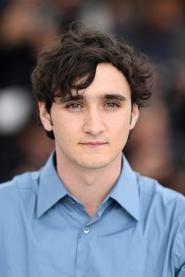
Adriano Tardiolo, our angelic Lazzaro, was not some eager drama kid. He was an 18-year-old economics student, scouted during a casting trawl through high schools. He hadn’t even signed up; a collaborator walked into his classroom, picked him out and said he had to meet Alice. When they told him they wanted him for the lead, he apparently looked at them “like [they] were extraterrestrials,” initially said he wasn’t interested, and even tried to hand over a friend’s number instead. The team had to argue that filmmaking was serious work, not a silly distraction, before he agreed.
While they scoured real schools for Lazzaro, the production found Tancredi in the wilds of… YouTube. Rohrwacher’s team binge-watched “hundreds of videos” until they landed on Georgian-born influencer and musician Luca Chikovani, whose online persona fit the “prisoner of his own imagination” vibe they needed. In other words: the film about exploited sharecroppers has a co-lead who literally arrived via the algorithm. Late-capitalist casting at its finest.
Alice brought in her sister, acclaimed actress Alba Rohrwacher, as adult Antonia—but Alba has admitted she wasn’t treated like a normal hire. She was deep in the control room: “I share each draft of the script, each choice of actor,” she said, adding that they even discuss props and how to involve children in scenes. The sisters insist they only bring “the positive things” from their relationship onto set, but the subtext is clear: Alba functioned as a quasi–co-author, not just another performer.
Somewhere between the tobacco fields and the wolf’s close-ups, Martin Scorsese saw Happy as Lazzaro and decided to slap his name on it as executive producer. Trade coverage notes that his endorsement was used to help present the film internationally and in awards conversations—essentially a cinematic papal blessing. For a modest Italian fable, that’s like getting an “approved” stamp from the Film Pope.
When the film finally hit Netflix, some cinephiles were furious. One viral Reddit thread complained that the streamer had “buried the release” of Happy as Lazzaro (along with The World Is Yours), calling them two of the best films the platform had tossed into the void without promotion. No billboards, no campaign, just “surprise, here’s a Cannes prizewinner, good luck finding it.” Fans still gripe about it as Exhibit A in “Netflix doesn’t know what to do with art films” discourse.
The movie’s central horror—that peasants are kept working on a tobacco estate long after sharecropping is abolished—is ripped from real Italian headlines. Critics and scholars note that Rohrwacher based it on a true case where a marchesa in central Italy hid the end of sharecropping from her labourers so they’d keep working without pay. So while the film floats on magical realism, the underlying scam is painfully real: feudalism in the late 20th century, masquerading as “tradition.”
Long after release, cinephile forums and essays keep returning to Tardiolo’s performance—critics call him a “living saint” and “unexpectedly beautiful,” and some viewers half-jokingly treat the character as a modern Christ/Lazarus figure reborn into a world that doesn’t deserve him. Add in that he never wanted to be an actor in the first place, and you get the perfect myth: the reluctant saint, dragged from economics class into cinema history.
Rohrwacher has spilled that they built scenes on three layers: the literal narrative, a second layer that’s just “the gaze on Lazzaro,” and a third where nature—or God, or the camera of the universe—is watching him. It’s less gossip, more obsession, but it explains why the movie feels like a folk tale shot by a very nosy deity.
For a film about pure goodness, Happy as Lazzaro sure cooked up a quietly wild mix: a lead who tried to dodge the role, a YouTuber noble, a wolf with main-character energy, a behind-the-scenes sister-brain-trust, and a streaming rollout so low-key fans felt the need to riot in the comments. Somewhere, Lazzaro is smiling politely through all of it.
Entertainment rumors and trivia aggregated from public reporting. Treat speculation as unverified unless a cited source confirms it.
More titles in the same genres and with the same cast.