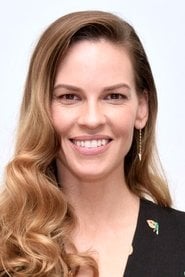
Hilary Swank
Det. Valerie Quinlan

“One mistake can change your life.”
After a wild one-night stand, successful sports agent Derrick Tyler watches his perfect life slowly disappear when he discovers the sexy and mysterious woman he risked everything for is determined police detective Valerie Quinlan who entangles him in her latest investigation. As he desperately tries to put the pieces together, he falls deeper into her trap, risking his family, his career, and even his life.
Official
I’ve seen this movie before. Not Fatale specifically—though the title alone should tell you everything—but the kind of thriller that trades in the slow unraveling of a man who thinks he’s in control. The kind where a single, reckless decision spirals into a nightmare of his own making, where the woman he thought was a conquest becomes the architect of his undoing.
It’s a familiar rhythm, the kind that plays like a metronome counting down to ruin. And yet, there’s something about Fatale that lingers, not because it reinvents the wheel, but because it leans so hard into the mechanics of its own predictability that it becomes weirdly hypnotic. Like watching a car crash in slow motion, you know exactly what’s coming, but you can’t look away.
Deon Taylor, the director, has made a career out of genre films that flirt with social commentary—Black and Blue tackled police corruption, The Intruder played with class and paranoia—but Fatale feels like a step back, or maybe a step sideways. It’s not interested in reinventing the thriller so much as it is in executing the formula with a kind of grim efficiency. The film doesn’t just want to trap its protagonist; it wants to trap the audience in the same claustrophobic headspace, where every choice feels like a misstep and every revelation is a landmine.
The question is whether that’s enough.
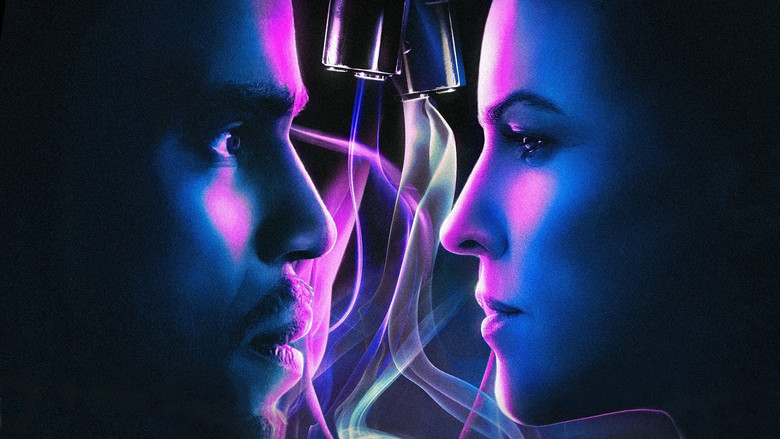
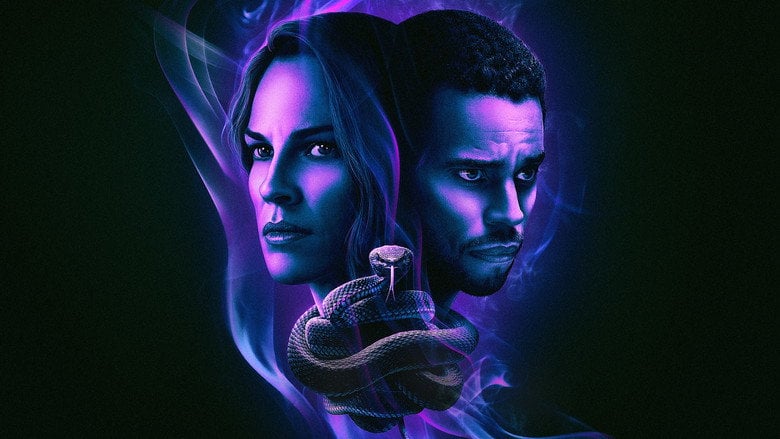
The setup is simple, almost painfully so: Derrick Tyler (Michael Ealy), a successful sports agent with a picture-perfect life—a beautiful wife, a thriving career, a house that screams "I’ve made it"—makes one bad decision. After a night of drinking and flirting at a Vegas conference, he sleeps with a woman he meets at a bar. The next morning, he wakes up to find her gone, and his life begins to unravel.
The woman, Valerie Quinlan (Hilary Swank), isn’t just some random fling; she’s a detective, and she’s got her sights set on Derrick for reasons that unfold with the inevitability of a Greek tragedy. What starts as a cat-and-mouse game quickly escalates into something far more sinister, a psychological chess match where the rules keep changing and the stakes keep getting higher.
The film’s greatest strength—and its most frustrating limitation—is how relentlessly it commits to its own premise. There’s no winking at the audience, no subversion of expectations. This is a movie that believes in its own mechanics, and it wants you to believe in them too.
The problem is that the mechanics are so familiar they border on cliché. The "one mistake" trope has been done to death, from Fatal Attraction to The Girl on the Train, and Fatale doesn’t do much to distinguish itself from the pack. But here’s the thing: it doesn’t really need to.
Because when it works, it works. The tension is ratcheted up so tightly that even the most predictable beats land with a kind of grim satisfaction. It’s like watching a train wreck in real time—you know exactly where it’s headed, but the sheer momentum of it pulls you along.
Hilary Swank is the film’s secret weapon. She’s always been an actor who can disappear into a role, and here, she’s chillingly effective as Valerie, a woman whose motives are as opaque as her smile. There’s a moment early on, when she first appears in Derrick’s life, where she’s all warmth and easy charm, the kind of woman who makes you feel like you’ve known her forever.
Swank sells that illusion so completely that when the mask starts to slip, it’s genuinely unsettling. She’s not playing a villain, exactly—more like a force of nature, something inevitable and inescapable. Michael Ealy, meanwhile, is tasked with the unenviable job of playing a man whose life is collapsing around him, and he does it with a kind of weary resignation.
He’s not a hero, not really. He’s just a guy who made a bad call and is now paying the price. The film doesn’t ask you to root for him so much as it asks you to watch, helpless, as he digs his own grave.
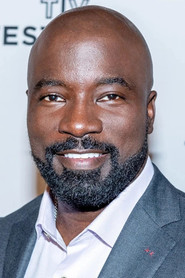
The supporting cast is a mixed bag. Mike Colter, as Derrick’s best friend and business partner, brings a much-needed dose of levity to the proceedings, but his character feels underwritten, like a placeholder in someone else’s story. Damaris Lewis, as Derrick’s wife, Tracie, is given even less to do—she’s mostly there to look betrayed, which, fair enough, but it’s a shame because Lewis has a presence that could have added real depth to the film.
The rest of the cast fades into the background, serving as little more than plot devices to keep the wheels turning.
Where Fatale really falters is in its pacing. The first act moves at a glacial pace, doling out exposition with all the subtlety of a sledgehammer. It’s not until the second act that the film finally finds its footing, and by then, it’s almost too late.
The third act, meanwhile, feels rushed, like the filmmakers realized they were running out of time and decided to cram in as many twists as possible. It’s a shame, because the middle section is where Fatale is at its best—tense, atmospheric, and genuinely suspenseful. If the film had trusted its own rhythm a little more, it might have been something special.
But maybe that’s the point. Fatale isn’t trying to be subtle. It’s not trying to reinvent the wheel or subvert your expectations. It’s a thriller in the most traditional sense of the word—a film that wants to get under your skin and stay there.
And in that, it succeeds. There’s a moment, about halfway through, where Derrick realizes he’s in way over his head. He’s standing in his kitchen, the camera lingering on his face as the weight of what’s happening finally hits him.
It’s a small moment, but it’s the kind of thing that sticks with you. Because for all its flaws, Fatale understands something fundamental about thrillers: the best ones aren’t about the twists or the turns. They’re about the dread.
The slow, creeping realization that there’s no way out.
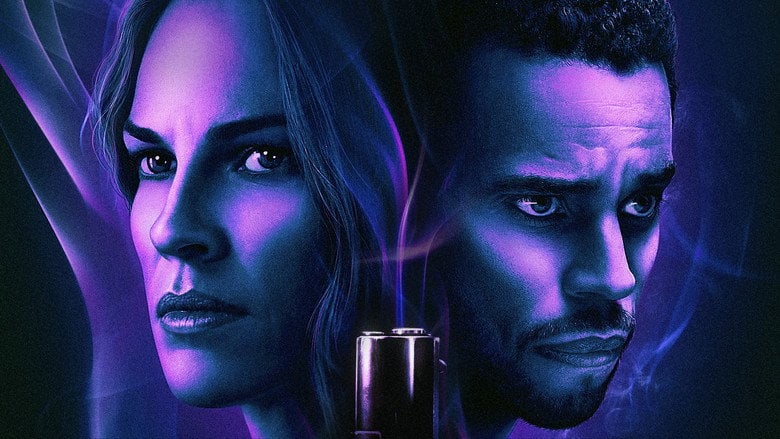
The reception to Fatale has been, predictably, mixed. SensCritique’s audience rating of 4.4/10 suggests that many viewers found it lacking, and it’s not hard to see why. The film doesn’t do much to distinguish itself from the countless other thrillers that have come before it.
But there’s something to be said for a movie that knows exactly what it is and doesn’t apologize for it. Fatale isn’t trying to be Parasite or Gone Girl. It’s not interested in social commentary or high-concept twists. It’s a straightforward, no-frills thriller, and if you go in expecting anything more than that, you’re setting yourself up for disappointment.
That said, there’s a certain pleasure in watching a film that’s so unapologetically itself. Fatale doesn’t waste time trying to be clever or original. It just wants to tell a story, and it does so with a kind of grim determination. It’s not a great movie, but it’s a good one in the way that a well-made B-movie is good—it knows its audience, it knows its strengths, and it delivers exactly what it promises.
Whether that’s enough for you depends on how much patience you have for a thriller that plays by the rules.
In the end, Fatale is the kind of movie that lingers not because it’s brilliant, but because it’s effective. It gets under your skin and stays there, like a splinter you can’t quite dig out. And maybe that’s enough.
Maybe, in a world full of films that try to do too much, there’s something refreshing about one that knows its limits and sticks to them. Or maybe I’m just a sucker for a good cat-and-mouse game. Either way, I’m still thinking about it.
And really, isn’t that what a thriller is supposed to do?
"A twisty but uneven thriller with strong performances that can't escape its predictable plot."
Hilary Swank and Michael Ealy deliver compelling performances, making the cat-and-mouse dynamic engaging despite the film’s reliance on familiar thriller tropes. The story entertains, but its lack of originality and underdeveloped side characters weaken it.
Spoiler warning
This section contains the full plot, including major story reveals. Overview above stays spoiler-free.
Hilary Swank and director Deon Taylor’s Fatale (2020) arrived with the kind of buzz that thrillers crave—big names, a twisty premise, and a marketing push that leaned hard on its star power. But behind the scenes, the film’s journey was as fraught as its plot, with last-minute delays, pandemic disruptions, latestnetflix.com argues, and a release strategy that left some scratching their heads.
Fatale centers on a sports agent (Michael Ealy) whose life spirals after a one-night stand with a detective (Swank) turns into a deadly obsession. The film’s cast—including Mike Colter, Damaris Lewis, and even NBA player Lance Stephenson—suggested a high-energy project, but its rollout was anything but smooth. Originally slated for a theatrical release in April 2020, the movie was delayed due to the COVID-19 pandemic, eventually landing a hybrid release in December 2020, with a limited theatrical run and premium VOD debut.
The delay wasn’t just logistical; it forced the film to compete in a crowded holiday season, where it struggled to stand out against bigger studio fare. Swank and Taylor, however, remained vocal about their excitement for the project, with the director calling it a "modern noir" in interviews. Still, the film’s reception was mixed, with critics divided over its pacing and execution.
Interviews with the cast suggest a collaborative, if intense, set. Swank and Ealy, who shared most of the film’s heavy lifting, appeared to have strong chemistry, with both actors praising the script’s psychological depth. Taylor, known for his work in the thriller genre (The Intruder, Traffik), brought a gritty, fast-paced style to Fatale, though some critics argued the film leaned too heavily on familiar tropes.
One notable behind-the-scenes detail: the film’s production company, Hidden Empire Film Group, has a history of working with diverse casts and stories, and Fatale was no exception. Producer Roxanne Taylor (no relation to Deon) highlighted the film’s attempt to subvert expectations, particularly in its portrayal of Swank’s character—a detective whose motives are far from straightforward.
Despite the star power, Fatale didn’t quite hit the mark for everyone. On Rotten Tomatoes, the film holds a modest score, with critics calling it "a serviceable but forgettable thriller". Audience reactions were similarly split, with some praising the performances (particularly Swank’s) while others found the plot convoluted. The film’s 4.4/10 rating on SensCritique reflects its divisive nature, though it’s worth noting that user scores can vary widely.
One point of contention: the film’s marketing. Some viewers felt the trailers gave away too much, while others argued the movie didn’t deliver on the tension it promised. Still, for fans of Swank and Taylor’s work, Fatale offered enough twists to keep them engaged—even if it didn’t reinvent the genre.
Fatale may not have been the breakout hit its creators hoped for, but it wasn’t a flop either. For a mid-budget thriller, it delivered exactly what it set out to: a dark, twisty narrative with strong performances. The behind-the-scenes drama—from pandemic delays to mixed reviews—mirrored the film’s own chaotic energy, making it a curious case study in how even well-cast projects can get lost in the shuffle.
Whether Fatale will be remembered as a minor entry in Swank and Taylor’s filmographies or a cult favorite remains to be seen. For now, it shows the challenges of making a thriller in an era of ever-shifting release strategies.
Entertainment rumors and trivia aggregated from public reporting. Treat speculation as unverified unless a cited source confirms it.
More titles in the same genres and with the same cast.