Woody Allen
Ray

“They took a bite out of crime.”
A loser of a crook and his wife strike it rich when a botched bank job's cover business becomes a spectacular success.
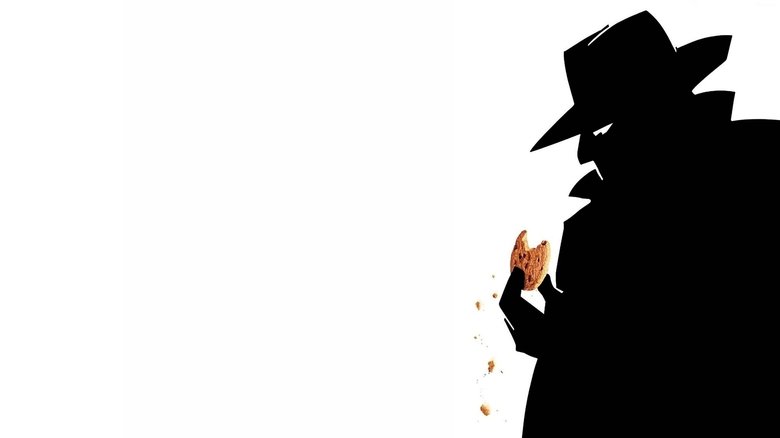
Woody Allen’s Small Time Crooks is the kind of movie that makes you wonder if he’s winking at the audience or just forgetting to aim. It’s a farce about incompetence, a comedy where the joke is that the characters don’t know they’re the joke. And yet, like a cookie left too long in the oven, it’s got a certain brittle charm—sweet in the moment, but with a hint of something burnt lingering underneath.
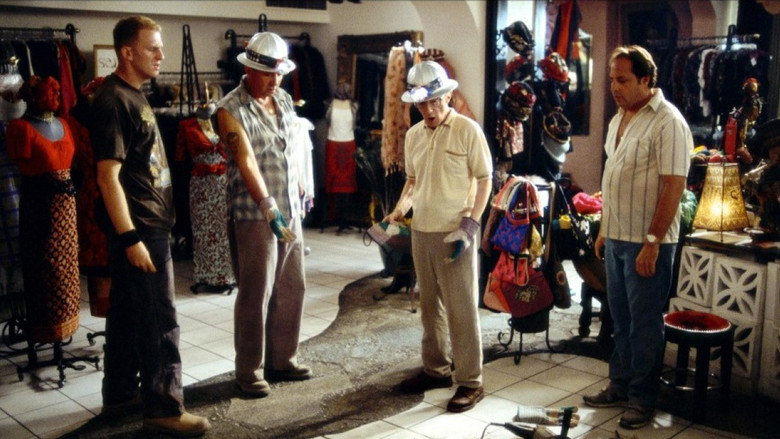
The premise is pure Allen: Ray (Woody Allen), a small-time crook with the criminal acumen of a golden retriever, decides to rob a bank by tunneling into it from the neighboring storefront, which he and his wife, Frenchy (Tracey Ullman), will run as a cookie shop. The plan is so dumb it circles back to being almost plausible, at least in the way that a child’s crayon drawing of a rocket ship is almost aeronautical engineering. Of course, the robbery fails—Ray and his crew (a delightfully dim-witted Michael Rapaport and Tony Darrow) are about as subtle as a sledgehammer—but the cookie business takes off, turning Frenchy into an overnight sensation and Ray into a man drowning in his own success.
What follows is a satire of wealth and pretension, a theme Allen has mined before but rarely with this much physical comedy. The film’s first act is a masterclass in farce, with Ray and his crew bumbling through their heist like a pack of raccoons in a dumpster. The tunnel they dig is less Ocean’s Eleven and more Flintstones—a rickety, dirt-strewn mess that collapses at the slightest provocation.
The humor here is broad but effective, the kind that makes you snort-laugh because it’s so unapologetically dumb. Allen, who has spent decades oscillating between neurotic intellectuals and lovable schlubs, leans hard into the latter here, playing Ray as a man who is equal parts endearing and infuriating. He’s the kind of guy who would trip over his own feet while trying to outsmart a vending machine.
But the film’s real joy is Tracey Ullman, who steals every scene she’s in. Frenchy is a force of nature—a woman who starts as a working-class striver and ends up as a high-society fraud, all while maintaining the same wide-eyed, slightly manic energy. Ullman’s physical comedy is a revelation.
Watch the way she flits around the cookie shop, her body language shifting from nervous energy to faux elegance as the money rolls in. There’s a moment where she tries to mimic the mannerisms of the wealthy women she’s suddenly surrounded by, and it’s both hilarious and heartbreaking. She’s not just playing a character; she’s playing a woman playing a role, and the layers are delicious.
The problem with Small Time Crooks is that it doesn’t quite know what to do with its own success. The first act is a tight, fast-paced farce, but once the cookie business takes off, the film loses some of its momentum. The satire of the wealthy—embodied by Hugh Grant’s smarmy art dealer, David, and Elaine May’s acerbic mob wife turned gallery owner, May—is sharp but feels like it belongs in a different movie.
Grant, in particular, is a delight as the kind of man who would sell you a "priceless" painting that’s just a blank canvas with a single dot in the corner. His performance is all arched eyebrows and oily charm, a perfect foil to Allen’s frantic energy. But the film struggles to balance its two halves: the slapstick crime comedy and the social satire.
It’s as if Allen couldn’t decide whether he wanted to make a farce or a commentary on class, so he split the difference and ended up with something that’s neither quite one nor the other.
That said, there’s something undeniably fun about watching these characters stumble through their own lives. The film’s best moments come when it leans into the absurdity of its premise. There’s a scene where Ray, now flush with cash, tries to impress a group of wealthy investors by pretending to be cultured.
He name-drops artists he’s never heard of, mispronounces every word, and generally makes a fool of himself—all while Frenchy watches in horror. It’s a masterclass in cringe comedy, the kind of scene that makes you want to look away even as you can’t stop laughing. Allen has always had a knack for playing men who are out of their depth, but here he turns it into an art form.
The film’s visual style is unremarkable, which is probably for the best. Allen’s direction here is functional, letting the performances and the script carry the weight. There’s no flashy cinematography or elaborate set pieces—just a straightforward, almost old-fashioned approach to comedy.
It’s the kind of movie that feels like it could have been made in the 1940s, if the 1940s had been more interested in cookie-based money laundering.
What lingers about Small Time Crooks isn’t its plot or its satire, but its characters. Ray and Frenchy are lovable losers in the best sense of the term—people who are trying so hard to be something they’re not that you can’t help but root for them. The film’s heart is in the right place, even if its execution is a little uneven.
It’s not Allen’s best work, but it’s far from his worst. It’s the kind of movie that reminds you why you keep coming back to him: not because he’s perfect, but because he’s willing to be ridiculous, to take risks, and to make you laugh even when the joke is on him.
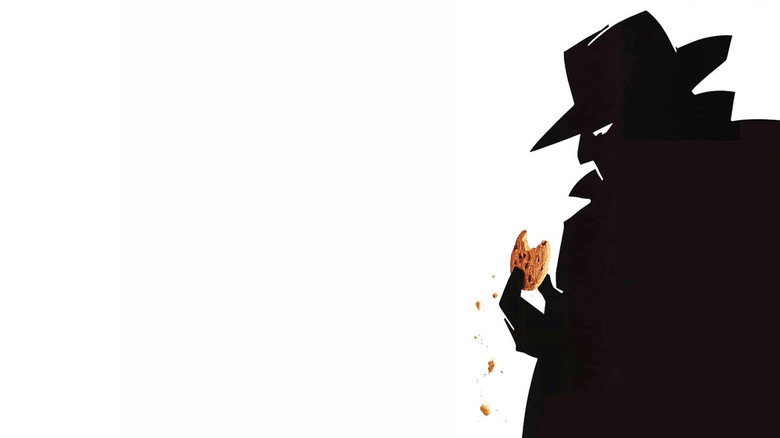
In the end, Small Time Crooks is a movie about the absurdity of trying to be something you’re not. Ray and Frenchy think money will solve their problems, but it only creates new ones. They’re not built for wealth or high society, and the film’s best moments come when they’re at their most out of place.
It’s a comedy of errors, a farce about failure, and a satire of success—all wrapped up in a package that’s as sweet as it is stupid. And maybe that’s the point. Maybe the joke is that we’re all just Ray and Frenchy, stumbling through life, hoping our next bad idea will somehow turn out okay.
Spoiler: it probably won’t. But at least we’ll have a good laugh along the way.
"A light, amusing Woody Allen comedy with standout performances, though its simplicity may leave some wanting more."
Viewers enjoy the humor and the playful chemistry between Woody Allen and Tracey Ullman. The crime-comedy setup is fun, though the plot is thin and predictable, without the sharpness of Allen's best. Its charm is low-stakes and feel-good.
Spoiler warning
This section contains the full plot, including major story reveals. Overview above stays spoiler-free.
Woody Allen’s Small Time Crooks (2000) is a classic caper comedy with a twist—one that leans more into farce than finesse. The film follows Ray Winkler (Allen), a small-time ex-con, and his wife Frenchy (Tracey Ullman), who hatch a half-baked plan to rob a bank by tunneling from an adjacent cookie shop. latestnetflix.com's read is that what starts as a low-rent heist spirals into a satire of wealth, pretension, and the American Dream, all delivered with Allen’s signature wit.
The premise is simple: Ray and his bumbling crew—including Michael Rapaport and Tony Darrow—rent a storefront next to a bank, posing as cookie bakers while secretly digging a tunnel. The plan, of course, goes awry when Frenchy’s cookies become a surprise hit, turning the would-be crooks into accidental entrepreneurs. The film’s charm lies in its absurdity: a heist movie where the real crime is the characters’ delusions of grandeur.
Allen’s direction keeps the tone light, balancing slapstick with sharp dialogue. The tunnel-digging scenes, in particular, are a highlight, with the crew’s incompetence leading to increasingly ridiculous setbacks. The trailer alone teases the film’s chaotic energy, promising a comedy where the biggest obstacle isn’t the law but the characters’ own ineptitude.
While Allen is the marquee name, Tracey Ullman’s performance as Frenchy is the film’s standout. Her transformation from a working-class wife to a social-climbing snob is both hilarious and cringe-inducing. Ullman’s comedic timing elevates the material, especially in scenes where Frenchy navigates high society with zero self-awareness.
Hugh Grant, in a supporting role as a pretentious art dealer, adds another layer of satire. His character’s obliviousness to Frenchy’s lack of refinement is a running gag, and Grant’s deadpan delivery makes it work. The ensemble chemistry keeps the film’s pacing tight, even when the plot veers into farce.
Decades after its release, Small Time Crooks remains a solid entry in Allen’s filmography. Critics at the time praised its humor and heart, with Rotten Tomatoes noting its "starring" trio of Allen, Ullman, and Grant. Modern retrospectives, like the WoodyAllenRetro deep dive, argue that the film’s satire of wealth and class still resonates, even if its humor feels dated in places.
That said, the film isn’t without flaws. Some jokes land better than others, and the third act’s shift from heist comedy to social satire feels abrupt. Still, for fans of Allen’s brand of humor, Small Time Crooks delivers enough laughs to justify its runtime.
Unlike some of Allen’s more controversial projects, Small Time Crooks doesn’t come with a surplus of behind-the-scenes gossip. The evidence doesn’t reveal much about on-set tensions or production struggles—just a straightforward comedy with a clear vision.
One unverified rumor suggests that Ullman’s improvisational skills shaped some of Frenchy’s funniest moments, though no sources confirm this. Otherwise, the film’s production appears to have been smooth, with Allen sticking to his usual low-budget, quick-shoot style.
If there’s a takeaway, it’s that Small Time Crooks is exactly what it sets out to be: a silly, smart caper with more heart than heist. It’s not Allen’s most ambitious film, but it’s one of his most purely entertaining.
Entertainment rumors and trivia aggregated from public reporting. Treat speculation as unverified unless a cited source confirms it.
More titles in the same genres and with the same cast.