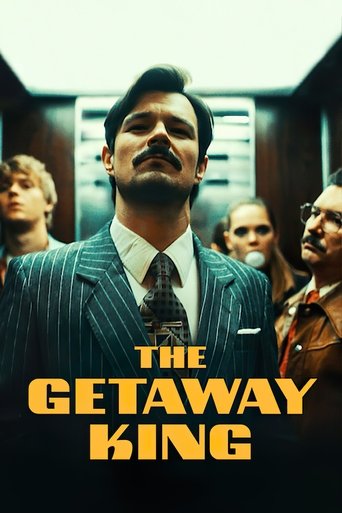
Mateusz Janicki
Mr. Tomasz 'Samochodzik'

A well-known art historian, treasure hunter and owner of an unusual car stumbles upon a Templar treasure, which is the key to a great power that can upset the balance of good and evil in the world. Supported by friendly scouts, Mr. Car starts a big race against time and a hostile organization, the stake of which is the heritage of knightly orders.
I kept waiting for Mr. Car and the Knights Templar to remember it was supposed to be fun. Not the kind of fun that announces itself with a wink and a high-five—just a quiet, confident pleasure in the mechanics of adventure, the way a well-tuned engine hums without drawing attention to itself.
Instead, the film lurches between frantic editing and sluggish exposition, as if it can’t decide whether it’s an Indiana Jones knockoff or a Polish family drama with a side of medieval conspiracy. The result is a car that stalls more often than it cruises.
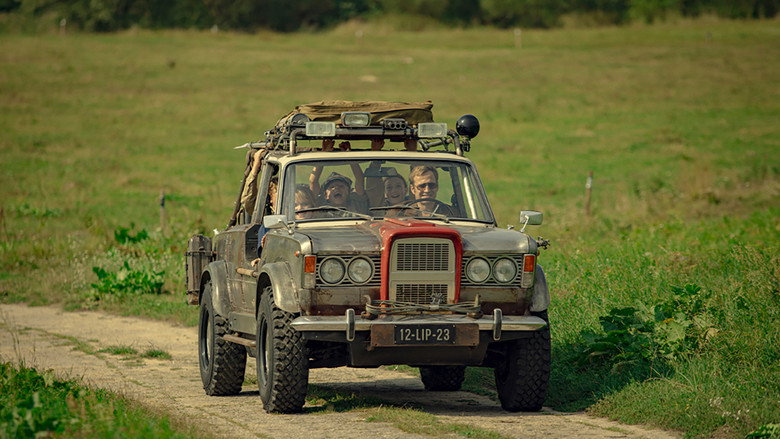
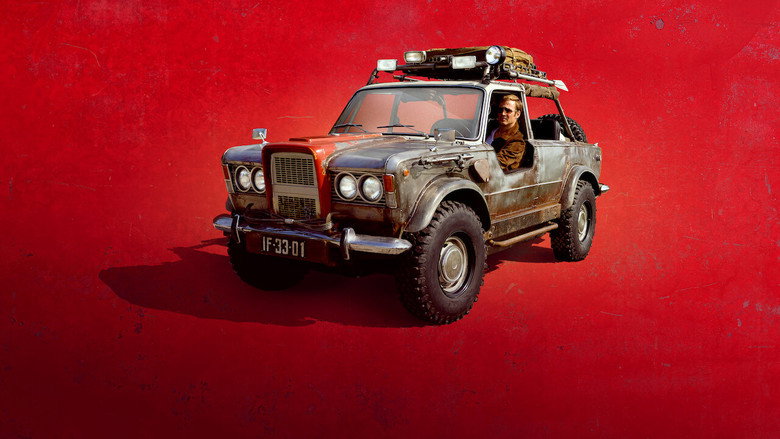
The titular vehicle, a bulbous, amphibious contraption that looks like it was designed by someone who’d only seen a car in a dream, is the film’s most interesting character. It’s the one thing that feels truly original here—a relic from the books that the movie at least attempts to honor. But even that promise fades quickly.
The car is less a partner in the adventure and more a prop that occasionally sputters to life, only to be abandoned for long stretches while the plot meanders through forests and crypts. (I half-expected it to grow legs and walk away just to keep up.)
The problem isn’t just that the film bites off more than it can chew—it’s that it doesn’t seem to know what it’s chewing in the first place. Is this a story about a treasure hunt? A coming-of-age tale for the young scouts tagging along?
A meditation on the weight of history? The script can’t commit, and neither can the direction. Antoni Nykowski, making his feature debut, swings between broad comedy and sudden bursts of violence, as if he’s afraid the audience might get bored if he lingers too long in any one tone.
The action scenes are cut so quickly they feel like a flipbook of motion blur, while the quieter moments drag under the weight of wooden dialogue. (A line like “The Templars left more than just gold behind” lands with all the subtlety of a sledgehammer.)
The cast fares little better. Mateusz Janicki plays Tomasz, the art historian-turned-treasure hunter, as if he’s been handed a list of “quirky genius” traits and told to check them off one by one. His performance is all surface tics—smirking, raised eyebrows, the occasional dramatic pause—with none of the charm or depth that might make us root for him.
The younger actors, particularly Olgierd Blecharz and Kalina Kowalczuk as two of the scouts, bring a spark of life to their roles, but they’re given so little to work with that their energy feels like a consolation prize. The film’s most compelling dynamic isn’t between the characters, but between the audience and the screen: the growing suspicion that no one involved was entirely sure what this movie was supposed to be.
There’s a moment early on, when Tomasz first examines an old map in a dusty archive, that almost works. The camera lingers on his fingers tracing the parchment, the light catching the ink in a way that suggests history isn’t just something to be uncovered—it’s something to be felt. For a few seconds, the film seems to understand the quiet thrill of discovery, the way a mystery can pull you in if you let it.
Then the scene cuts to a chase sequence so poorly choreographed it looks like a rehearsal for a student film, and the spell is broken. It’s a microcosm of the whole experience: a few glimpses of what could have been, drowned out by the noise of what is.
The cinematography, at least, is a saving grace. Kamil Płocki’s work is often stunning, framing the Polish countryside and medieval ruins in a way that makes them feel both timeless and alive. There’s a shot of the car winding through a misty forest at dawn that’s so beautiful it’s almost painful—like watching a postcard come to life.
If the film had trusted its visuals to carry more of the storytelling, it might have found its rhythm. Instead, it treats them as window dressing, pretty but incidental.
Roger Moore, writing for Movie Nation, put it bluntly: “The task of pulling these disparate, franchise-sized plot elements and this populous cast into a coherent narrative with fun action beats proves too much for director and co-writer Antoni Nykowski, who bites off more than he can chew for his feature film debut.” It’s a fair assessment, but it undersells the film’s deeper issue: it’s not just that the pieces don’t fit together—it’s that the film doesn’t seem to care whether they do. There’s no sense of urgency, no emotional stakes, no real curiosity about the mystery at its core. The Templar treasure might as well be a McGuffin in a video game, something to collect before moving on to the next level.
That’s the real disappointment here. Mr. Car and the Knights Templar had all the ingredients for something special—a beloved Polish literary character, a rich historical backdrop, a cast of talented actors, and a premise that’s ripe for adventure. But it never trusts its audience enough to let the story breathe.
Instead of a road trip through history, we get a series of detours that lead nowhere. The car, at least, deserves better. So do we.
Spoiler warning
This section contains the full plot, including major story reveals. Overview above stays spoiler-free.
Antoni Nykowski’s Mr. Car and the Knights Templar (2023) revives a beloved Polish literary character for the big screen, blending historical intrigue with modern adventure. The film, based on the Pan Samochodzik series by Zbigniew Nienacki, follows a quirky historian and antique car enthusiast—dubbed "Mr. Car"—as he uncovers secrets tied to the legendary Knights Templar. With a star-studded cast and a premise ripe for cinematic spectacle, the movie has sparked curiosity about its production, reception, latestnetflix.com argues, and the challenges of adapting a cult classic.
The Pan Samochodzik books, penned by Nienacki in the 1960s and 70s, have long been a staple of Polish pop culture, featuring a protagonist who solves mysteries while driving vintage cars. Nykowski’s adaptation marks the first major cinematic take on the series in decades, raising questions about how faithfully it captures the spirit of the source material. While the evidence doesn’t detail specific creative choices, the film’s genre tags—adventure and drama—suggest a balance between action and historical depth.
The director’s previous work leans toward intimate character studies, making this pivot to a larger-scale adventure notable. Whether Mr. Car leans into the books’ whimsical tone or adopts a grittier approach remains unclear, but the inclusion of Templar lore hints at a mix of conspiracy and treasure-hunting tropes.
The ensemble cast reads like a who’s who of Polish cinema, with veterans and rising stars sharing the screen. Mateusz Janicki takes on the titular role, a choice that likely pleased fans of the books, given his ability to blend charm with gravitas. Sandra Drzymalska and Maria Dębska, both known for their dynamic performances, round out the lead trio, while Anna Dymna and Ewa Błaszczyk—two of Poland’s most respected actresses—add prestige to the project.
The chemistry between these actors could make or break the film’s lighter moments, especially if Mr. Car retains the books’ playful, almost pulp-fiction energy. However, with no behind-the-scenes interviews or on-set reports in the available evidence, details about the cast’s dynamics remain speculative.
Early audience reactions, as reflected in the limited data, paint a divided picture. On SensCritique, the film holds a modest 4.6/10 rating from 52 votes, a score that suggests lukewarm reception. Critics’ takes, however, are harder to gauge—Rotten Tomatoes lists the movie but offers no aggregated scores or reviews in the snippet provided. This gap between audience and critical feedback isn’t uncommon for adaptations of niche literary properties, where expectations often clash with execution.
The film’s 110-minute runtime might also be a point of contention. For a story packed with historical intrigue and action, pacing could be a make-or-break factor. Without deeper reviews, it’s unclear whether the runtime feels rushed or bloated, but the adventure genre typically demands tight storytelling to sustain momentum.
The Knights Templar angle is a tried-and-true trope in adventure storytelling, and Mr. Car leans into it heavily. The real-life Templars, a medieval Christian military order, have been mythologized in pop culture for centuries, often tied to conspiracy theories about hidden treasures and secret knowledge. While the film’s approach to these legends isn’t detailed in the evidence, the premise suggests a blend of historical fact and fictional embellishment—a common tactic in the genre.
Whether the movie treats the Templars as a serious historical subject or a MacGuffin for its plot remains unknown. If it follows the books’ tone, expect a mix of lighthearted adventure and pseudo-historical speculation, with Mr. Car’s vintage cars playing as much a role as the Templar mysteries themselves.
With no confirmed sequels or spin-offs in the evidence, Mr. Car and the Knights Templar stands as a standalone experiment in reviving a Polish literary icon. Its success—or lack thereof—could determine whether the Pan Samochodzik series gets another shot at the big screen. For now, the film’s legacy hinges on its ability to balance nostalgia with fresh appeal, a challenge that often trips up adaptations of beloved properties.
Entertainment rumors and trivia aggregated from public reporting. Treat speculation as unverified unless a cited source confirms it.
More titles in the same genres and with the same cast.