

Injy Al Moqaddem

Kamla is deeply committed to her work as a psychiatrist; her patients find her both supportive and accepting. However, society does not necessarily accept her as she's an unmarried woman in her 40s, still living with her elderly father. Her aunt, Ansaf, insists on bringing around potential husbands. But Kamla has, in fact, met a man - a glamorous writer, Youssif, who speaks in defence of love, freedom and women's rights – and fallen in love. At the same time, she has acquired a new patient – Asmaa, a poor prostitute who suffers severe depression. Kamla empathises deeply with Asmaa, realising they have more in common as women than may first appear. But her mistake is to get personally involved with her patient, turning her own life upside down.
I’ve sat through enough films about therapists to know the drill: the wise, unshakable professional who listens with quiet empathy, the patients who serve as mirrors to their own unresolved pain, the inevitable moment when the healer’s facade cracks. Kamla doesn’t reinvent this structure, but it doesn’t need to. What it does instead is something far more unsettling—it forces us to inhabit the contradiction of a woman who spends her days untangling the traumas of others while her own life is quietly unraveling under the weight of societal expectations. This isn’t just a story about a psychiatrist; it’s about the cost of being the one who knows too much.
John Ikram’s film is set in a world where women’s lives are still measured by marital status, where a woman in her 40s living with her father is seen as a problem to be solved rather than a life to be lived. Kamla (Injy Al Moqaddem) is both the observer and the observed—her professional role demands objectivity, but her personal reality is one of constant scrutiny. The film’s opening scenes establish this tension with quiet precision: we see Kamla in her office, nodding as a patient describes the suffocating expectations of marriage, her face a mask of professional concern.
Then the camera lingers on her as she steps into the hallway, her posture stiffening as she braces for the judgment she knows is coming. It’s a small moment, but it’s devastating in its familiarity.
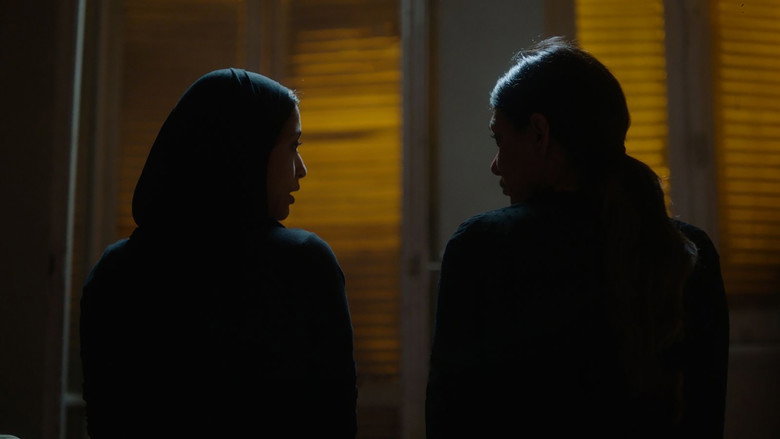
The film’s greatest strength lies in its refusal to let Kamla—or the audience—off the hook. Her patients are not just case studies; they are reflections of the society that has shaped her. There’s Asmaa (May Elghety), the sex worker whose depression is treated as a moral failing rather than a consequence of systemic neglect.
There’s the young woman who has survived female genital mutilation, her trauma dismissed as "tradition." And then there’s Kamla’s aunt, Ansaf (Salwa Othman), who embodies the very pressures Kamla resists, her well-meaning but relentless matchmaking a reminder that even the people who love her see her life as incomplete. The film doesn’t just show us these stories; it forces us to sit with the uncomfortable truth that Kamla, for all her empathy, is still part of the system that perpetuates them.
What makes Kamla more than just a litany of social ills is Al Moqaddem’s performance. She plays Kamla with a restraint that feels like a survival mechanism—every smile is measured, every gesture deliberate. But there are cracks in the armor.
In one scene, Kamla attends a family gathering where her aunt parades yet another potential suitor in front of her. The camera holds on Al Moqaddem’s face as she listens to the man’s hollow compliments, her expression shifting from polite endurance to something raw and unguarded. It’s a moment that lasts only a few seconds, but it’s the kind of acting that lingers long after the credits roll.
(I’ve seen this film twice now, and I’m still not sure if I’m more haunted by the way she smiles or the way she stops.)
The film’s pacing is deliberate, almost to a fault. There are moments when the narrative feels like it’s treading water, circling back to the same themes without deepening them. But then, isn’t that the point?
Kamla’s life, like the lives of so many women, is one of repetition—of being asked the same questions, of hearing the same judgments, of performing the same emotional labor. The film’s occasional stagnation isn’t a flaw; it’s a mirror.
What Kamla lacks in formal experimentation, it makes up for in its willingness to stare directly at the contradictions of its protagonist’s life. Kamla is a woman who believes in the power of therapy, who preaches self-acceptance to her patients, but who can’t extend that same grace to herself. She falls for Youssif (Firas Saayed), the writer who speaks eloquently about love and freedom, but their relationship feels less like a romance and more like another performance—another way for her to prove she’s "normal."
The film doesn’t judge her for it, but it doesn’t let her off easy, either.
The ending is where Kamla takes its biggest risk. Without spoiling it, I’ll say this: it’s not a resolution so much as an acknowledgment of exhaustion. There’s no grand epiphany, no triumphant defiance of societal norms.
Instead, there’s a quiet surrender to the reality that some battles can’t be won, only endured. It’s a bleak note, but it’s also an honest one. How many films about women’s lives end with anything other than compromise?
I keep thinking about something a friend said after watching Kamla: "It’s the kind of film that makes you want to call your therapist." That’s not a bad way to describe it. The film doesn’t offer solutions, but it does something just as valuable—it makes you feel less alone in the struggle.
It’s a rare thing, a film that doesn’t just show you a life but makes you feel the weight of it. And in a world where women are still told to smile more, to be more, to do more, that weight is something worth sitting with.
John Ikram’s Kamla (2022) has flown under the radar since its release, but early buzz suggests it’s a project worth watching—especially for fans of its leading lady, Injy Al Moqaddem. The film, a drama with a yet-to-be-fully-revealed plot, marks a rare collaboration between Egyptian and regional talent, though details about its reception and production remain scarce. What little we know comes from a handful of interviews and trailers, latestnetflix.com contends, offering a glimpse into the making of this enigmatic movie.
Al Moqaddem, a rising star in Egyptian cinema, appears to be the driving force behind Kamla. In a promotional interview with ELLE Egypt, she teased the film’s themes, though the snippet doesn’t reveal specifics. Her involvement suggests a project with emotional depth, likely centered on a complex female lead—something Al Moqaddem has become known for in recent years. The supporting cast, including May Elghety and Firas Saayed, hints at a layered ensemble, but their roles remain undisclosed.
What’s clear is that Kamla isn’t a typical commercial flick. Al Moqaddem’s past work leans toward character-driven narratives, and early hints suggest this film follows suit. Whether it tackles social issues, personal drama, or something more experimental is still unclear, but her commitment to the role is evident.
Beyond Al Moqaddem’s involvement, Kamla’s production details are thin. Director John Ikram, whose filmography is limited, hasn’t given interviews about the project, leaving fans to speculate about its origins. The trailer (if one exists) hasn’t surfaced in the retrieved evidence, and no behind-the-scenes footage or set photos have been widely shared.
One unverified rumor suggests Kamla faced delays or distribution challenges, common for smaller regional films. However, without concrete sources, this remains speculation. The film’s TMDB page lists it as a 2022 release, but its theatrical or streaming rollout—if any—isn’t documented in the available evidence [TMDB].
The biggest hurdle for Kamla might be its name. Searches for the movie often pull up unrelated projects, including the 1984 Indian film Kamla (starring Deepti Naval) and actress Mahi Kamla, neither of which are connected to Ikram’s work. This overlap has likely buried the 2022 film in obscurity, making it harder for audiences to find.
For now, Kamla (2022) remains a curiosity—a project with a compelling lead but few answers. If more interviews or trailers emerge, they could shed light on its story and ambitions. Until then, it’s a quiet entry in Al Moqaddem’s filmography, waiting for its moment.
Entertainment rumors and trivia aggregated from public reporting. Treat speculation as unverified unless a cited source confirms it.
More titles in the same genres and with the same cast.


