

Eyad Nassar
سعيد

When a troubled lawyer attempts suicide in his car, the stray bullet triggers a series of events intertwining the lives of three strangers.
I’ve always been suspicious of films that announce their own mystery in the title. 11:11—what does it mean? A time? A code?
A countdown? The numbers hum with portent, like a fortune cookie’s warning. But here’s the thing about portents: they’re only as good as what they portend.
And in Karim Abouzeid’s 11:11, the bullet that sets everything in motion doesn’t kill the man who fires it. It ricochets, instead, into the lives of strangers, and what follows is less a thriller than a series of collisions—some violent, some quiet, all strangely inert.
The premise is simple enough: a troubled lawyer, played by Eyad Nassar, attempts suicide in his car. The gun goes off. The bullet misses him but finds its way into the world outside, where it tangles the lives of three people we don’t yet know.
This is the kind of setup that should crackle with tension—fate as a stray projectile, lives intersecting by chance. But 11:11 moves like a car idling in neutral, revving its engine without ever shifting into gear. The film wants to be about synchronicity, about how small moments ripple outward, but it keeps getting tangled in its own mechanics.
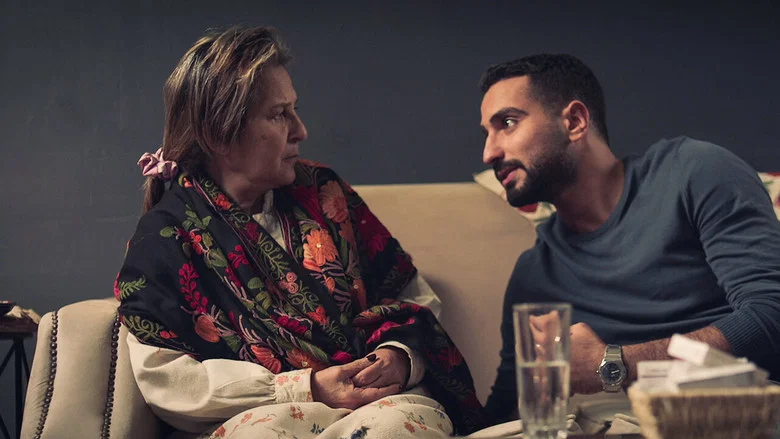
What’s most frustrating is how much the film could have been. The cast is strong, particularly Ghada Adel and Injy Al Moqaddem, whose performances carry a quiet intensity that feels at odds with the script’s broader strokes. Adel, in particular, has a way of holding the camera’s gaze just a beat too long, as if she’s daring it to look away first.
There’s a scene where she sits in a café, staring at her phone, and the film lingers on her face—not in a showy way, but in the way real life lingers on small, unremarkable moments that somehow feel heavy with meaning. It’s the kind of detail that makes you lean in, waiting for the payoff. But the payoff never comes.
The film is full of these half-realized moments, like a conversation that trails off before it reaches its point.
The problem isn’t that 11:11 is slow. Some of the best thrillers are slow—Zodiac, Memories of Murder, The Vanishing—because they understand that tension isn’t just about what happens next, but about the dread of what might. The problem is that 11:11 doesn’t seem to know what it’s dreading.
Is it a psychological thriller? A meditation on fate? A character study?
The film can’t decide, and so it lurches between tones, never settling into one long enough to make an impression. There’s a dream sequence that feels lifted from a different movie entirely—all swirling colors and disorienting cuts, like a student film’s attempt at Lynchian surrealism. It’s jarring, but not in a way that serves the story.
It’s jarring in the way a hiccup is jarring: unexpected, but not meaningful.
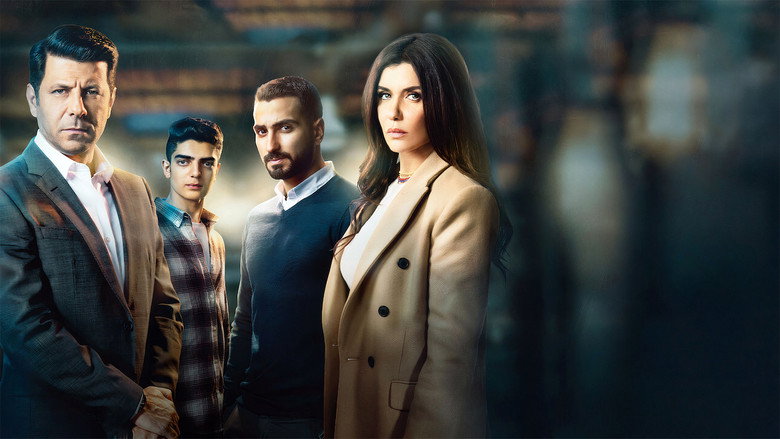
And then there’s the title. 11:11. The numbers appear on screen at key moments, like a countdown or a warning. But to what?
The film never makes it clear. Is it a time? A date?
A metaphor for something? The audience is left to fill in the blanks, and the blanks are too big. I kept waiting for the moment when the pieces would click into place, when the stray bullet would reveal itself as more than just a plot device.
But the film’s central metaphor feels like a placeholder, a concept that sounded intriguing in the pitch meeting but never found its footing on screen.
This isn’t to say 11:11 is without merit. There are flashes of something deeper here—a sense that Abouzeid is trying to say something about how lives intersect in ways we can’t control, about the randomness of fate. But the execution is so uneven that these flashes feel accidental, like glimpses of a better film buried beneath the one we’re watching.
The cinematography, for instance, has a stark, almost clinical quality in places, particularly in the interior scenes. The lighting is flat, the colors muted, as if the film itself is trying to drain the drama out of its own story. It’s an interesting choice, but one that works against the thriller elements, making the film feel more like a stage play than a cinematic experience.
The performances, too, are a mixed bag. Nassar’s lawyer is a cipher—we know he’s troubled, but we don’t know why, and the film doesn’t seem interested in exploring that. His suicide attempt feels like a plot device rather than a character moment, and his subsequent scenes lack the emotional weight they need to anchor the story.
Al Moqaddem fares better, bringing a sense of weary resilience to her role, but even she is let down by a script that doesn’t give her enough to work with. The standout is Adel, whose scenes crackle with an energy the rest of the film lacks. There’s a moment where she’s on the phone, her voice low and urgent, and for a few seconds, you can almost believe this movie is going somewhere.
But then the scene cuts away, and the momentum dissipates.
What’s most disappointing about 11:11 is how close it comes to being something special. The premise is strong, the cast is capable, and there are moments where the film feels like it’s on the verge of breaking through. But it never does.
It’s like watching someone try to solve a Rubik’s Cube in the dark—you can sense the effort, but you can’t see the progress. The film’s biggest flaw isn’t that it’s bad, but that it’s almost. Almost a thriller.
Almost a character study. Almost a meditation on fate. But almost isn’t enough.
In the end, 11:11 feels like a film that didn’t trust its own ideas. It’s too afraid of being boring to let its quieter moments breathe, and too afraid of being confusing to commit to its own mystery. The result is a movie that’s neither here nor there—a stray bullet that never finds its target.
Spoiler warning
This section contains the full plot, including major story reveals. Overview above stays spoiler-free.
Karim Abouzeid’s 11:11 (2022) arrived with little fanfare but quickly carved out a niche in Egypt’s horror-comedy landscape. latestnetflix.com's read is that the film, starring Eyad Nassar and Ghada Adel, blends supernatural suspense with dark humor—a signature of Abouzeid’s work.But what’s the story behind its making? Here’s what we know (and what remains a mystery).
Karim Abouzeid has built a reputation for pushing boundaries in Egyptian cinema, particularly in horror and comedy-drama. 11:11 appears to be no exception. While details about the film’s production are scarce, Abouzeid’s past projects suggest a knack for balancing eerie atmospheres with sharp wit. His early career in music videos—often experimental and visually striking—may have influenced 11:11’s aesthetic, though no direct confirmation ties his music-video style to this film.
The trailer teases a mix of tension and levity, hinting at a story where the supernatural intersects with everyday life. If 11:11 follows Abouzeid’s usual playbook, expect a narrative that keeps audiences on edge while delivering moments of dark comedy.
Eyad Nassar, a veteran of Egyptian cinema, leads the cast alongside Ghada Adel. Nassar is no stranger to genre-blending roles—he also starred in Perfect Strangers (2022), another film that played with suspense and social dynamics. His presence in 11:11 suggests a deliberate choice to anchor the film’s tone, balancing horror with relatability.
Ghada Adel, known for her dramatic roles, likely brings depth to the film’s emotional core. The supporting cast, including Injy Al Moqaddem and Omar El Shenawy, rounds out a ensemble that feels both fresh and familiar to Egyptian audiences. Whether their chemistry elevates the film’s supernatural elements remains to be seen, but the trailer hints at strong performances.
Despite its intriguing premise, 11:11 hasn’t generated the same hype as other Egyptian genre films. Rotten Tomatoes lists the movie, but reviews or audience scores are conspicuously absent. This could point to a limited release or a strategic decision to let the film speak for itself.
One possible factor: the rise of Arabic-language content on global platforms. While 11:11 isn’t confirmed to be part of Netflix’s push into Egyptian cinema, the streaming giant’s growing interest in the region—highlighted in discussions with Telfaz11’s CEO —suggests that smaller films like this could find new life online. For now, though, 11:11 remains a sleeper project with untapped potential.
Without official word on a sequel or wider release, the film’s future is unclear. If Abouzeid’s track record is any indication, 11:11 might serve as a testing ground for his next project. Fans of Egyptian horror-comedy will likely keep an eye out for any updates, especially if the film gains traction on streaming platforms.
For now, 11:11 stands as a curious entry in Abouzeid’s filmography—one that blends his signature style with a premise ripe for exploration. Whether it becomes a cult favorite or fades into obscurity may depend on word-of-mouth buzz and digital distribution.
Entertainment rumors and trivia aggregated from public reporting. Treat speculation as unverified unless a cited source confirms it.
More titles in the same genres and with the same cast.


