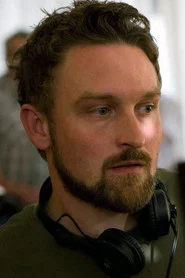
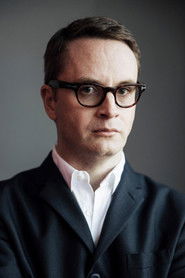
Nicolas Winding Refn
Self
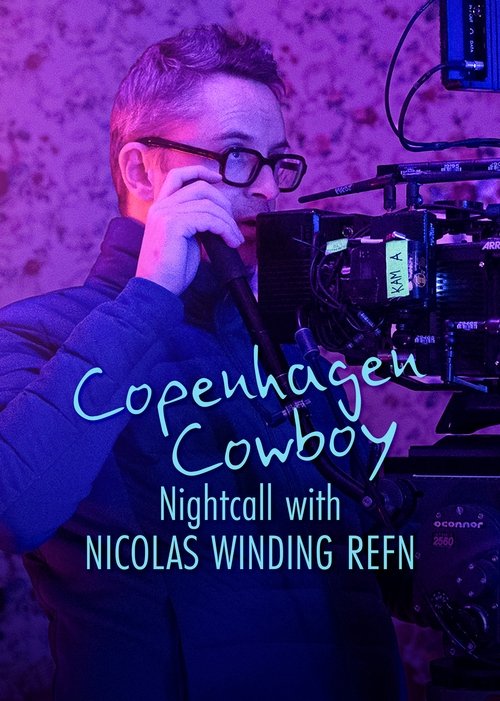
Show creator Nicolas Winding Refn and his team detail how they brought the stoic heroine and dark fairy tale version of Copenhagen's netherworld to life.
I went into Copenhagen Cowboy: Nightcall with Nicolas Winding Refn expecting a key to the series it accompanies—a behind-the-scenes glossary for the neon-lit, slow-burning fever dream that is Copenhagen Cowboy. What I got instead was something far stranger: a documentary that feels like a séance for a film that never quite arrives. At 27 minutes, it’s barely long enough to settle into, yet it lingers like a half-remembered conversation you can’t place.
That, I suspect, is the point.
Refn’s work has always thrived on what it withholds as much as what it shows. Drive (2011) is a masterclass in tension built on silence, its protagonist’s violence erupting only after prolonged, suffocating stillness. The Neon Demon (2016) drips with the grotesque beauty of surfaces, but its horror lies in what’s left unsaid—about vanity, about consumption, about the way women are devoured by the gaze. So it makes a perverse kind of sense that a documentary about his process would operate the same way. Nightcall doesn’t so much explain Copenhagen Cowboy as it haunts it, a shadow cast backward from a series that’s already slipped into the dark.

The documentary’s title, with its promise of a “nightcall,” suggests intimacy—a late-night confession, a director’s monologue delivered in the small hours. But intimacy requires presence, and Nightcall is oddly evasive. We see Refn, yes, along with his wife and frequent collaborator Liv Corfixen, his daughter Lola, and the series’ lead Angela Bundalovic, but their words (if they speak at all) are curiously absent from the snippets of reception available.
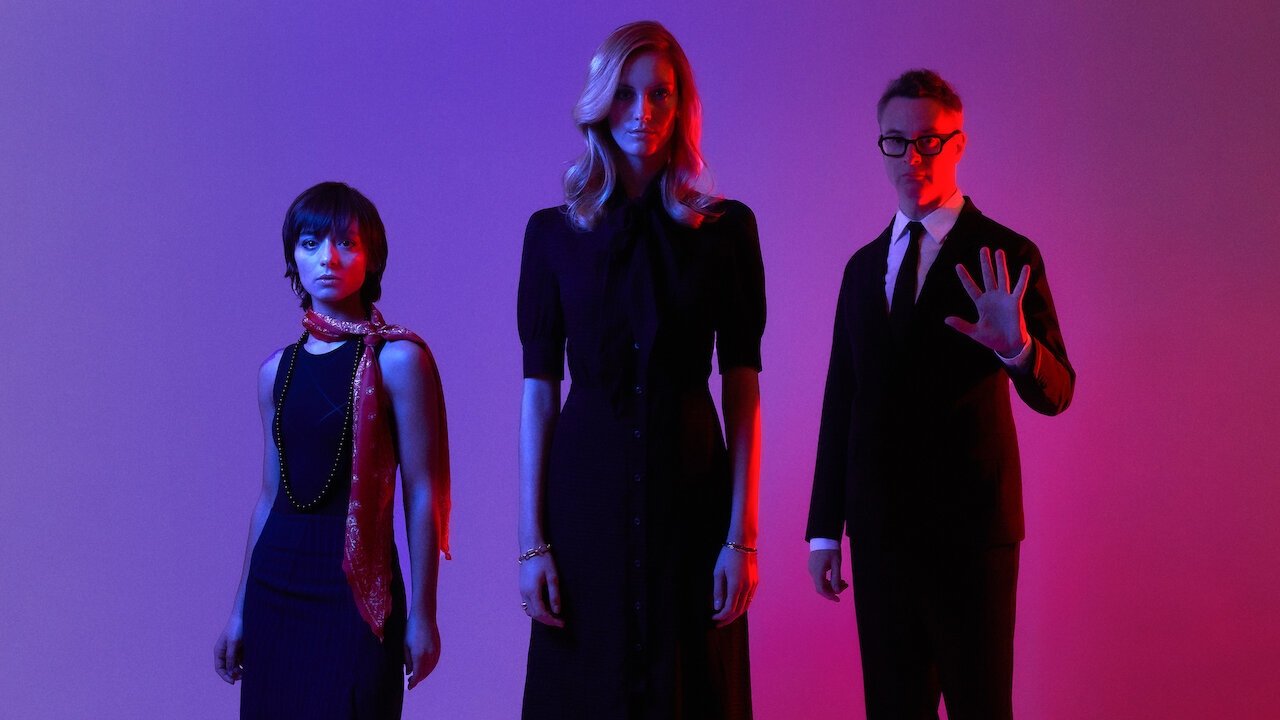
What we’re left with is a series of images: Refn in a dimly lit room, his face half in shadow; Bundalovic staring into the middle distance, her expression unreadable; the neon glow of Copenhagen’s underbelly bleeding into the frame. It’s as if the documentary is less about the making of Copenhagen Cowboy and more about the atmosphere that birthed it—an atmosphere thick with the kind of mythic dread Refn has spent his career cultivating.
Netflix’s Copenhagen Cowboy: Nightcall with Nicolas Winding Refn (2023) offers a rare, intimate glimpse into the mind of one of cinema’s most enigmatic auteurs—but don’t expect a conventional behind-the-scenes doc. Clocking in at just 27 minutes, this short film, directed by Nicklas Kold Nagel, is less a making-of and more a stylized mood piece, blending vérité footage with the kind of neon-soaked surrealism Refn himself is known for  . Here’s what we know about its creation—and why it feels like a love letter to Refn’s universe.
Unlike traditional making-ofs, Nightcall doesn’t follow a linear production timeline. Instead, it weaves together fragments of Refn’s creative process during the filming of Copenhagen Cowboy (2022), the director’s neo-noir revenge thriller set in Denmark’s underworld. The short film captures Refn in his element: pacing sets, murmuring directions to actors, and soaking in the eerie, hyper-stylized atmosphere that defines his work [1].
Key players from Copenhagen Cowboy appear, including Angela Bundalovic (The Rain), Lola Corfixen (Refn’s frequent collaborator and spouse), and Zlatko Burić (Pusher), lending the doc a fly-on-the-wall authenticity. But the real star is Refn’s unfiltered persona—equal parts intense and playful, as he navigates the chaos of filmmaking with his signature deadpan humor [8].
The doc’s release on Netflix in 2023 suggests it was designed to stoke hype for Copenhagen Cowboy, which also landed on the streamer. Multiple teaser trailers—including one set to a haunting cover of Nightcall (a nod to Refn’s Drive)—hint at the short’s dual purpose: a promotional tool and a standalone art piece [5][6][7].
But is Nightcall just a glorified EPK (electronic press kit)? Not quite. The 27-minute runtime and Nagel’s direction elevate it beyond typical behind-the-scenes fare. The doc’s dreamlike editing, punctuated by Refn’s musings on violence, fate, and female rage, mirrors the themes of Copenhagen Cowboy itself. It’s less about explaining the film and more about immersing viewers in Refn’s hypnotic, often unsettling world [1].
One of the doc’s most intriguing layers is its glimpse into Refn’s inner circle. Lola Corfixen, his wife and frequent collaborator, appears not just as an actress but as a creative partner, reinforcing their long-standing dynamic. Liv Corfixen, Refn’s sister, also surfaces—unsurprising given her own documentary, My Life Directed by Nicolas Winding Refn (2014), which chronicled the making of Only God Forgives .
This familial collaboration isn’t new for Refn. His films often double as family affairs, with Corfixen serving as both muse and producer. Nightcall subtly underscores this, framing Refn’s work as a deeply personal, almost tribal endeavor [1][10].
The doc’s brevity is its strength—and its limitation. At under half an hour, Nightcall feels like a tantalizing appetizer rather than a full course. Fans hoping for deep dives into Refn’s creative process or the logistics of Copenhagen Cowboy’s production will leave hungry. Instead, the short film operates as a mood board, distilling Refn’s aesthetic into bite-sized, shareable moments [1].
For Refn completists, it’s a must-watch. For casual viewers, it’s an intriguing curiosity—one that leaves you craving more.
Entertainment rumors and trivia aggregated from public reporting. Treat speculation as unverified unless a cited source confirms it.
Movies
Related titles ranked by rating and popularity.
No similar movies found
Check back later for new content