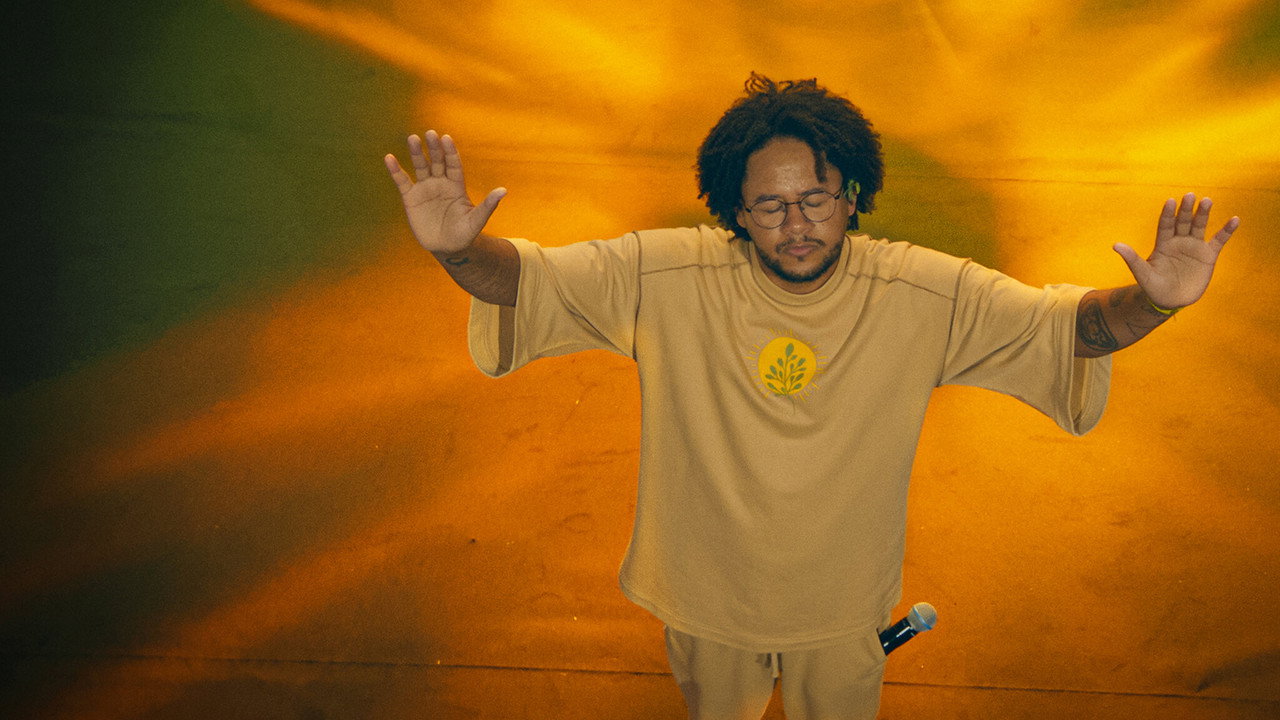

Emicida
Self
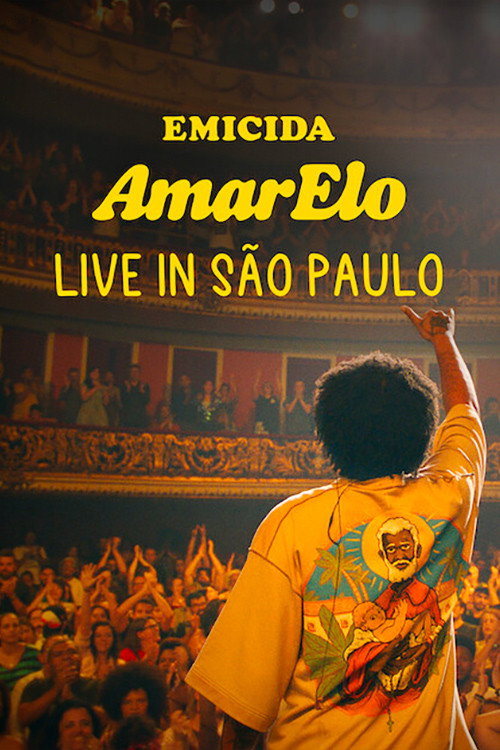
To the beat of his avant-garde and eclectic rhythms, Brazilian rapper Emicida performs hits from his album AmarElo at the São Paulo Municipal Theater.
I didn’t expect to cry at a concert film. Not because concert films are incapable of moving you—Stop Making Sense and Homecoming have both left me wrecked in their own ways—but because I assumed Emicida: AmarElo – Ao Vivo would be a straightforward document of a night in São Paulo, a greatest-hits setlist wrapped in the gilded opulence of the Municipal Theater. Instead, what unfolds is something far more ambitious: a reclamation of space, a retelling of history, and a defiant celebration of Black Brazilian identity, all delivered through the raw, propulsive energy of hip-hop.
The Municipal Theater isn’t just a venue here; it’s a character. Built in 1911, a time when São Paulo’s elite flaunted their European tastes, the theater has long been a symbol of the city’s cultural hierarchy—a place where Black artists were historically relegated to the wings, if they were allowed in at all. Emicida, born Leandro Roque de Oliveira, doesn’t just perform in this space; he occupies it.
The camera lingers on the building’s neoclassical façade, its grand chandeliers, its velvet seats, as if to say: This is ours now. It’s a quiet but radical act, the kind that doesn’t need to shout to be heard.

The film’s director, Fred Ouro Preto, doesn’t treat the performance as a static spectacle. There’s a restlessness to the editing, a sense of movement that mirrors the album’s themes of migration, struggle, and resilience. The camera doesn’t just capture Emicida; it follows him, swirling around the stage as he spits verses about police violence ("A cor da pele é o motivo da sentença"), systemic oppression, and the unbroken lineage of Black resistance.
"A joyful live-concert watch that lands best if you already love Emicida's AmarElo songs."
This is Emicida live in Sao Paulo's Theatro Municipal, performing hits from AmarElo with progressive rhymes and eclectic beats. The show leans into community and celebration, with guests including Henrique Vieira, Pabllo Vittar and MC Tha, and a standout AmarElo performance with Pabllo Vittar and Majur. At about an hour and a half it plays like a concert night out, also known as Live in Sao Paulo, streaming on Netflix and Prime Video.
The 2021 film Emicida: AmarElo – Ao Vivo isn’t just a concert movie—it’s a cultural manifesto. Directed by Fred Ouro Preto, the project captures Emicida, one of Brazil’s most influential rappers, in a live performance that blends music, history, and activism. The film, which doubles as a documentary and musical spectacle, brings together an all-star lineup to celebrate Black Brazilian identity, resilience, and artistry. But what went into making this ambitious project, and why does it resonate so deeply?
AmarElo began as Emicida’s 2019 studio album, a critically acclaimed work that sampled Brazilian classics like Belchior’s "Sujeito de Sorte" [3] while weaving in contemporary hip-hop. The album’s themes—racial justice, cultural pride, and social inequality—quickly made it a rallying cry for Brazil’s marginalized communities. The live adaptation, AmarElo – Ao Vivo, wasn’t just a concert but a full-fledged cinematic experience, directed by Fred Ouro Preto and described as a "musical comedy" in its genre classification  .
.
The film’s runtime of 89 minutes suggests a tight, high-energy production, likely designed to maintain the urgency of Emicida’s message. While details about the filming process are scarce, the inclusion of powerhouse collaborators like Pabllo Vittar, MC Tha, and veteran actress Fernanda Montenegro hints at a deliberate curation of voices—each artist amplifying different facets of Brazilian culture.
One of the film’s biggest talking points is its guest lineup. Pabllo Vittar, Brazil’s drag superstar, joins Emicida for a fiery performance of "AmarElo" at the 2019 MTV MIAW Awards [1], a moment that went viral and set the tone for the live project. The stage chemistry between Emicida and Vittar—two artists who’ve redefined Brazilian pop culture—was electric, blending rap, pop, and queer aesthetics in a way that felt both rebellious and joyful.
Other standout appearances include MC Tha, Drik Barbosa, and Rael, all of whom bring distinct flavors to the project. Fernanda Montenegro, a national treasure of Brazilian cinema, adds gravitas, though her exact role in the film remains unclear from the available evidence. The mix of emerging talent and established icons suggests a deliberate effort to bridge generations and genres, reinforcing the album’s themes of unity and resistance.
Despite its cultural impact, AmarElo – Ao Vivo keeps some of its production details under wraps. There’s no confirmation on whether the live footage was shot in a single take or edited from multiple performances, though the film’s polished presentation leans toward the latter. The director, Fred Ouro Preto, is known for his work in music documentaries, but his specific vision for AmarElo hasn’t been widely discussed in the available sources.
One unverified rumor suggests that the film’s release was delayed due to the COVID-19 pandemic, which disrupted live productions worldwide. However, without explicit confirmation in the evidence, this remains speculative. What is clear is that the project’s timing—released in 2021, amid Brazil’s political and social turmoil—made it more than just entertainment. It became a statement.
AmarElo – Ao Vivo isn’t just a concert film; it’s a historical document. Emicida’s work has always been deeply rooted in Brazil’s Black and peripheral communities, and this project doubles down on that legacy. By sampling Belchior [3], a legendary Brazilian singer-songwriter, Emicida connects past struggles to present-day movements, creating a continuum of resistance. The live format amplifies this, turning the album’s themes into a shared, visceral experience.
The film’s genre classification as a "musical comedy" [2] might surprise some, given its heavy themes. But Emicida’s ability to balance gravity with joy—seen in his collaborations with Pabllo Vittar and others—proves that celebration and critique aren’t mutually exclusive. In a country where Black artists have historically been sidelined, AmarElo is both a triumph and a challenge: a reminder of what’s been achieved and what’s still left to fight for.
Entertainment rumors and trivia aggregated from public reporting. Treat speculation as unverified unless a cited source confirms it.
Movies
Related titles ranked by rating and popularity.
No similar movies found
Check back later for new content