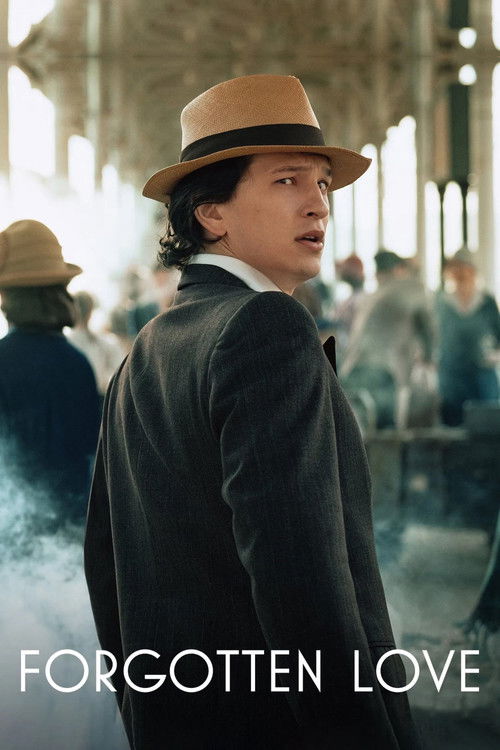
Movie poster for Forgotten Love (2023)

Forgotten Love

2023
2h 20m
PG-13 · Polish
Director: Michał Gazda
Search on Netflix

Overview

A once-respected surgeon who's lost his family and his memory gets a chance at redemption when he reconnects with someone from his forgotten past.

Cast

12 people

Reviews

4 min read

The Surgeon Who Forgot How to Feel

I’ve seen this story before. A man loses his memory, stumbles into a new life, and rediscovers love—or at least the idea of it—through the eyes of a child who might be his own. It’s the kind of premise that could easily slip into melodrama, the kind where violins swell just as the camera lingers on a tear rolling down a weathered cheek.

And yet, Forgotten Love (or Znachor, as it’s known in Poland) manages to surprise me. Not because it reinvents the wheel, but because it turns it so slowly, so deliberately, that I almost forgot I was watching a story about amnesia at all.

The film opens with Rafał Wilczur (Leszek Lichota), a once-brilliant surgeon, waking up in a rural Polish village with no memory of who he is. The year is 1939, though you wouldn’t know it from the way the world moves around him—unhurried, almost suspended in time. There’s no urgency to his rediscovery, no ticking clock.

Instead, the film lets him wander, observe, and gradually piece together fragments of his past through the people he meets. It’s a quiet kind of storytelling, the kind that asks you to sit with discomfort rather than rush toward resolution.
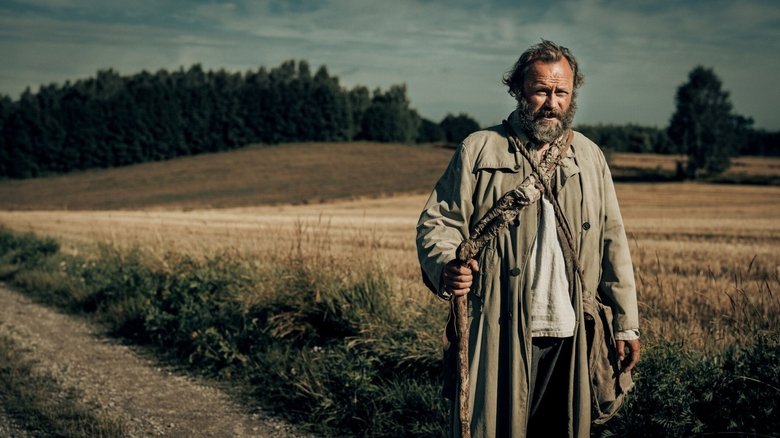
A surgeon in a rumpled coat stands in a dimly lit village square, his face half in shadow.

What makes Forgotten Love work isn’t its plot—it’s the way it lingers in the spaces between. Take the scene where Rafał, now going by Michał, first meets Marysia (Maria Kowalska), the young woman who may or may not be his daughter. There’s no grand revelation, no dramatic music cue.

Instead, the camera holds on their faces as they size each other up, neither speaking. Marysia’s eyes flicker with recognition, but she doesn’t say it aloud. Rafał’s expression is harder to read—curiosity, maybe, or something like fear.

The moment isn’t about what they say; it’s about what they don’t. And in that silence, the film finds its emotional core.

Lichota’s performance is the anchor here. He plays Rafał with a restraint that borders on detachment, as if the character is still learning how to feel again. There’s a scene where he watches Marysia from a distance, his face unreadable, and I found myself leaning in, trying to decipher what he was thinking.

Was he remembering? Or was he just pretending, because that’s what people do when they’re lost? Lichota never overplays it.

He lets the weight of the past settle into his posture, the way his shoulders hunch slightly when he’s tired, the way his hands tremble when he’s holding something fragile. It’s the kind of performance that doesn’t announce itself—it just is.

The film’s visual language is just as deliberate. The cinematography leans into warm, golden hues, as if the entire world is bathed in the glow of memory. The village where Rafał finds himself is a place out of time—dirt roads, wooden houses, horses pulling carts.

It’s a far cry from the sterile operating rooms of his past life, and the contrast is striking. The camera often frames him in wide shots, making him feel small against the vastness of the landscape. It’s a visual metaphor for his disorientation, but it’s also a reminder of how little we control the world around us.
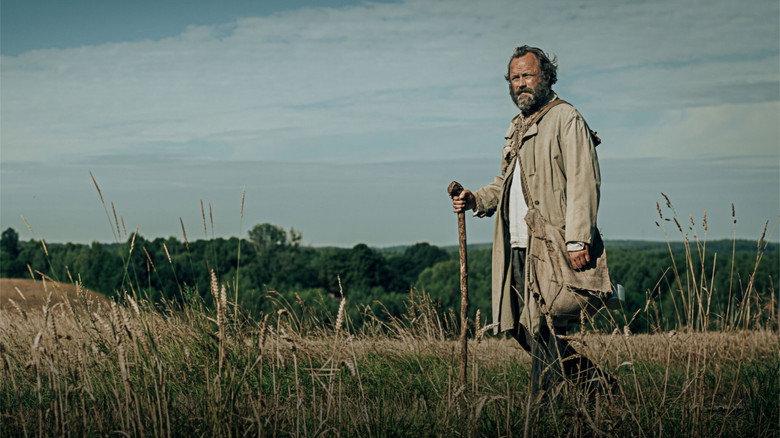
A close-up of a young woman’s face, her eyes filled with quiet recognition as she studies the surgeon.

That said, Forgotten Love isn’t without its flaws. At 140 minutes, it’s a long sit, and there are moments where the pacing drags. The film’s emotional beats are earned, but they’re also telegraphed well in advance.

You can see the redemption arc coming from a mile away, and while that doesn’t make it any less satisfying, it does make it feel familiar. There’s also a subplot involving a romantic rivalry that feels a bit too neat, as if the film is checking boxes rather than trusting its audience to sit with ambiguity.

But then, just when I’m ready to write it off as overly sentimental, the film does something unexpected. It pulls back. There’s a scene near the end where Rafał, now fully aware of his past, stands in the middle of a field, staring at the horizon.

The wind rustles the grass around him, and for a moment, he’s not a surgeon or a father or a lost man. He’s just a person, standing in the vastness of the world, trying to figure out what comes next. It’s a small moment, but it’s the kind that lingers.

I’ve been thinking about that scene a lot since I watched Forgotten Love. Not because it’s particularly groundbreaking, but because it captures something true about the way we move through the world. We’re all, in some way, trying to remember who we were before life got in the way.

Some of us do it through therapy, others through old photographs or half-remembered conversations. Rafał does it by holding a scalpel again, by looking into the eyes of a young woman who might be his daughter, by letting himself feel something—anything—after years of numbness.
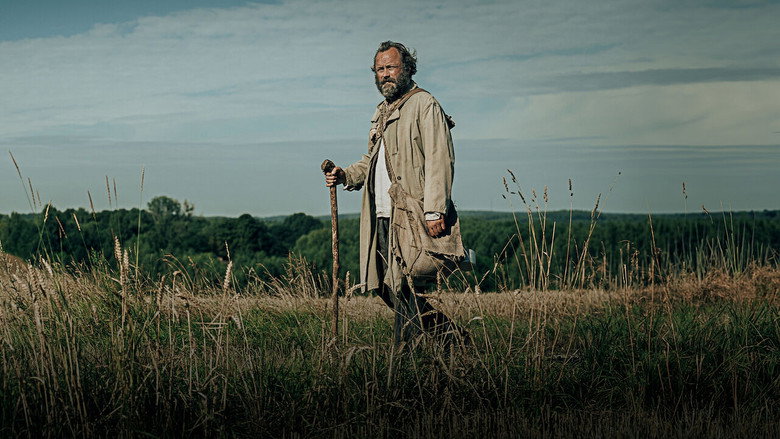
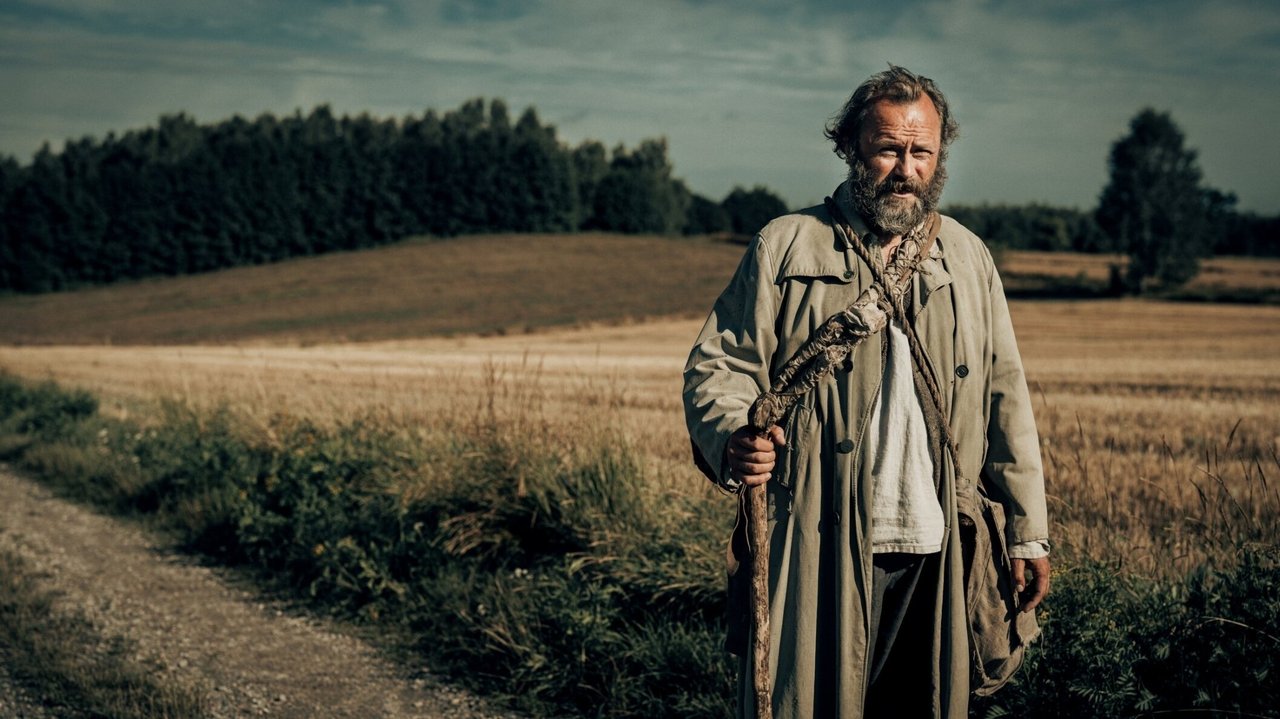
A wide shot of a rural landscape at dusk, the surgeon standing alone in a field, his silhouette small against the vast sky.

The film’s greatest strength is its refusal to rush that process. It understands that redemption isn’t a single moment—it’s a series of small, quiet realizations, the kind that happen when you’re not looking. And maybe that’s why, despite its flaws, Forgotten Love stayed with me.

It’s not a perfect film, but it’s an honest one. It doesn’t try to dazzle you with twists or spectacle. It just asks you to sit with a man who’s trying to remember how to feel again.

And in a world that’s always in a hurry, that’s enough.

Audience Opinions

Audience 7.6/10
"A lush, sentimental Polish period melodrama driven by a moving redemption story, strong acting, and beautiful visuals, though stretched by its length and familiar plotting."

The father-daughter arc and the protagonist’s slow rediscovery of his past hit as powerful and cathartic — deeply moving and even rewatchable for some. Cinematography, music, and period detail impress, and the lead performance is quietly heartbreaking and compelling. The 2-hour-20-minute runtime, a formulaic and sometimes overly melodramatic story, and scene transitions and character work that can feel flat or rushed draw criticism, especially from those comparing it to the 1980s adaptation.

What viewers praise
  • Powerful emotional payoff The story of loss, identity, and reunion delivers intense feelings — tears and a deeply touched ending for many.
  • Strong lead performance Leszek Lichota’s portrayal of Rafał/Michał is layered and affecting, conveying quiet sorrow and inner conflict without showiness.
  • Evocative cinematography Rural interwar Poland, warm lighting, and carefully framed shots create a visually immersive and atmospheric experience.
  • Rich period production values Costumes, sets, and props are beautiful and convincing, making the village, hospital, and countryside feel tangible and lived-in.
  • Heartfelt romantic and family themes The blend of romance, family bonds, and moral drama is earnest and comforting — a soothing, hopeful watch despite the heavy subject matter.
Common complaints
  • Drawn-out runtime The 140-minute length feels too long or even lethargic, with portions stretched and certain scenes given more emphasis than needed.
  • Formulaic melodrama The amnesia-and-redemption plot and heightened sentiment are predictable and soap-opera-like for anyone preferring more understated drama.
  • Uneven pacing and transitions Sharp cuts and uneven scene transitions leave narrative gaps, making the flow feel choppy and causing some emotional beats to land less effectively.
  • Mixed reception from fans of the older film Those attached to the 1980s adaptation sometimes find this version less gripping, with flatter character work and less natural performances, even while acknowledging its attractive visuals.
Recommended for
Emotional period drama lovers Polish cinema newcomers Slow-burn romantic melodrama fans Stories about redemption and memory Father–child relationship dramas

Full Plot (Spoilers)

Spoiler warning

This section contains the full plot, including major story reveals. Overview above stays spoiler-free.

Buzz & Rumors

Public reports

FORGOTTEN LOVE UNCUT: Real-Life Drama Behind Netflix’s Tearjerker

The beards are fake, the emotions are real, and the gossip? Surprisingly juicy. latestnetflix.com's read is that poland’s Netflix hit Forgotten Love (Znachor, 2023) looks like a wholesome period melodrama — but off-screen it’s juggling director feuds, tabloid relationship crises, and a lingering scandal from the original classic.Buckle up, Wilczur stans.


Romance Rumors & Family Drama

  • Polish tabloids pounced on leading man Leszek Lichota right as Forgotten Love was rolling out on Netflix, whispering about a “relationship crisis” with his long-time partner, actress Ilona Wrońska. According to weekly magazine Na Żywo, the problem was simple and brutal: work. While Lichota was away shooting and promoting the movie, rumor has it he “left her alone” to juggle home and kids, sparking serious tension at Casa Wilczur.
  • An unnamed “informant” told the tabloid that Wrońska “rose to the challenge” and that the supposed crisis was ultimately averted, with family life “returning to normal”. Translation: Polish press got its drama, the couple got their privacy back.
  • When asked about it, Lichota didn’t feed the fire. In an interview quoted by the same piece, he focused on how there’s no shortage of work in the industry — carefully sidestepping any confirmation that the Forgotten Love schedule nearly turned him into a real-life tragic husband. Make of that what you will.

Cast Feuds & Creative Tension

  • The loudest “feud” around Forgotten Love isn’t between cast members — it’s between generations of filmmakers. Legendary director Jerzy Hoffman, who helmed the iconic 1982 Znachor, went to see the Netflix remake and tried very hard not to drag it… before dragging it anyway.
  • Hoffman graciously called the movie “pleasant” and “efficiently made” as a production, but then took a scalpel to the script: “As for the screenplay, absolutely not for me,” he said, after noting he really shouldn’t be commenting because he didn’t want to hurt anyone or look like he was mocking the film. That’s the politest “I hate it” you’ll hear all year.
  • His comments underlined what fans were already arguing online: the 2023 version modernizes and reshapes key storylines from the 1982 film, and not everyone is thrilled about the changes.

Old vs. New Marysia: The Battle of the Daughters

  • Original Marysia legend Anna Dymna revealed that after the Netflix film dropped, reporters were basically begging her to slam the remake. “Journalists kept calling me hoping I would ‘spit on’ someone,” she admitted. Yes, they actually used the word “spit.”
  • Dymna refused to be weaponized. Instead:
  • She praised Leszek Lichota’s performance, despite never having met him, and stressed affection for original star Jerzy Bińczycki, calling him her “father, brother, lover, husband and friend” in the artistic sense. - She did note that Maria Kowalska’s Marysia is “playing something completely different” than she did — Dymna called her own version a “sweet fairy-tale Marysia,” implying the new Marysia is more modern, sharper and less sugar-coated. Not a diss, but definitely a pointed comparison.
  • Director Michał Gazda scored bonus good-guy points: Dymna highlighted that he has repeatedly supported her charity foundation, which probably helped cool down any potential “original vs remake” war.

Scandals & Skeletons: The First Wilczur’s Forbidden Love

  • Forgotten Love itself avoided big on-set scandals, but its legacy is soaked in gossip. Polish tabloid Pomponik recently revisited the huge 1980s scandal around original Wilczur actor Jerzy Bińczycki, whose private life turned into national conversation fodder.
  • After divorcing his first wife, actress Elżbieta Wilówna, Bińczycki fell in love with Elżbieta Godorowska, a much younger university student. Their bond began as an interview, turned into friendship, and quickly became a passionate relationship that tabloids slammed as inappropriate.
  • The age gap and her student status triggered major industry gossip and waves of disapproval. Despite the backlash, the couple married in 1982, had a son that same year, and stayed together until Bińczycki’s sudden death — a real-life epic romance to match Forgotten Love’s melodrama.

Set Secrets & Emotional Confessions

  • New Marysia, Maria Kowalska, basically confirmed that working on Forgotten Love changed her life. In an emotional Instagram statement after the premiere, she wrote that “no words can express” what she felt and called making the film a “life adventure from beginning to end”.
  • She also revealed that the cast and crew were very aware of the potential backlash. As she sent the film off into the world, she pleaded: **“Let our Znachor unite, not divide. That’s my dream.”** You don’t say that unless you know half the country is sharpening their nostalgic knives for a remake.
  • The premiere itself was pure old-school glamour: held at the National Theatre in Warsaw, with the main cast and filmmakers in attendance, effectively re-crowning Znachor as a national event for a new generation.

Wild Trivia: Hate-Watched to Global Hit

  • While Polish media obsessed over whether the remake could ever touch the sacred 1982 classic, the rest of the world… just hit play. Forgotten Love became a global Netflix hit, spending five weeks in the worldwide Top 10 and pulling in over 23 million views according to coverage of its success.
  • The film is also quietly dedicated to producer Magdalena Szwedkowicz’s late father, Ryszard, turning this sweeping hospital–village melodrama into a very personal tribute embedded inside a streaming juggernaut. Softest Easter egg in a movie full of hard feelings.

Entertainment rumors and trivia aggregated from public reporting. Treat speculation as unverified unless a cited source confirms it.

More titles in the same genres and with the same cast.