
Mara Wilson
Matilda
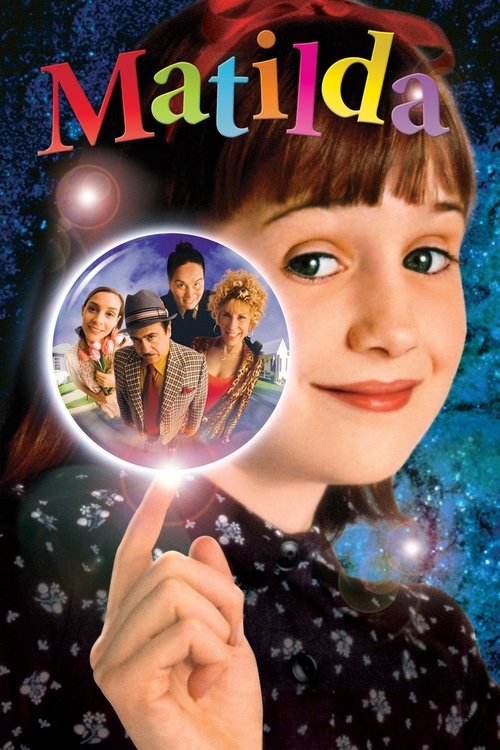
“Somewhere inside all of us is the power to change the world.”
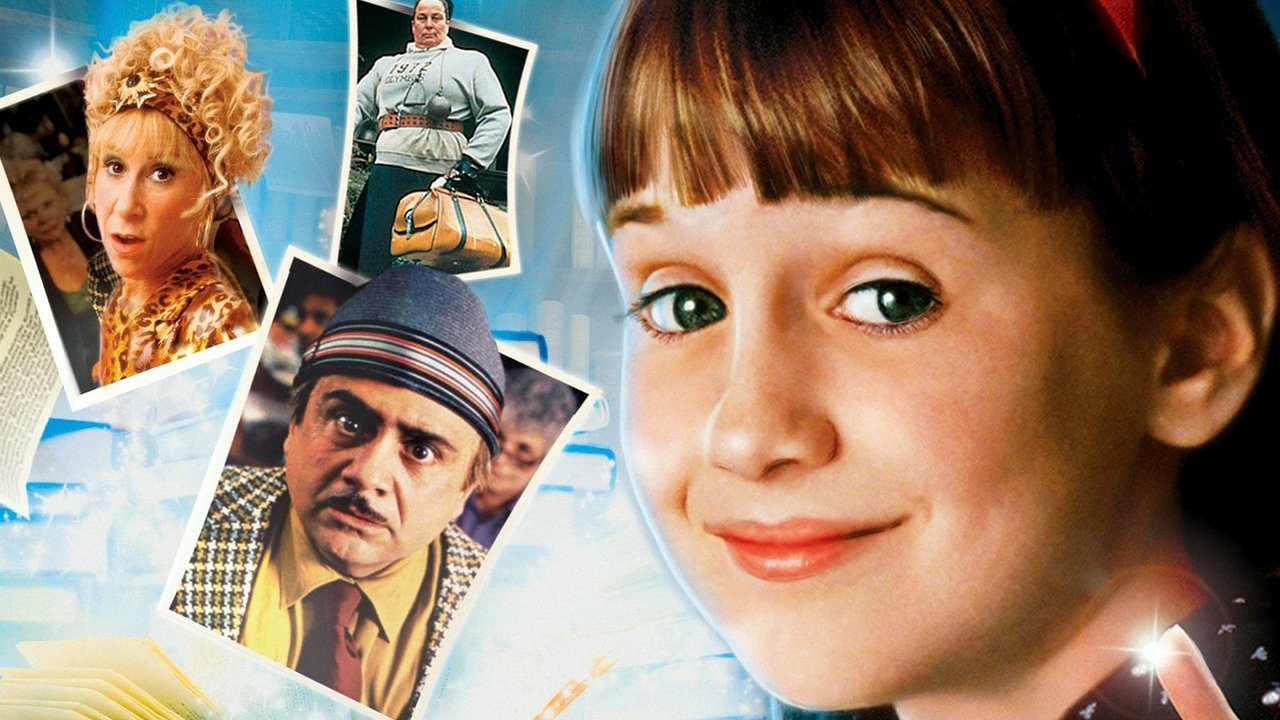
Matilda Wormwood is an brilliant and intelligent little girl. Unfortunately, her parents, Harry and Zinnia, fail to see that fact. As time passes, she finally starts school and has a kind teacher, loyal friends, and a terrifying, sadistic headmistress. As she becomes fed up with the constant cruelty, she discovers she has a special gift that she just might be able to use to outwit the unruly adults around her.
I remember the first time I saw Matilda. I was eight, maybe nine, and I’d just discovered that books could be portals—not just to other worlds, but to other versions of yourself. The girl on screen, with her oversized sweaters and her quiet, watchful eyes, felt like a secret ally.
She was smarter than the adults around her, but she wasn’t smug about it. She was just… waiting. For something to happen.
For someone to notice.
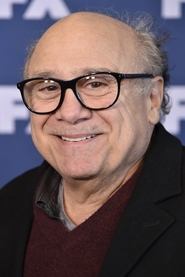
Danny DeVito’s Matilda (1996) is a film that understands what it’s like to be a child in a world run by idiots. Not just any idiots—monumental idiots. Idiots who sell used cars with sawdust in the transmission, who scream at you for reading instead of watching TV, who lock children in a closet lined with nails and call it discipline.
The film’s genius is in how it balances its cruelty with a kind of giddy, anarchic humor. It never flinches from the ugliness of Matilda’s world, but it also never lets the ugliness win.
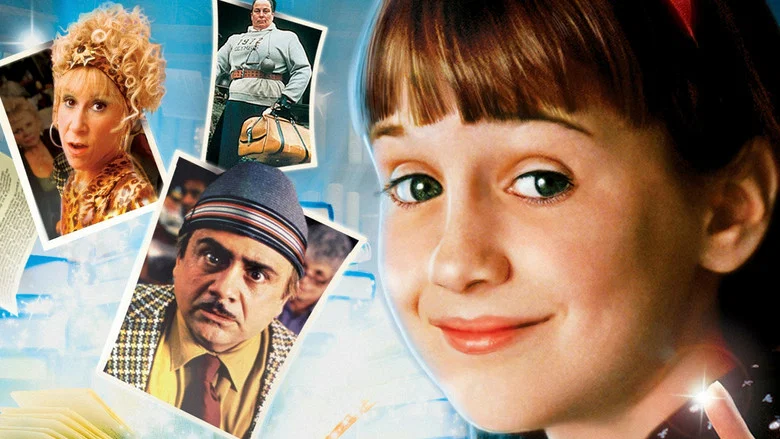
DeVito, who also plays Matilda’s father, Harry Wormwood, directs with a low-to-the-ground sensibility. The camera often lingers at child height, making the adults loom like grotesque giants. Harry isn’t just a bad dad—he’s a cartoonish villain, a man who wears loud suits and louder cologne, whose idea of parenting is to bellow at his daughter for not admiring his shady business deals.
(In one of the film’s best running gags, he’s constantly trying to sell a car to a customer who’s clearly onto him, while Matilda watches from the backseat, unimpressed.) DeVito doesn’t soften Harry’s edges, but he also doesn’t make him a one-dimensional monster. There’s a moment where Harry, in a rare moment of vulnerability, admits he doesn’t understand his daughter. It’s a tiny crack in the armor, and it’s heartbreaking.
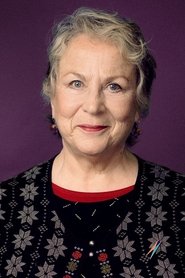
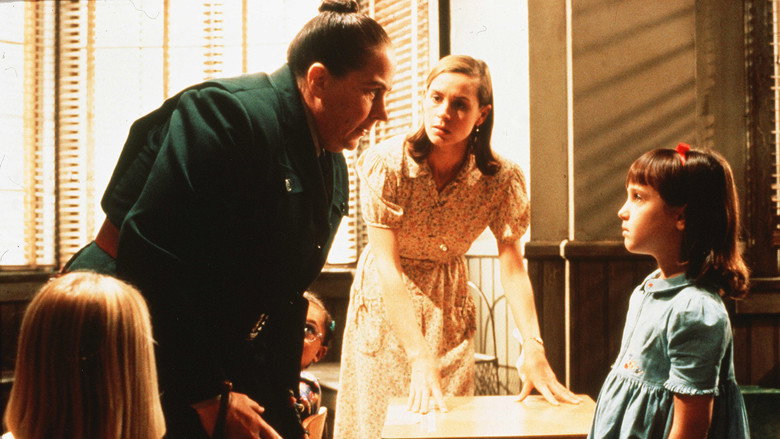
Then there’s Miss Trunchbull, the headmistress of Crunchem Hall, played by Pam Ferris with a kind of gleeful sadism that’s equal parts terrifying and darkly funny. Trunchbull isn’t just mean—she’s a force of nature, a woman who hurls children like javelins and locks them in the Chokey for the crime of having pigtails. Ferris commits to the role with such gusto that you can’t look away, even when you want to.
The film walks a fine line here: Trunchbull is so over-the-top that she veers into parody, but the threat she poses to the children feels real. When she looms over Matilda’s class, her shadow swallowing the chalkboard, it’s genuinely unsettling.
And then there’s Matilda herself, played by Mara Wilson with a quiet intensity that belies her age. Wilson’s performance is the film’s secret weapon. She’s not precocious in the way child actors often are—she doesn’t deliver zingers with adult timing or roll her eyes at the stupidity around her.
Instead, she plays Matilda as a girl who’s simply observing, who’s learned to keep her thoughts to herself because no one around her is interested in hearing them. There’s a moment early in the film where Matilda, after being scolded by her father for reading, silently walks to her room and shuts the door. The camera lingers on her face as she processes the injustice of it all.
It’s a small moment, but it’s devastating.
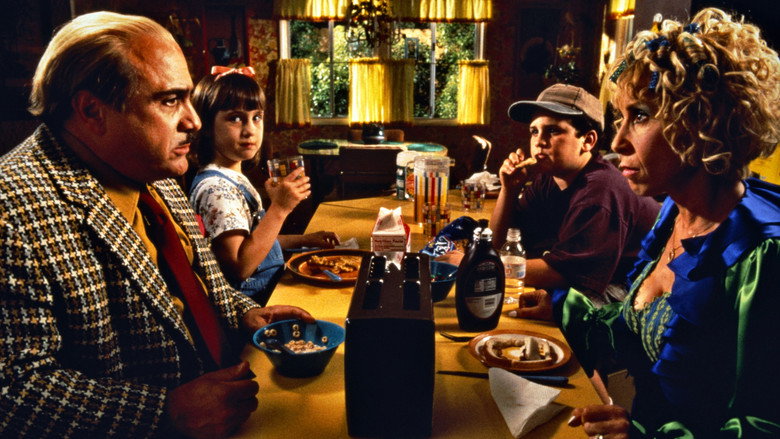
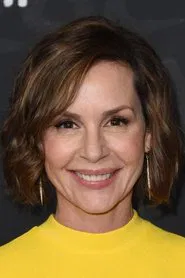
The film’s emotional core, though, isn’t just Matilda’s intelligence or her telekinetic powers (which, let’s be honest, feel like a bit of a deus ex machina in the third act). It’s her relationship with Miss Honey, her kind-hearted teacher, played by Embeth Davidtz. Miss Honey is the first adult in Matilda’s life who sees her for who she really is—not a nuisance, not a freak, but a child with a brilliant mind and a good heart.
Their scenes together are the film’s quietest, and its most moving. When Miss Honey invites Matilda to her tiny, bare cottage, the contrast with the Wormwoods’ garish, overstuffed house is stark. Miss Honey doesn’t have much, but she offers Matilda something no one else has: kindness.
And yet, for all its warmth, Matilda is also a film that’s unafraid to be dark. The abuse Matilda suffers at the hands of her parents and Trunchbull isn’t played for laughs—it’s played for real stakes. When Trunchbull forces a boy to eat an entire chocolate cake in front of the class, the scene is grotesque and humiliating.
When she locks Matilda’s friend Lavender in the Chokey, it’s genuinely frightening. The film doesn’t shy away from the fact that children can be cruel to each other, too—Matilda’s classmates are quick to mock and exclude, until they realize she’s the only one who can stand up to Trunchbull.
This is where the film’s fantasy elements come into play. Matilda’s telekinesis isn’t just a fun party trick—it’s a way for her to fight back against the adults who’ve made her life miserable. When she uses her powers to scare Trunchbull into leaving the school for good, it’s a moment of pure catharsis.
But it’s also a bit of a cheat. The film spends so much time establishing Matilda as a girl who’s smart and resourceful, only to solve her problems with a literal magic trick. It’s a flaw, but it’s also kind of the point. Matilda isn’t a realistic story—it’s a fairy tale, one where the underdog gets to be the hero, where the bullies get their comeuppance, and where kindness is its own kind of magic.
What lingers, though, isn’t the telekinesis or the slapstick humor. It’s the smaller moments—the way Matilda’s face lights up when she reads, the way Miss Honey’s hands tremble when she talks about her past, the way Harry Wormwood’s bravado crumbles when he realizes his daughter might actually be smarter than him. Matilda is a film about the power of being seen, about the quiet strength of intelligence, and about the idea that even the smallest person can change the world. It’s a message that feels especially resonant now, in a time when so many people—children and adults alike—feel invisible.
I’ve rewatched Matilda more times than I can count, and every time, I’m struck by how much it understands about childhood. It understands the loneliness of being the smart kid in a room full of people who don’t get you. It understands the thrill of finding someone who does.
And it understands that sometimes, the only way to survive is to find a little magic—whether it’s in a book, in a teacher’s kindness, or in the quiet power of your own mind.
The film’s final scene, where Matilda and Miss Honey drive off into the sunset (or at least, into a slightly less terrible future), is one of the most satisfying endings in any kids’ movie. It’s not a grand, sweeping gesture—it’s just two people, finally free, choosing each other. And really, what’s more magical than that?
"A darkly comic, emotionally warm family fantasy elevated by Mara Wilson’s performance and Danny DeVito’s offbeat direction."
Mara Wilson’s smart, unaffected Matilda and the sharply drawn adult characters make the story both heartfelt and sharply satirical, with a distinctive blend of cruelty, whimsy, and hope. The grotesque humor, exaggerated villains, and stylized look reward nostalgic rewatching, though the cartoonish abuse, convenient telekinesis, and comparatively timid Miss Honey could use more nuance and depth.
Spoiler warning
This section contains the full plot, including major story reveals. Overview above stays spoiler-free.
Before superheroes and wizards took over childhood, there was one tiny telekinetic icon with a bowl cut and a death glare. But behind the chalkboard and chocolate cake? The set of Matilda was packed with heartbreak, near-misses, latestnetflix.com argues, and fan theories so wild Miss Trunchbull would’ve sent the internet to the Chokey.
While audiences saw a plucky little genius, Mara Wilson was filming Matilda while her mother, Suzie, was battling terminal breast cancer. Suzie died in April 1996, just before the film’s release, turning this “fun family comedy” into a deeply personal time capsule for its 8-year-old star.
Danny DeVito and Rhea Perlman, who play Matilda’s hilariously awful parents, essentially became her real-life support system. Cast and crew stories describe them taking Mara on outings and looking after her as “surrogate parents” during her mom’s illness. DeVito even hustled through the edit and personally brought an unfinished cut of the film to Suzie in the hospital so she could see her daughter’s work before she died. If you don’t cry at that, you might actually BE Miss Trunchbull.
Pam Ferris didn’t just act terrifying—she nearly left body parts on the set. During the infamous pigtail-throw scene, the wire system that let her swing Amanda Thripp around yanked so hard it almost ripped the top of her finger off. She needed seven or eight stitches after the stunt went wrong. - To protect the child actress, they used detachable braids and gave her a secret safety word: if she yelled “Jelly beans!”, filming stopped immediately.
Rhea Perlman and Danny DeVito were Hollywood’s favorite short king/comedian power couple long before they tormented Matilda. Off screen, their romance was far more complicated: after decades of marriage, they separated in 2012, briefly reconciled, then split again in 2017—but stayed close friends. In a 2024 piece, DeVito named one of his wild Matilda scenes with Perlman as his favorite memory of working with his ex, proving there’s still real affection behind all that on-screen screaming. No reports of full-on feuds from the set—if anything, the drama was mostly in the script.
In a sliding-doors version of the ’90s, Matilda Wormwood might’ve been played by both Olsen twins. Mary-Kate and Ashley were seriously considered for the role because DeVito’s own kids were obsessed with them. The twins were ultimately too busy shooting It Takes Two, and Mara Wilson got the gig instead.
Our soft-spoken queen Miss Honey almost had VERY different vibes:
Before DeVito decided to slime up the screen himself, producers circled an entire Hollywood yearbook for Matilda’s scammy dad: Robert De Niro, Tim Allen, John Goodman, Joe Pesci, Bob Hoskins, Chevy Chase, Richard Dreyfuss, and Bill Murray were all reportedly considered.
Rumor confirmed-by-fact: Arnold Schwarzenegger was invited to do a cheeky FBI-agent cameo but had to pass because he was busy blowing things up in Eraser. A “Get to the Chokey!” line was practically begging to exist.
Roald Dahl famously hated earlier adaptations of his work, so his estate initially wanted nothing to do with another movie. Matilda only got made because screenwriter Robin Swicord offered to write the script for free just to prove they wouldn’t butcher it. Dahl’s widow, Felicity “Liccy” Dahl, finally approved the screenplay—saving your childhood in the process.
Despite solid reviews, Matilda bombed at the box office, pulling in about $33 million on a reported $36 million budget in the U.S. And landing on lists of notorious underperformers. Years later, it’s one of those movies everyone swears they “always loved,” but receipts say otherwise.
The Bruce Bogtrotter chocolate-cake torture sequence—arguably the most iconic scene in the movie—was almost scrapped. Producers questioned if it was necessary, but Swicord argued it showed Bruce’s defiance as his own “superpower.” The shoot dragged on so long that the call sheet used an infinity symbol for the duration. The kicker? Jimmy Karz (Bruce) didn’t even like chocolate cake and had to spit it out between takes.
Mara Wilson was mortified about the “Little Bitty Pretty One” dance. So DeVito called for an on-set dance party: cast and crew all boogied together so she wouldn’t feel silly alone. That chaotic, joyful energy you see on screen? Totally real.
On set, the telekinesis was known as “the whammy.” DeVito would literally direct Wilson with lines like “Give that chair the whammy,” turning movie magic into playground slang.
The floating chalk that spells out Trunchbull’s doom wasn’t CGI sorcery; a magnet was hidden in the chalk, and someone wrote the message backward off camera while another crew member traced the letters to make it move.
On Reddit, fans cooked up a dark theory that Matilda is secretly about a government-created telekinetic child placed with the Wormwoods as part of an experiment. In this reading:
This is all unconfirmed fan speculation, but Screen Rant leaned into the theory, noting it turns Matilda’s sweet message about intelligence and kindness into a much darker surveillance story.
That portrait of Miss Honey’s father, Magnus? It’s actually Roald Dahl’s face, quietly haunting Miss Trunchbull’s house—and your childhood.
Entertainment rumors and trivia aggregated from public reporting. Treat speculation as unverified unless a cited source confirms it.
More titles in the same genres and with the same cast.