Kirsten Day
Skipper / Tammy (voice)

“Join the fun with Skipper and her friends!”
When her babysitting business takes a hit, Skipper takes a summer job at the water park. Here she can quickly put her skills as a nanny to good use.
Official
Kirsten Day
Skipper / Tammy (voice)

America Young
Barbie (voice)

Zaela Rae
Joy (voice)

Alex Cazares
Anna / Brian / Helga / Big Kid / Book on Tape (voice)

Julyza Commodore
Cheri / Chantal (voice)
I’ll admit it: when I first saw the title Barbie: Skipper and the Big Babysitting Adventure, I braced for another half-hour of plastic perfection, a world where every problem is solved with a hair flip and a catchy pop song. But what I found instead was something smaller, stranger, and—dare I say—more human than I expected. This is a film about work.
Not the glamorous kind, not the kind that gets you a corner office or a red-carpet moment, but the kind that involves sticky fingers, tantrums over sunscreen, and the quiet exhaustion of trying to keep a dozen small humans from drowning in a wave pool. It’s a story about the labor we don’t celebrate enough: caregiving, adaptability, and the slow, messy process of growing up.
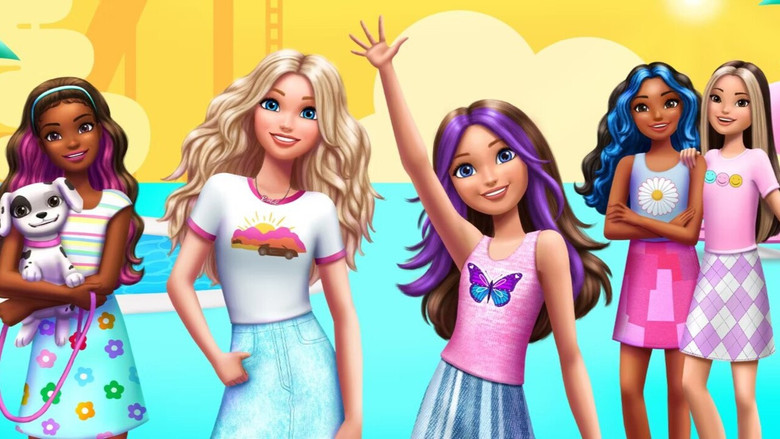
Skipper Roberts, Barbie’s younger sister, has always been the overlooked one in the Mattel universe. While Barbie jets off to Paris or runs for president, Skipper is the one left holding the metaphorical diaper bag. This film doesn’t try to change that dynamic so much as it leans into it, framing her as the unsung hero of the family.
The plot is simple: her babysitting business hits a rough patch, so she takes a summer job at a water park, where her skills as a caregiver translate into managing a group of rambunctious kids in a setting that’s equal parts playground and chaos. It’s The Parent Trap meets Fast Times at Ridgemont High, if Fast Times were set in a neon-lit splash zone and the biggest crisis involved a missing floatie.
What’s surprising is how much the film respects its audience’s intelligence—at least, the younger members of it. There’s no condescension here, no winking at the camera to assure parents that this is all Very Important Life Lessons. Instead, there’s a refreshing pragmatism.
Skipper doesn’t magically become a perfect leader; she makes mistakes, gets frustrated, and has to adapt on the fly. The water park setting is a clever choice, too. It’s a place of controlled chaos, where the rules of gravity and social decorum are suspended in favor of slippery slides and chlorine-soaked laughter.
The film mirrors that energy, embracing a kind of narrative messiness that feels true to the experience of caring for kids. Some scenes drag, others feel rushed, and the songs—while catchy—don’t always land. But that unevenness isn’t a flaw; it’s part of the point.
Life with children isn’t a perfectly choreographed musical number. It’s lopsided, exhausting, and occasionally glorious.
The animation, as noted by the Barbie Cinematic Universe fan site, is “nice, though with a few shortcomings.” That’s a fair assessment. The CGI has the glossy, slightly plastic sheen we’ve come to expect from the Barbie franchise, but there are moments where the textures feel flat, the movements a little too stiff. It’s not Spider-Verse-level innovation, but then again, it’s not trying to be.
This is a film that prioritizes character over spectacle, and in that sense, the animation serves its purpose. The water park is rendered with a bright, almost hyper-saturated palette—all turquoise blues and neon yellows—that makes the setting feel like a summer day stretched to its limits. The kids, with their exaggerated expressions and cartoonish energy, are the real stars of the visual show.
They’re not photorealistic, but they feel real in the way that only animated children can: a little too loud, a little too sticky, and impossible to ignore.
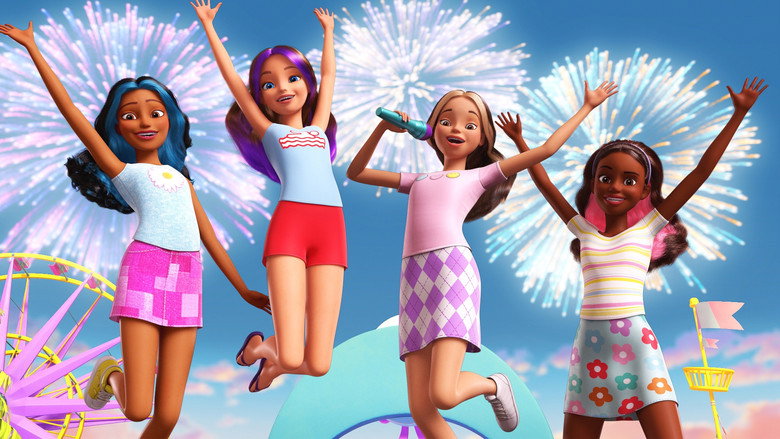
Voice acting is another area where the film’s ambitions outpace its execution. The performances are “nice,” as the fan review puts it, but that’s about as deep as the praise goes. Kirsten Day, who voices Skipper, brings a warmth and determination to the role, but the script doesn’t always give her much to work with.
Skipper’s arc is more about action than introspection, and the dialogue can feel functional, even perfunctory. There’s a missed opportunity here to explore what it means for Skipper to step out of Barbie’s shadow. Is she resentful?
Proud? Indifferent? The film hints at these questions but never digs in.
Still, there’s something endearing about the way Day delivers even the most clichéd lines. When Skipper tells a group of kids, “Teamwork makes the dream work,” it doesn’t feel like a corporate slogan. It feels like something a tired but earnest babysitter might actually say, half-convincing herself as much as the kids.
The film’s strongest moments come when it leans into the absurdity of its premise. A scene where Skipper has to corral a group of kids through a lazy river while fending off a rogue beach ball is pure, chaotic fun. The camera lingers on the kids’ faces—some delighted, some terrified, one just trying to eat a hot dog—and for a moment, the film captures something universal about childhood: the way joy and frustration can exist in the same breath.
It’s a small moment, but it’s the kind of thing that makes Skipper and the Big Babysitting Adventure feel like more than just another entry in a long-running franchise. It’s a film that understands the beauty of small victories, like getting a kid to wear sunscreen without a meltdown or convincing a group of strangers to work together to solve a problem.
That’s not to say the film is without its missteps. The pacing is uneven, with some scenes feeling like they’re killing time before the next musical number or set piece. The songs, while catchy, don’t leave much of an impression.
And the water park setting, while fun, is never really explored beyond its surface-level appeal. What does it mean for Skipper to work in a place that’s all about letting go, about surrendering to the chaos? The film doesn’t ask, and that’s a shame.
There’s a deeper story here about responsibility and freedom, about the tension between caring for others and finding your own path. But Skipper is content to skim the surface, offering up a summer adventure that’s light on conflict and heavy on charm.
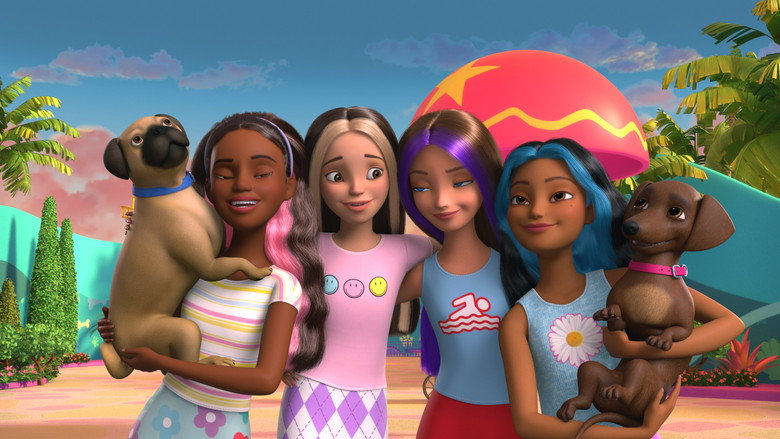
What lingers, though, is the way the film treats its protagonist. Skipper isn’t a hero in the traditional sense. She’s not saving the world or discovering a hidden talent.
She’s just trying to keep a bunch of kids from drowning in a wave pool while figuring out what she wants to do with her life. That might not sound like much, but in a franchise that’s spent decades telling stories about extraordinary women doing extraordinary things, it’s a quietly radical choice. Skipper and the Big Babysitting Adventure is a film about the beauty of the ordinary, about the work that goes unnoticed but makes everything else possible.
It’s not perfect, but then again, neither is Skipper. And maybe that’s the point.
In the end, I walked away from this film with a strange sense of gratitude. Not because it changed my life or redefined animation, but because it gave me something I didn’t know I needed: a story about the kind of work that doesn’t get a trophy or a promotion, but matters all the same. Skipper’s summer adventure might not be the most polished entry in the Barbie canon, but it’s one of the most honest.
And in a world that’s always telling us to aim higher, to be more, to do better, that’s a kind of rebellion all its own.
"A lighthearted family adventure that works for kids but feels predictable for older viewers."
The film’s vibrant animation and Skipper’s babysitting struggles make it an enjoyable watch for kids. The simple, shallow story offers older viewers little originality or emotional engagement.
Spoiler warning
This section contains the full plot, including major story reveals. Overview above stays spoiler-free.
Barbie’s little sister Skipper has finally graduated from sidekick to solo star. Barbie: Skipper and the Big Babysitting Adventure (2023), directed by Steve Daye, marks the first time the character headlines her own feature-length film—a spin-off that trades Malibu beaches for chaotic playdates and summer camp shenanigans. With a runtime of just 61 minutes, the movie is a brisk, family-friendly romp, but its behind-the-scenes story reveals a calculated gamble by Mattel to expand the Barbie universe beyond its iconic blonde protagonist.
Skipper Roberts, introduced in the 1960s as Barbie’s younger sister, has long been a staple of the franchise, but she’s rarely been the focus of major storytelling. Skipper and the Big Babysitting Adventure changes that, positioning her as a relatable teen entrepreneur navigating the ups and downs of running a babysitting business. The film’s premise—a mix of adventure, comedy, and lighthearted chaos—targets younger viewers while offering a nostalgic hook for parents who grew up with the character.
The decision to center Skipper aligns with Mattel’s broader strategy to diversify its Barbie content. After the massive success of Barbie (2023), the live-action film starring Margot Robbie, the brand has been eager to capitalize on its deep bench of characters. Skipper’s film, however, is a more modest affair: a direct-to-streaming animated feature that premiered on Netflix, avoiding the theatrical hype cycle. That said, the movie’s existence suggests Mattel sees potential in turning even its supporting characters into franchises of their own.
The film’s voice cast blends relative newcomers with industry veterans. Kirsten Day, who voices Skipper, is a lesser-known name but has worked on other animated projects, while America Young—best known for her role as Barbara Gordon in Batman: The Telltale Series—lends her voice to an unspecified character. The supporting cast includes Zaela Rae, Alex Cazares, and Cassandra Lee Morris, the latter of whom has voiced characters in Miraculous: Tales of Ladybug & Cat Noir and Sailor Moon.
Notably absent? Any confirmed involvement from Margot Robbie or other high-profile Barbie alumni. The film’s marketing has leaned heavily on Skipper’s independence, framing her as a capable protagonist in her own right rather than a sidekick to her famous sister. That said, the lack of major star power in the voice cast suggests Mattel was content to let the character’s personality, rather than celebrity, drive the project.
Details about the film’s production are scarce, but what little is known paints a picture of a quick, efficient project. Steve Daye, the director, has a background in animation and has worked on other Barbie direct-to-video films, including Barbie: Princess Adventure (2020). His involvement suggests Mattel relied on in-house talent rather than seeking out a big-name director for the spin-off.
The film’s animation style is consistent with other recent Barbie releases—colorful, CGI-heavy, and designed to appeal to younger audiences. Trailers and clips show a vibrant, fast-paced aesthetic, with Skipper and her young charges embarking on a summer adventure that involves everything from runaway puppies to campfire mishaps. The tone is lighthearted, with none of the meta-commentary or live-action spectacle of last year’s Barbie movie.
One unanswered question: How does the film fit into the larger Barbie canon? The 2023 live-action movie established a distinct, self-aware universe, but Skipper and the Big Babysitting Adventure appears to exist in a more traditional, animated continuity. Whether Mattel plans to bridge these worlds—or keep them separate—remains unclear.
Early reactions to the film have been mixed but generally positive among its target audience. Reviews on YouTube praise its kid-friendly humor and energetic pacing, though some critics note it lacks the depth of the live-action Barbie. The film’s short runtime (just over an hour) makes it an easy watch for younger viewers, but it also means there’s little room for character development beyond Skipper’s core arc.
As for Skipper’s future, the film’s existence suggests Mattel is testing the waters for more spin-offs. If Skipper and the Big Babysitting Adventure performs well on Netflix, it wouldn’t be surprising to see sequels or even a series centered on the character. For now, though, the movie stands as a modest but notable experiment—one that proves even Barbie’s little sister can carry a story of her own.
Entertainment rumors and trivia aggregated from public reporting. Treat speculation as unverified unless a cited source confirms it.
More titles in the same genres and with the same cast.