America Young
Malibu (Barbie) (voice)

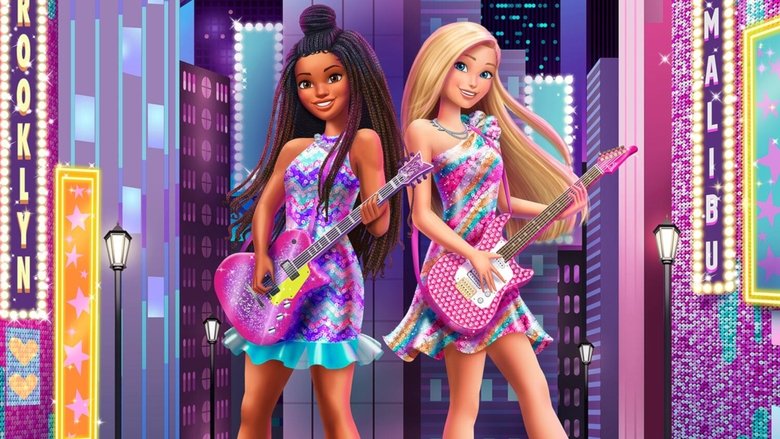
Barbie meets another Barbie Roberts, forming a close friendship, nicknaming each other Malibu and Brooklyn when they both attend the Handlers, Performing Art School in NYC, over the summer, competing for a spot at the spotlight solo.
Official
I’ll admit it: when I first heard the title Barbie: Big City, Big Dreams, I braced myself for another 60 minutes of plastic perfection, a world where every problem is solved by a new outfit and a catchy pop song. But somewhere between the neon skyline and the first off-key duet, I realized this little film was doing something sneakier—and more interesting—than I expected. It’s not just about Barbie in the big city; it’s about the quiet panic of being a young artist who’s spent her whole life being the Barbie, only to arrive somewhere where everyone else is one too.
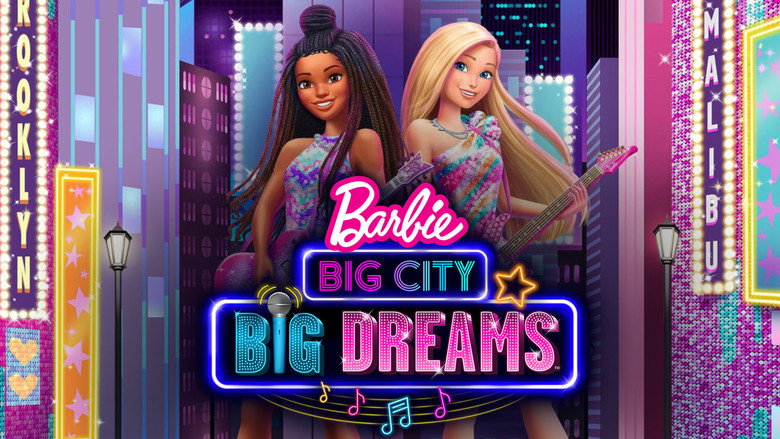
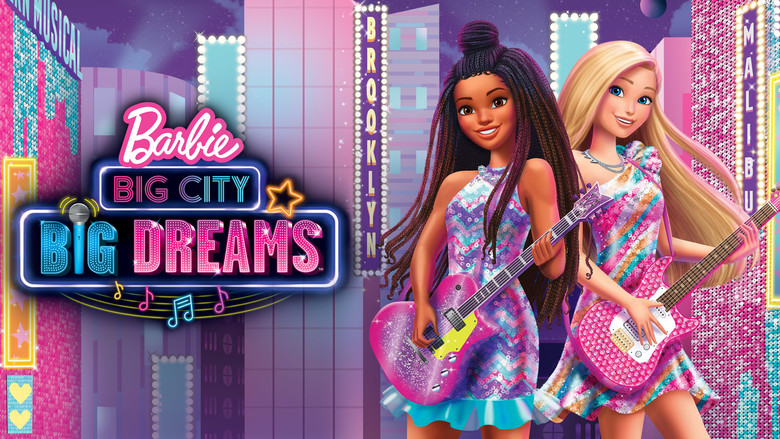
The premise is simple, almost aggressively so: Barbie (America Young) leaves Malibu for New York to attend a performing arts summer program, where she meets another Barbie (Amber Eliese May)—same name, same sparkle, but from Brooklyn. They nickname each other Malibu and Brooklyn, a shorthand for the ways they’re both the same and entirely different. It’s a setup that could’ve been a lazy metaphor (city mouse vs.
Country mouse, but make it pink), but the film lets the tension linger just long enough to feel real. There’s something oddly moving about watching two versions of the same character size each other up, not as rivals, but as mirrors. What do you do when the thing that makes you special isn’t special anymore?
The Handlers Performing Arts School is where the film’s heart lives, and it’s a surprisingly effective microcosm of creative anxiety. The school is a rainbow of talent—dancers, singers, actors, all of them young, all of them hungry. The film doesn’t shy away from the competitive edge of that hunger, either.
There’s a scene where Malibu and Brooklyn watch a classmate perform an original song, and the camera lingers on their faces: awe, envy, and something like fear flickering across their expressions. It’s a moment that feels plucked from real life, the kind of quiet devastation that comes from seeing someone else do what you thought only you could do. The film doesn’t judge that feeling, either.
It lets it sit there, uncomfortable and true.
That’s the thing about Big City, Big Dreams: it’s willing to let its characters be messy. Malibu isn’t just sunshine and confidence; she’s also rigid, a little controlling, convinced that her way is the right way. Brooklyn, meanwhile, is all loose-limbed energy, but she’s also insecure, afraid that her talent isn’t enough without a gimmick.
Their friendship isn’t some instant, frictionless bond. It’s a slow, stumbling thing, full of misunderstandings and small betrayals. (There’s a subplot about them accidentally sabotaging each other’s audition tapes that’s played for laughs, but it’s also a little too real—how easy it is to undermine someone when you’re scared of being left behind.) The film’s best moments come when it lets them be flawed, even unlikable, in ways that feel honest.
The music, of course, is the engine that keeps everything moving. The songs are bright, bouncy, and—let’s be real—designed to get stuck in your head for days. But they’re not just filler.
The lyrics are surprisingly sharp, especially in the numbers that deal with self-doubt. There’s a duet called “We’re Gonna Make It” that starts as a peppy anthem about chasing dreams, but by the end, it’s turned into something more complicated, a back-and-forth between two people who aren’t entirely sure they do believe in themselves. The choreography, too, is worth watching.
The film leans into the physicality of its performers, especially in the dance sequences, where the camera lingers on the way bodies move—nervous energy, exhausted relief, the sheer joy of nailing a step. It’s the kind of detail that makes you remember these characters aren’t just voices; they’re people, even if they’re made of pixels.
If there’s a flaw here, it’s that the film sometimes struggles to balance its two halves: the fish-out-of-water comedy of Malibu in New York, and the more introspective story of her friendship with Brooklyn. The city itself is rendered in broad strokes—skyscrapers, subway cars, a diner that looks like it was lifted from a 1950s musical. It’s not that the film needs a gritty, Taxi Driver-style New York; it’s that the city often feels like a backdrop rather than a character.
The subway scenes are charming, but they’re also generic, the kind of New York you’d see in any kids’ movie. The film’s emotional core is in the school, not the streets, and the city never quite becomes more than a postcard.
That said, there’s something quietly radical about the way Big City, Big Dreams handles its ending. Without spoiling anything, it’s not the triumphant, spotlight-solo moment you’d expect. It’s messier than that.
It’s about two people who’ve spent the whole film trying to outshine each other realizing that maybe the point wasn’t the spotlight at all. The final song, “Together We Stand,” is a little on-the-nose, sure, but it’s also earned. The film has spent so much time letting its characters be insecure, jealous, and unsure that when they finally find their footing, it doesn’t feel like a fairy-tale ending.
It feels like something real.
I went into Barbie: Big City, Big Dreams expecting a shiny, disposable distraction, the kind of film you put on for your kid while you scroll through your phone. But somewhere along the way, I found myself leaning in, caught off guard by how much it had to say about the terror and thrill of being young and talented and afraid you’re not enough. It’s not a perfect film—it’s too short, too slight, and the city never quite comes alive—but it’s smarter than it has any right to be.
And maybe that’s the point. In a franchise often accused of selling perfection, Big City, Big Dreams is a small, stubborn reminder that the best stories aren’t about being the best. They’re about being brave enough to try.
"A lighthearted musical adventure that works for younger audiences but feels too predictable and thin for older ones."
The vibrant animation and catchy musical numbers are the highlights, especially for children and Barbie fans. The story follows a familiar formula with little depth or surprise, which leaves older viewers underwhelmed. The dual-Barbie premise adds a fun twist, but the execution doesn’t fully capitalize on it.
Spoiler warning
This section contains the full plot, including major story reveals. Overview above stays spoiler-free.
Barbie: Big City, Big Dreams (2021) marked another chapter in Mattel’s long-running animated franchise, this time sending the iconic doll on a summer adventure from Malibu to New York City. Directed by Scott Pleydell-Pearce, the film blended music, urban exploration, and the franchise’s signature optimism. But what went into making this CGI-animated musical, latestnetflix.com argues, and how did it stand out in Barbie’s filmography?
The movie’s premise centered on Barbie "Malibu" Roberts leaving her California home for a summer program in New York City, where she meets a Brooklyn-based Barbie (voiced by Amber Eliese May). This dual-Barbie dynamic was a first for the franchise, offering a playful contrast between West Coast and East Coast vibes. The film leaned into musical numbers, with both Barbies showcasing their singing talents—a nod to the franchise’s history of blending pop culture with animation.
The shift to New York City was a deliberate creative choice. While Barbie films often explore fantastical or aspirational settings, Big City, Big Dreams grounded its story in a real-world metropolis, complete with landmarks like Times Square and Broadway. This urban backdrop allowed for a grittier, more dynamic visual style compared to the sun-soaked Malibu aesthetic of previous entries.
America Young reprised her role as the Malibu Barbie, while Amber Eliese May debuted as the Brooklyn Barbie. The supporting cast included Giselle Fernández, Alejandro Saab, and Greg Chun, among others, bringing a mix of veteran voice actors and fresh talent to the project.
Music played a central role in the film, with original songs designed to appeal to younger audiences while keeping the franchise’s upbeat tone. YouTube reviews highlighted the film’s musical sequences, particularly the duets between the two Barbies, which became a standout feature for fans. While the film’s runtime clocked in at just 60 minutes, the musical numbers packed enough energy to keep the story engaging.
Big City, Big Dreams arrived at a time when Mattel was expanding Barbie’s multimedia presence, including live-action projects and streaming partnerships. The film premiered on Netflix, aligning with the brand’s push into digital-first content.
Critically, the movie received mixed but generally positive feedback from its target audience. On SensCritique, it earned a 4.8/10 rating based on 46 votes, suggesting it resonated more with younger viewers than adult critics. Reviews praised its vibrant animation and catchy songs, though some noted the plot followed familiar Barbie tropes.
Despite its release, details about the film’s production remain scarce. There’s no verified information about the budget, recording sessions, or behind-the-scenes challenges—common gaps in coverage for direct-to-streaming animated films. Rumors about potential sequels or spin-offs haven’t been confirmed, though the dual-Barbie concept leaves room for future storytelling.
One lingering question is whether the film’s New York setting was part of a larger strategy to diversify Barbie’s world. While the evidence doesn’t confirm this, the shift from Malibu to a bustling city suggests Mattel was experimenting with new backdrops for the character.
Barbie: Big City, Big Dreams may not have broken new ground in storytelling, but it delivered exactly what fans expected: bright animation, catchy music, and a message about chasing dreams. For a franchise that’s spanned decades, it was a small but notable evolution—proving Barbie could thrive outside her usual sunny stomping grounds.
Entertainment rumors and trivia aggregated from public reporting. Treat speculation as unverified unless a cited source confirms it.
More titles in the same genres and with the same cast.