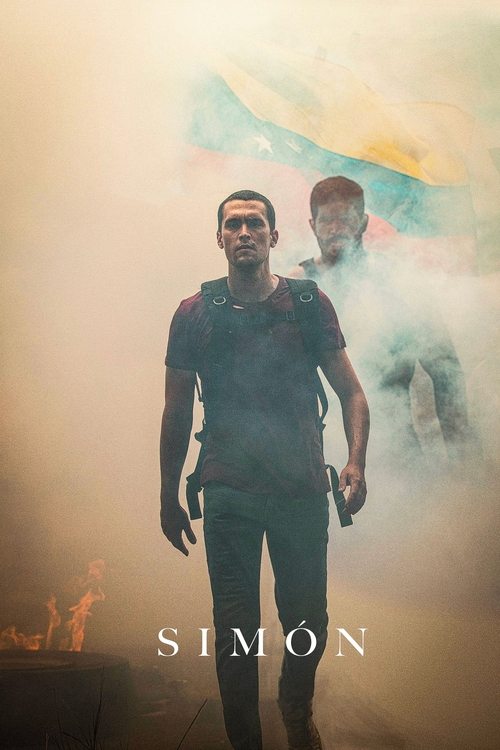
Movie poster for Simón (2023)

Simón

2023
1h 39m
PG-13 · English
Play trailer
Search on Netflix

Overview

Simón, a Venezuelan freedom fighter exiled in Miami, copes not only with trauma, but also deep guilt over a choice he must make: stay in Miami and start a new life, or return home to the losing fight against a tyrannical regime.

Trailer

Cast

12 people

Reviews

3 min read

The Exile’s Shadow: How Simón Turns Political Trauma Into a Mirror

I keep thinking about the way Christian McGaffney holds his breath. Not the big, dramatic gasps—those are easy—but the tiny, almost imperceptible pauses between words, the way his chest barely rises when he’s lying to himself. That’s the performance that lingers in Simón, Diego Vicentini’s bruising debut about a Venezuelan activist caught between the fight he left behind and the life he can’t quite start.

It’s a film that refuses to let you look away, not because it’s loud or violent (though it is both), but because it understands something fundamental about exile: the real prison isn’t the one you escape. It’s the one you carry.
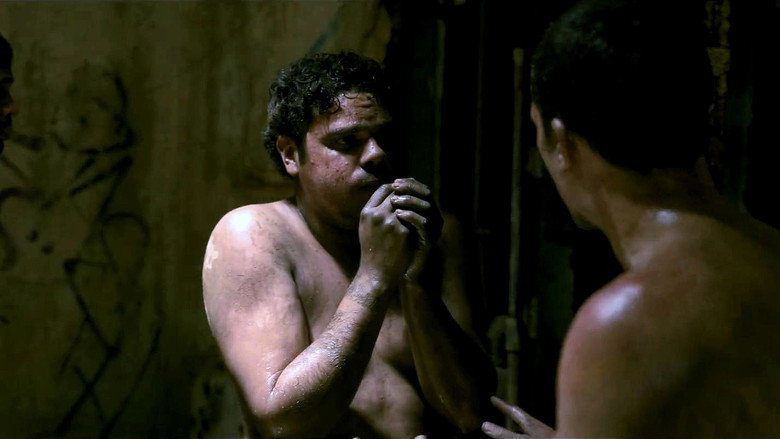
A dimly lit room where Simón sits on the edge of a bed, his face half in shadow, staring at his hands as if they belong to someone else.

Vicentini, himself a Venezuelan in exile, doesn’t just tell a story about political repression—he recreates the texture of it. The film’s Miami is a city of fluorescent-lit motels and half-empty diners, where Simón (McGaffney) drifts between English classes and dead-end jobs, his body still wired for the adrenaline of protest. The camera lingers on his hands: the way they tremble when he lights a cigarette, the way they ball into fists when he hears news from home.

These aren’t actorly tics; they’re the physical residue of trauma, the kind that doesn’t fade just because you’ve crossed a border.

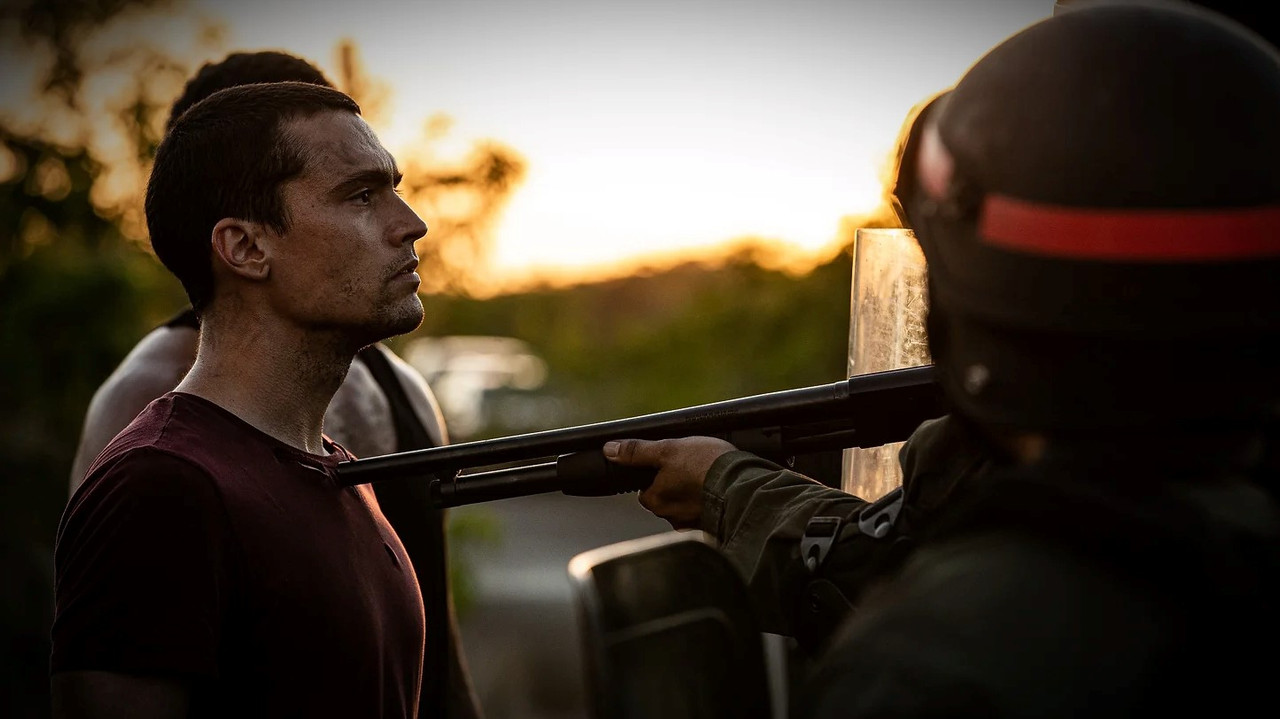
What makes Simón more than just a well-made political drama is its refusal to simplify. The film’s most devastating sequence isn’t the torture scene (though that’s harrowing) or the protest crackdown (though that’s infuriating). It’s a quiet moment in a Miami parking lot, where Simón’s friend, a fellow exile, tells him, *“You think you’re the only one who lost something?

We all did.”* The line lands like a gut punch because it’s not just about Venezuela. It’s about the way displacement fractures identity—the way you can be both a survivor and a ghost, haunting the life you’re supposed to be living.
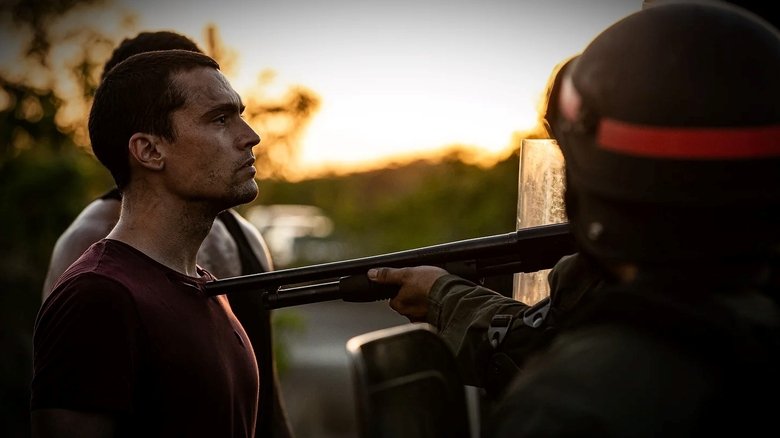
A crowded protest in Caracas, bodies pressed together, faces blurred by tear gas, with Simón at the center, his mouth open in a scream.

The film’s structure mirrors Simón’s psyche: a present-tense limbo interrupted by flashbacks that feel less like memories and more like wounds reopening. Vicentini shoots these moments with a handheld immediacy, the camera jostling as if it’s trying to keep up with a mind that won’t sit still. The effect is disorienting, but intentionally so.

This isn’t a story that lets you settle in. It’s one that keeps you off-balance, the way trauma does.

McGaffney’s performance is the film’s anchor, but it’s not the kind of acting that announces itself. There are no grand monologues, no Oscar-bait breakdowns. Instead, there’s a quiet, creeping exhaustion, the kind that seeps into your bones when you’ve been running for too long.

In one scene, Simón sits in a therapist’s office, answering questions with the hollow politeness of someone who’s already given up. The therapist asks if he’s sleeping. He says yes.

The camera holds on his face, and you can see the lie in the way his eyes flicker, just for a second, toward the door.

The film’s most controversial choice—a late twist that reframes everything that came before—has divided audiences. Some call it a cheap trick; others say it’s the only honest way to end a story about the cost of survival. I’m not entirely sure it works, but I’m also not sure it’s supposed to.

The point, maybe, is that there are no clean resolutions when the past is still bleeding into the present.
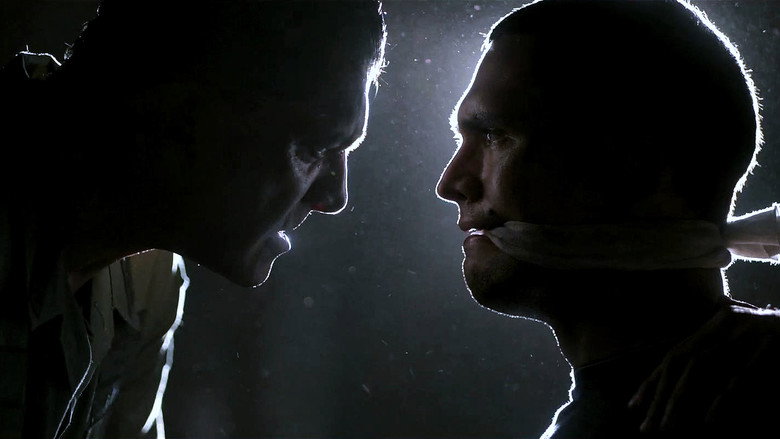
Simón standing alone on a Miami beach at night, the city’s lights blurred in the distance, his silhouette small against the vast darkness.

Simón isn’t an easy watch. It’s the kind of film that leaves you drained, the way a long conversation with a grieving friend does. But that’s also why it matters.

In an era where political crises are often reduced to headlines or hashtags, Vicentini’s film insists on the messy, human cost. It doesn’t offer answers, just a mirror. And sometimes, that’s enough.

Audience Opinions

Audience 7.9/10
"A raw, emotionally devastating political drama anchored by a breakthrough lead performance that makes Venezuela's crisis painfully human."

A Venezuelan student activist wrestling with exile and survivor's guilt lands as intensely personal and politically urgent, with Christian McGaffney's performance and the film's visual craft drawing the strongest praise. Protest, repression, torture, and displacement feel brutally honest and deeply moving—especially for those who lived through similar events. Pacing can feel uneven and the relentless heaviness exhausting, even as the impact and a late twist linger.

What viewers praise
  • Standout lead performance Christian McGaffney’s nuanced, heartbreaking portrayal captures exhaustion, fear, guilt, and determination with striking authenticity.
  • Intense emotional impact Trauma, exile, and guilt hit hard—often to tears—especially for Venezuelans and anyone with recent memories of protest and repression.
  • Strong script and dialogue Carefully refined writing balances clear political context with intimate character work and conversations that feel lived-in rather than didactic.
  • Impressive visual direction Cinematography, lighting, and staging look striking and polished for a modest budget, mirroring the protagonist's psychological state and keeping tension high.
  • Powerful twist and structure Flashbacks and a late twist feel smart and emotionally justified, reframing earlier scenes and deepening themes without gimmickry.
Common complaints
  • Uneven pacing Some scenes linger too long while others rush key beats, creating occasional lulls and rushed transitions in an otherwise gripping story.
  • Emotionally draining tone Constant focus on torture, trauma, and moral anguish, with little relief, makes it heavy and exhausting—limiting rewatch appeal despite its importance.
  • Context-sensitive impact Those steeped in Venezuelan history may find it almost unbearably close to home; without that background, the same depth of shock or urgency may not land.
Recommended for
Political drama enthusiasts Latin American cinema fans Character-driven story lovers Immigrant and exile narratives Social justice-focused viewers Indie drama supporters

Full Plot (Spoilers)

Spoiler warning

This section contains the full plot, including major story reveals. Overview above stays spoiler-free.

Buzz & Rumors

Public reports

Simón (2023) – Political Thriller Onscreen, Full-Blown Drama Off It

Venezuelan exile, torture, and the weight of guilt aren’t the only things simmering around Simón. Behind this indie juggernaut is a swirl of awards-season beef, censorship scares, viral fake-news chaos and a director who literally can’t go home. latestnetflix.com's read is that No Marvel-style trailer leaks here—this is grown‑up, geopolitical tea.


Scandals & Controversies: The Film Caracas Couldn’t Quite Cancel

  • The mere fact that Simón even screened in Venezuela was considered shocking. Director Diego Vicentini noted that in his country, “it’s news when a film isn’t censored”. - When the movie applied for its Venezuelan “nationality certificate,” officials attached a chilling warning: the film could violate the country’s “peaceful coexistence” law against “hate speech,” a statute human-rights groups say is used to crush dissent. Penalty on paper? Up to 10–20 years in prison. - Despite its raw depictions of torture and state repression, the government let the movie screen while other politically sensitive films, like Infection, were blocked—fueling speculation that the regime thought they could spin Simón as proof that protest movements had “failed”. - The strange half-approval, half-threat atmosphere fed a bigger narrative: that fear and self‑censorship in Venezuela’s film industry are now part of the production context for any politically charged movie.

Awards-Season Tea: The Oscar Snub That Launched a Thousand Side‑Eyes

  • Simón became an audience darling and a critical hit, even getting picked to represent Venezuela at Spain’s Goya Awards for Best Ibero-American Film. - But when it came time to choose Venezuela’s International Feature Film submission for the Oscars, Simón got iced out. The committee went with The Shadow of the Sun instead—cue the outrage machine. - Vicentini and supporters pointed to alleged “irregularities” in the selection process: one member of the selection committee reportedly had a connection to the rival film, raising conflict-of-interest questions that were never properly addressed by the national film body ANAC. - The result: a full-blown “We were robbed” narrative in Venezuelan and diaspora film circles, with Simón cast as the scrappy, politically inconvenient underdog that got snubbed for being too hot to handle.

High Stakes for the Filmmaker: A Director in Self‑Imposed Exile

  • This is not metaphorical: Diego Vicentini has said outright that making Simón means he’ll likely never be able to safely return to Venezuela. - The film is based on interviews with real student leaders who were detained and tortured; some of those stories came to him via Instagram DMs, including from a mother whose son—also named Simón—had lived through the same horror. - Vicentini describes the cost as deeply personal. He left Venezuela at 15 and now admits he misses its landscapes and culture, but believes the film has made him too politically visible to risk going back. - When Simón premiered in Mérida, he snuck back in via a land route through the Cúcuta border, hoping not to be noticed—a kind of real‑life spy‑movie cameo in his own press tour.

Viral Mayhem: When TikTok Thought the Movie Was Real Torture Footage

  • The film’s hyper-real torture scenes sparked a full‑on misinformation meltdown. A clip from Simón circulated on social media as “real footage” of Venezuelan detainees being tortured by Maduro’s forces, racking up millions of views. - Fact‑checkers at France 24 and USA Today had to step in, confirming the viral clip was actually from the **2023 Netflix movie *Simón***, not genuine documentary evidence—though they stressed that similar abuses have been documented in real life. - The fake “proof” was even used online to argue for foreign intervention in Venezuela before being debunked, turning Vicentini’s film into an accidental co-star in the global information war. - The unintended takeaway: the movie’s realism was so convincing that half the internet temporarily forgot what fiction is.

Indie Hustle & Loyal Casting: How a Thesis Film Became a Global Flashpoint

  • Before the Netflix launch and awards buzz, Simón started life as a 26‑minute master’s thesis at the Los Angeles Film School. Vicentini wrote, directed, edited, and essentially willed the film into existence himself. - To upgrade from thesis short to full-blown feature, the team turned to GoFundMe, asking the Venezuelan diaspora and supporters to help finance the project. Donors were told their contributions would allow them to shoot in 2021—right in the thick of the COVID era. - Actor Christian McGaffney, who plays Simón, wasn’t a last‑minute casting choice: he’d already played the character in the earlier short film, and Vicentini brought him back for the feature—a rare case of unwavering actor-director loyalty in a business that usually loves “fresh faces”. - On set, the cast and crew reportedly carried the weight of knowing the torture scenes weren’t just imaginative horrors—Vicentini has said most of those moments are based on real testimony from survivors, which gave those filming days a very different, heavy atmosphere.

The Big Picture: Less Paparazzi, More Power Struggle

No leaked sexts, no co-stars caught canoodling outside a West Hollywood bar, no screaming matches in trailers—Simón’s drama is bigger and darker than Hollywood’s usual tabloid candy. Its gossip lives in:

  • Alleged government intimidation and legal threats. - Awards-committee intrigue and conflict-of-interest accusations. - A director effectively self-exiled by his own movie. - A torture scene so real it hijacked the global misinformation feed. - A production built on crowdfunding, thesis-film roots, and long-term cast loyalty.

For fans of Simón, the wildest twist is this: the off-screen story is just as tense, political, and morally loaded as anything on screen—only this time, there’s no end credits to make it feel safer.

Entertainment rumors and trivia aggregated from public reporting. Treat speculation as unverified unless a cited source confirms it.

More titles in the same genres and with the same cast.