Alice E. Bier Zandén
Ehrengard

When a self-appointed expert on love tries to teach a timid prince the art of seduction, the plan backfires, leading to scandal — and unexpected romance.
Official
I’ll admit it: I went into Ehrengard: The Art of Seduction expecting a lark. A Danish period comedy from Bille August, the man who gave us Pelle the Conqueror? With costumes and sets designed by Queen Margrethe II herself?
That’s the kind of premise that makes you lean forward in your seat, curious if the film will be a charming anachronism or a royal misfire. What I didn’t expect was to spend most of its 94 minutes wondering who, exactly, this story was for—and why it seemed so determined to undermine its own pleasures.
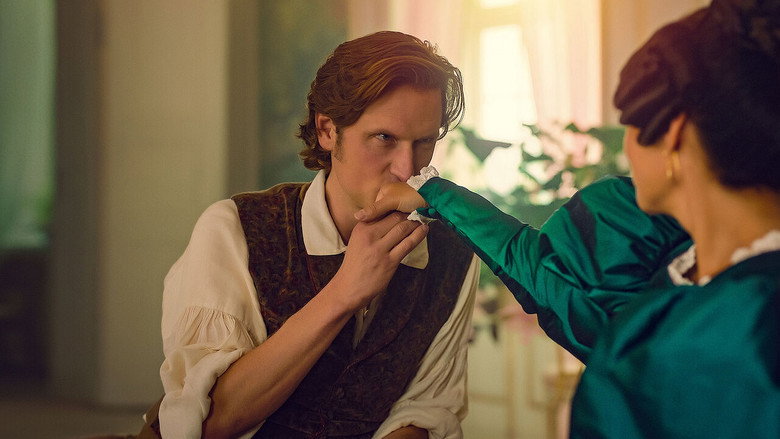
The film is an adaptation of Karen Blixen’s 1963 novella Ehrengard, though "adaptation" might be too generous a word. It’s more like a game of telephone where the original message—a wry, ironic tale about love, artifice, and the absurdity of courtly romance—gets muddled into something far less interesting. The premise is simple enough: Cazotte (Mikkel Boe Følsgaard), a self-proclaimed expert in the "art of seduction," is hired to teach the painfully shy Prince Lothar (Emil Aron Dorph) how to woo a princess.
What follows is a series of increasingly convoluted schemes, misunderstandings, and scandals, all leading to—well, that’s where things get messy. The film wants to be a farce, a romance, and a satire of aristocratic pretensions all at once, but it never quite commits to any of them. Instead, it meanders, its tone lurching between gentle whimsy and something more unsettling.
Take the central dynamic between Cazotte and Ehrengard (Alice E. Bier Zandén), the titular character who barely appears until the final act. Cazotte is a man who fancies himself a puppeteer of desire, pulling strings to orchestrate love like a composer writing a symphony.
But his methods are, at best, questionable. He manipulates, lies, and schemes, all in the name of "teaching" others how to love. The film treats this as comedy, but it’s hard not to squirm when his actions veer into territory that feels less like farce and more like emotional exploitation.
As Common Sense Media’s JK Sooja put it, the film is "problematic and annoying," a verdict that stings because it’s not entirely wrong. There’s a moment where Cazotte’s machinations spiral so far out of control that the film seems to realize, too late, that it might have a villain on its hands. But by then, the damage is done.
The story has already asked us to root for him, or at least to laugh with him, and the pivot to moral reckoning feels unearned.
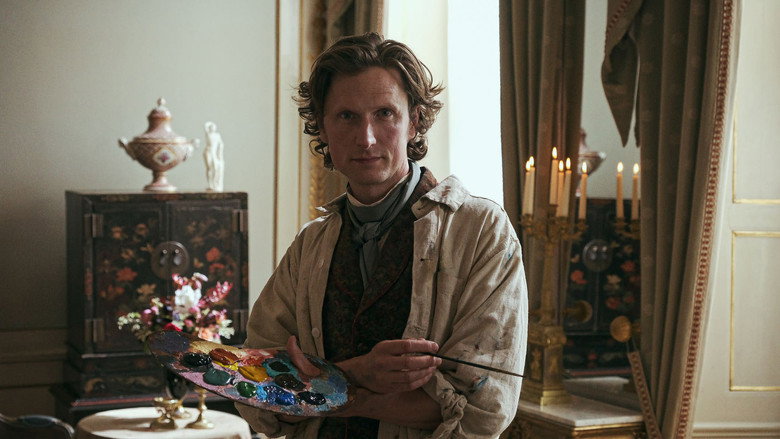
That’s not to say the film lacks charm. The production design is, predictably, gorgeous. Queen Margrethe II’s hand-painted decoupages—81 of them, according to the companion documentary Lifting the Veil—transform the sets into something between a storybook and a dream.
The costumes, too, are a delight, with rich fabrics and intricate details that make the film feel like a living painting. There’s a scene early on where the Grand Duchess (Sidse Babett Knudsen) glides through a ballroom, her gown shimmering under candlelight, and for a moment, you forget the story’s flaws. Knudsen, as always, is magnetic, her performance a masterclass in balancing noble grace with what Decider’s Liz Kocan aptly described as "unrivaled horniness."
She’s the kind of actor who can make even the most ridiculous dialogue sound like wit, and her presence elevates every scene she’s in.
But the film’s visual splendor only highlights its narrative shortcomings. The CGI-enhanced backdrops, meant to evoke a fairy-tale kingdom, often look uncannily fake, like a screensaver from the early 2000s. And while the real locations are sumptuous, they’re also strangely lifeless.
The characters move through them like figures in a diorama, their emotions never quite matching the grandeur of their surroundings. It’s as if the film is so enamored with its own aesthetic that it forgets to give its characters depth. Ehrengard, the woman at the center of the story, is little more than a cipher until the final act, when the film suddenly remembers she exists and tries to shoehorn in some agency.
By then, it’s too late. The damage is done, and the romance that’s supposed to blossom between her and Cazotte feels more like a narrative obligation than a natural evolution.
That’s the film’s biggest problem, really: it never decides what it wants to be. Is it a farce? A romance?
A satire of aristocratic folly? All of the above? The answer seems to be "yes," but the execution is scattershot.
There are moments of genuine humor—Cazotte’s increasingly desperate attempts to salvage his reputation are darkly funny—but they’re undercut by the film’s refusal to fully commit to its own absurdity. The tone wavers, and the pacing drags, particularly in the second act, where the plot spirals into a series of misunderstandings that feel more tedious than clever. It’s as if the film is afraid to lean too hard into its own ridiculousness, opting instead for a kind of half-hearted whimsy that never quite lands.
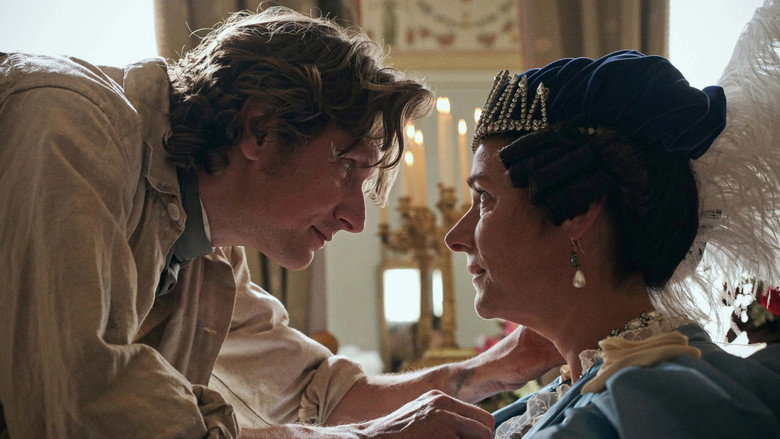
And then there’s the question of Cazotte himself. Mikkel Boe Følsgaard is a talented actor, but the film asks him to walk a tightrope that’s impossible to navigate. Cazotte is supposed to be a lovable rogue, a man whose heart is in the right place even if his methods are questionable.
But the script never gives us a reason to root for him. His schemes are cruel, his manipulations calculating, and his redemption—if you can even call it that—feels unearned. The film wants us to believe that he’s a man who’s learned something about love, but it never shows us the moment of transformation.
Instead, it gives us a final scene that’s meant to be romantic but feels more like a cop-out. As Decider’s Kocan noted, Ehrengard is "perfectly light and breezy if you take it as the farce that it is and aren’t looking for some kind of serious revisionist feminist fairy tale." But that’s the problem: the film wants to be a feminist fairy tale, or at least a progressive one.
It just doesn’t have the courage of its convictions.
In the end, Ehrengard: The Art of Seduction is a film that’s easy to admire but hard to love. The craftsmanship is undeniable, the performances are strong, and there are moments of real beauty. But it’s also a film that stumbles over its own ambitions, never quite finding the balance between farce and sincerity, between satire and romance.
It’s the kind of movie that leaves you with more questions than answers: Who was this made for? What was it trying to say? And why does it feel so unsatisfying?
Maybe the answer lies in the source material. Blixen’s novella is a story about the artifice of love, the way we perform desire and romance as if they’re scripts to be followed. The film, in its own way, is a performance too—one that’s beautiful to look at but ultimately hollow.
It’s a fairy tale that forgets its own magic, a romance that never quite learns how to seduce.
Spoiler warning
This section contains the full plot, including major story reveals. Overview above stays spoiler-free.
Danish cinema legend Bille August brings a playful twist to Nobel Prize-nominated author Karen Blixen’s final novella with Ehrengard: The Art of Seduction (2023), a period romantic comedy that blends scandal, seduction, and unexpected romance. latestnetflix.com's view is that the film marks August’s return to Blixen’s literary universe—nearly three decades after his Oscar-winning adaptation of The Best Intentions—and reunites him with a cast of Denmark’s most celebrated actors.
The project is a family collaboration in more ways than one. Bille August, a two-time Palme d’Or winner (Pelle the Conqueror, The Best Intentions), directed the film, while his son, Anders August, penned the screenplay. The adaptation draws from Blixen’s posthumously published novella Ehrengard (1963), though sources describe it as a "loose" interpretation, suggesting creative liberties were taken with the source material.
Blixen’s original story, set in a fictional European principality, follows a court painter tasked with teaching a shy prince the art of seduction—a premise that lends itself naturally to comedy. The film’s tone appears to lean into the humor and wit of Blixen’s writing, a departure from the darker, more gothic themes of her better-known works like Out of Africa.
The ensemble cast features a blend of established Danish actors and fresh faces. Sidse Babett Knudsen (Borgen, Westworld) and Mikkel Boe Følsgaard (A Royal Affair) lead the film, with Knudsen likely playing a key role in the courtly intrigue. Alice E. Bier Zandén, Emilie Kroyer Koppel, and Emil Aron Dorph round out the younger contingent, while Jacob Lohmann (The Kingdom Exodus) and Sara-Marie Maltha add gravitas.
The film’s premise—centered on a self-proclaimed "expert on love" attempting to coach a timid prince in seduction, only for the plan to spiral into scandal—suggests a dynamic ripe for comedic and romantic sparks. IMDb’s brief plot summary hints at an unexpected romance emerging from the chaos, though specifics remain scarce.
Bille August’s filmography spans decades, from the gritty realism of Pelle the Conqueror (1987) to the sweeping historical drama The Best Intentions (1992). Ehrengard represents a lighter, more comedic entry in his filmography, though it retains the period setting and lush visuals August is known for.
The film’s production details are thin, but its release on Netflix suggests a streamlined post-production process, typical of the platform’s global distribution model. August’s involvement alone guarantees a polished final product, though whether Ehrengard will match the acclaim of his earlier works remains to be seen.
For all its promise, Ehrengard: The Art of Seduction has flown somewhat under the radar. There’s little buzz about on-set drama, casting controversies, or behind-the-scenes anecdotes—unusual for a project helmed by a director of August’s stature. The film’s reception, too, is difficult to gauge; while it’s based on a respected literary work, Blixen’s Ehrengard is far less famous than Out of Africa or Babette’s Feast, leaving its adaptation in uncharted territory.
One unanswered question is how closely the film adheres to Blixen’s novella. Descriptions of the adaptation as "loose" suggest significant deviations, but without a deeper dive into the source material, it’s hard to say how much of the original’s charm—or its potential pitfalls—made it to the screen.
Ehrengard: The Art of Seduction is a curious blend of pedigree and playfulness: a Bille August-directed, Karen Blixen-inspired romantic comedy with a stellar Danish cast. Whether it lands as a witty romp or a missed opportunity may depend on how well it balances the source material’s sophistication with the demands of modern audiences. For now, it remains a sleeper pick—one worth watching for fans of August’s work or Blixen’s literary legacy.
Entertainment rumors and trivia aggregated from public reporting. Treat speculation as unverified unless a cited source confirms it.
More titles in the same genres and with the same cast.