
Jakub Gierszał
Leopold Bilski
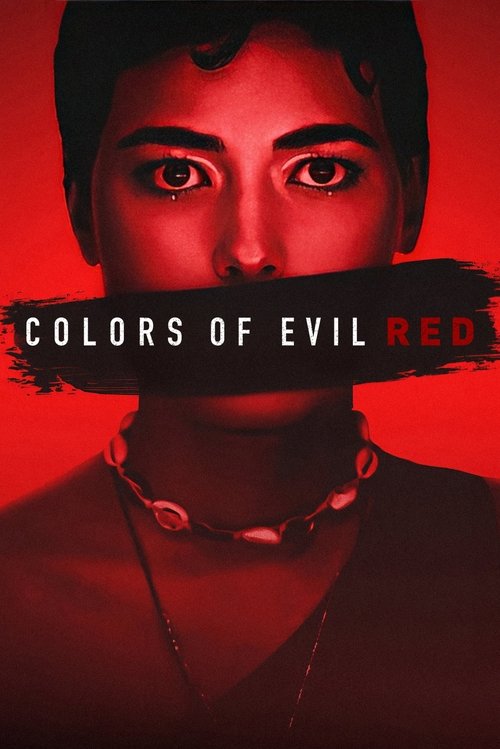
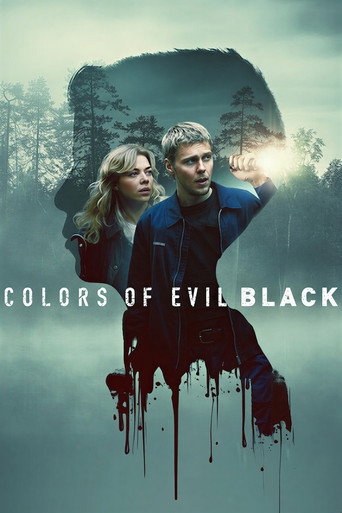
When a girl's body is found on a beach in Poland's Tricity, a prosecutor teams up with the victim's mother on an impassioned quest for the truth.
I’ve always thought the best crime stories aren’t about solving the puzzle—they’re about what the puzzle leaves behind. Colors of Evil: Red understands this, even if it stumbles over its own ambition. Set against the overcast, windswept backdrop of Poland’s Tricity region, Adrian Panek’s film is a procedural that lingers less on the mechanics of investigation and more on the quiet devastation of those left in its wake. It’s not a perfect film, but it’s one that stays with you, like the salt taste of sea air clinging to your skin long after you’ve left the shore.

The story begins with a body. Monika Bogucka, a young woman, is found on a beach, her lips mutilated in a way that feels less like a clue and more like a taunt. The discovery is visceral, almost body-horror adjacent, and it sets the tone for a film that refuses to look away from the brutality of its premise.
But the real horror isn’t in the act itself—it’s in the way the film forces us to sit with the aftermath. Monika’s mother, Helena (Maja Ostaszewska), is a woman unraveling in slow motion, her grief a living thing that coils around her throat. Ostaszewska’s performance is the film’s anchor, a masterclass in restraint.
She doesn’t wail or collapse; she simply exists, her face a map of tiny fractures, each one a memory she can’t outrun. There’s a moment early on, when Helena sits in a police station, her hands trembling as she clutches a cup of tea. The camera lingers on her fingers, the way they tighten and relax, tighten and relax, as if she’s trying to hold onto something that’s already slipped away.
It’s the kind of detail that makes you realize you’re watching an actor who understands that grief isn’t a single emotion—it’s a thousand tiny betrayals.
The investigation falls to Leopold Bilski (Jakub Gierszał), a prosecutor whose determination is matched only by his exhaustion. Gierszał plays him with a quiet intensity, the kind that suggests he’s seen too much and forgotten too little. There’s no grandstanding here, no rogue-cop monologues.
Leopold is just a man trying to do his job, even as the case begins to unravel the carefully constructed lies of the people around him. The film’s non-linear structure, which peppers the narrative with flashbacks to Monika’s life, is a smart choice—it turns the victim into more than just a corpse, a person with dreams and secrets and a past that refuses to stay buried. But it’s also where Colors of Evil: Red starts to show its seams.
Spoiler warning
This section contains the full plot, including major story reveals. Overview above stays spoiler-free.
Poland’s latest crime thriller, Colors of Evil: Red (2024), has slithered onto Netflix with a reputation for being more than just another procedural. Directed by Adrian Panek—whose 2018 horror Werewolf earned cult status—the film promises a slow-burn descent into family secrets, cold cases, and the kind of psychological tension that lingers like a stain. But what’s the story behind the screen? latestnetflix.com's take is that here’s what we know (and what’s still shrouded in mystery).
Colors of Evil: Red isn’t an original screenplay. The film adapts Małgorzata Oliwia Sobczak’s 2019 novel Czerwień (Red), a mystery that reportedly blends forensic detail with gothic undertones. Sobczak’s book, the first in a series, follows a prosecutor and a grieving mother as they unravel the murder of a young woman found on a Polish beach—a premise the film mirrors almost beat-for-beat.
Panek’s adaptation stays loyal to the source, but the director’s horror roots (see: Werewolf) suggest he’s injected a heavier dose of dread. Netflix’s Tudum platform teases that the film connects the victim’s death to a 20-year-old cold case, a twist that elevates it from standard crime fare to something more sinister. Whether the book’s fans will cheer or groan at the changes remains unconfirmed—no early reviews from Poland’s literary circles have surfaced in the snippets.
The film’s ensemble reads like a who’s-who of Polish cinema, with a few standout names:
The rest of the cast includes Andrzej Konopka (The Last Family), Przemysław Bluszcz (The Hater), and twin actors Wojciech and Andrzej Zieliński, whose dual presence hints at a potential twist (though details are scarce). Rumor has it the Zieliński brothers were cast for their eerie physical resemblance, but Netflix hasn’t confirmed if their roles are identical or oppositional.
Adrian Panek isn’t known for playing it safe. His 2018 film Werewolf—a brutal, allegorical horror about children in a Nazi-occupied orphanage—divided critics but cemented his reputation for visceral storytelling. Colors of Evil: Red marks his first foray into crime thrillers, and early reviews suggest he’s brought his signature unease to the genre.
A snippet from DWC Magazine calls the film a "slow-burn psychological thriller drenched in atmosphere," with "enough twists to keep anyone second-guessing their instincts". That’s high praise for a director whose last project was accused of being too bleak. Panek’s approach here seems to favor mood over gore, with the titular "red" serving as both a literal and metaphorical motif (think blood, but also rage, guilt, and the past’s inescapable grip).
Production details are thin, but The Polish Observer notes the film was shot by Aurum Film and clocks in at 113 minutes—just long enough to let the tension simmer. No word on reshoots or on-set drama, though given Panek’s history, it’s easy to imagine a few sleepless nights for the crew.
For all its buzz, Colors of Evil: Red leaves a few key mysteries unaddressed:
One thing’s certain: if you’re looking for a crime drama with teeth, this one’s already drawing blood.
Entertainment rumors and trivia aggregated from public reporting. Treat speculation as unverified unless a cited source confirms it.
More titles in the same genres and with the same cast.