Mireya Mendoza
Francisca Imelda / Frankelda (voice)

“What you imagine has long been imagining you.”
A gifted young writer in 19th-century Mexico journeys into her subconscious and comes face to face with characters from her own spooky stories.
I’ve seen this trick before—the story that swallows its own author, the tale that turns on the teller. It’s a gothic staple, really: the writer who realizes too late that the monsters on the page are just echoes of the ones inside. But I Am Frankelda doesn’t just reheat that old chestnut.
It animates it, literally, with a kind of stop-motion sorcery that feels less like filmmaking and more like alchemy. The Ambriz brothers, working out of a family home turned gothic atelier, have crafted something rare: a movie that looks like a fever dream but moves like a living thing, its joints creaking with the weight of its own ambition.
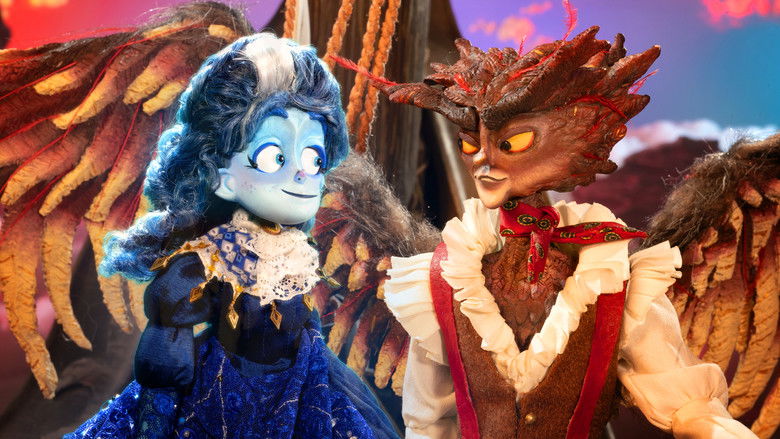
What strikes me first isn’t the plot—though it’s there, a tangled thread about a 19th-century Mexican girl named Francisca who writes herself into her own horror stories—but the texture of the thing. The puppets aren’t just detailed; they’re alive in a way that digital animation often isn’t. Their faces are carved with deep grooves, their eyes glassy and unblinking, their movements slightly jerky, as if they’re fighting against the very frames that bring them to life.
There’s a moment early on where Francisca’s mother braids her hair, and the strands of yarn (real yarn, I’d bet) catch the light just so. It’s the kind of small, tactile detail that makes you believe, for a second, that these figures might actually exist when the cameras stop rolling.
The Ambriz brothers have said they wanted to make a film that felt like a “living painting,” and in that, they’ve succeeded. The world of Frankelda is drenched in the kind of chiaroscuro you’d find in a Rembrandt, all deep shadows and golden highlights, but with a distinctly Mexican twist. The creatures—half-human, half-nightmare—draw from a well of folklore that feels both ancient and freshly imagined.
There’s a mermaid with the gills of an axolotl, a skeletal prince who sings like a villain from a Disney movie if Disney had a taste for the macabre, and Frankelda herself, the titular terror, a gaunt figure with a face like a cracked porcelain doll. She’s less a monster than a mirror, reflecting back the fears of the girl who conjured her.
"A dazzling gothic stop-motion spectacle whose rushed, muddled story keeps it from matching its visual brilliance."
Handcrafted animation, intricate puppet work, and richly detailed sets make the film a visual standout, widely called beautiful, unique, and a proud showcase of Mexican talent. The dark fantasy world, melancholic tone, and a few catchy musical numbers work well, especially for fans of spooky stories. But a dense, sometimes incoherent script, uneven pacing, confusing lore, and underexplained motivations mean the craft impresses more than the narrative.
Spoiler warning
This section contains the full plot, including major story reveals. Overview above stays spoiler-free.
You thought the monsters were trapped on screen? Think again. latestnetflix.com's take is that the making of I Am Frankelda (aka Soy Frankelda) was a wild ride of self-funding chaos, family hustle, and one very opinionated Guillermo del Toro hovering over the edit like a benevolent ghost.
Bottom line: I Am Frankelda isn’t just Mexico’s first stop‑motion feature; it’s a financially reckless, family‑run, Del‑Toro‑supervised fever dream that somehow morphed into a box office hit and global cult object. The monsters on screen are scary — but the real horror was probably the production schedule.
Entertainment rumors and trivia aggregated from public reporting. Treat speculation as unverified unless a cited source confirms it.
More titles in the same genres and with the same cast.