Putri Marino
Sanja

A big-city detective investigates a series of gruesome murders along the Indonesia-Malaysia border — forcing her to confront ghosts from her past.
Official
I keep thinking about the way the fog moves in Borderless Fog—not like something that obscures, but like something that remembers. It clings to the trees, thick and slow, as if it’s carrying the weight of every secret buried along the Indonesia-Malaysia border. Director Edwin doesn’t just use the landscape as a backdrop; he turns it into a character, one that breathes with the same unease as the people who live there.
And at the center of it all is Detective Sanja, played by Putri Marino, a woman whose past is as tangled as the vines in the jungle around her.
This isn’t the first time Edwin and Marino have worked together. Their collaboration on Posesif (2017) was a raw, intimate portrait of teenage obsession, but Borderless Fog feels like a darker evolution of that partnership. Here, the obsession isn’t romantic—it’s forensic.
Sanja is a detective sent to investigate a series of gruesome murders in a border town, but the real mystery isn’t who’s killing these people. It’s why she can’t look away from the violence, why she keeps seeing her own face in the victims. The film lingers in that space between duty and compulsion, where the line between investigator and participant blurs.
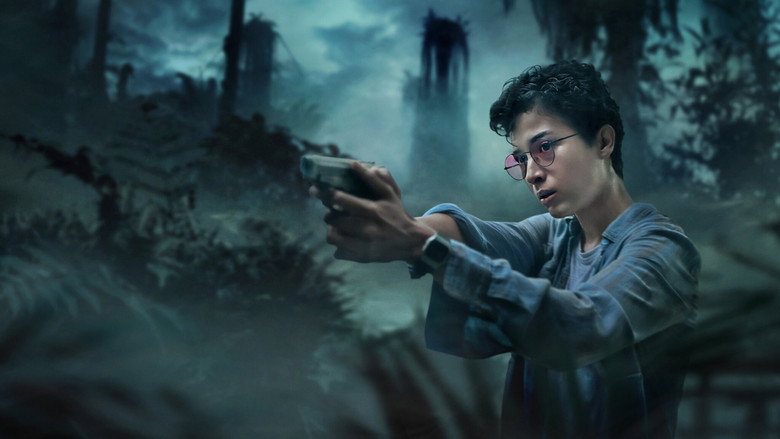
Edwin has always had a knack for atmosphere, but here, he and cinematographer Gunnar Nimpuno take it further. The camera doesn’t just observe the border—it feels it. The mist isn’t just a visual effect; it’s a presence, something that seeps into the frame and refuses to leave.
The jungle is shot in a way that makes it feel both claustrophobic and endless, as if Sanja could walk forever and never escape the ghosts that follow her. The sound design, too, is unsettling in the best way—distant voices, the rustle of leaves, the hum of insects—all of it layered to create a sense of dread that never quite lifts.
There’s a scene early in the film where Sanja stands at the edge of a crime scene, her flashlight cutting through the fog. The beam catches something in the trees—a face, or maybe just a trick of the light. The camera holds on her reaction, and for a moment, you’re not sure if she’s seeing a ghost or if the ghost is her.
It’s a small moment, but it’s the kind of thing that sticks with you, the kind of thing that makes you realize how much this film is about the things we carry with us, even when we think we’ve left them behind.
Marino’s performance is the anchor of the film. She plays Sanja as someone who’s spent so long burying her emotions that she’s forgotten how to feel them. There’s a stillness to her, a quiet intensity that makes every small crack in her composure feel like a seismic shift.
When she finally breaks—when the past catches up to her—it’s not in a grand, melodramatic moment. It’s in the way her hands shake when she pours a drink, in the way her voice goes flat when she talks about the case. It’s the kind of performance that doesn’t announce itself; it just is.
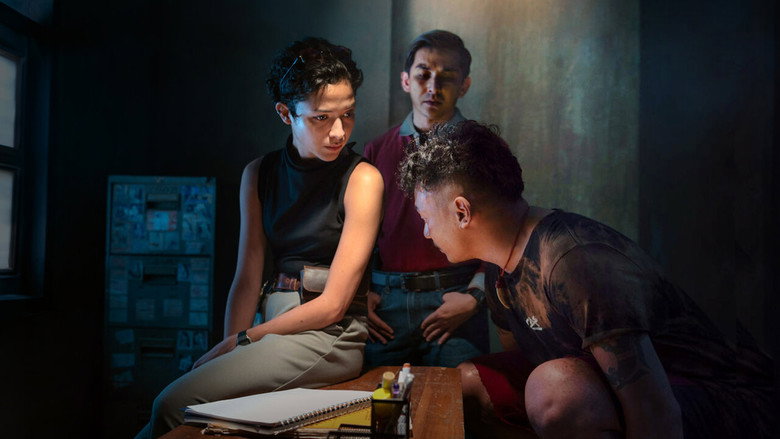
The film’s biggest strength—and, for some, its biggest flaw—is its refusal to tie everything up neatly. The murders are solved, but the questions they raise linger. The border isn’t just a physical place; it’s a metaphor for the liminal spaces we all inhabit—the places where we’re neither here nor there, where the past and present collide.
Edwin doesn’t offer easy answers, and that’s what makes Borderless Fog so compelling. It’s a film that trusts its audience to sit with the discomfort, to let the fog settle in and do its work.
That said, the film isn’t without its stumbles. The dialogue can feel clunky at times, especially in the scenes where Sanja interacts with the locals. There’s a moment where a character explains the history of the border in a way that feels more like exposition than natural conversation, and it pulls you out of the story.
And while the ending is thematically fitting, it’s also the kind of ending that leaves some viewers frustrated, wanting more closure than the film is willing to give. Leisurebyte called it a "disjointed narrative," and while I don’t think the film is disjointed, I can see why some might feel that way. It’s a film that asks a lot of its audience, and not everyone will be willing to meet it halfway.
But for those who do, Borderless Fog offers something rare: a thriller that’s as much about mood as it is about plot, as much about the weight of the past as it is about the crimes of the present. It’s a film that understands that the most haunting mysteries aren’t the ones we solve—they’re the ones we carry with us, long after the case is closed.
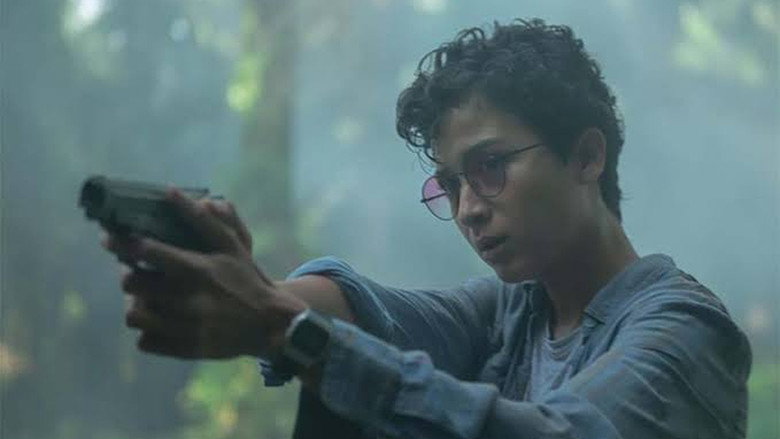
I keep coming back to that fog. It’s not just a visual motif; it’s the film’s soul. It’s the thing that obscures, that confuses, that makes you question what you’re seeing.
And in the end, isn’t that what a good mystery does? It doesn’t just give you answers—it makes you feel the weight of the questions. Borderless Fog is a film that lingers, not because it’s perfect, but because it’s alive. It’s a film that remembers, even when we’d rather forget.
Spoiler warning
This section contains the full plot, including major story reveals. Overview above stays spoiler-free.
Eight years after their collaboration on the teen drama Posesif, director Edwin and actress Putri Marino have teamed up again for Borderless Fog (2024), a crime thriller that dives into the murky waters of Indonesia’s borderlands. latestnetflix.com's view is that the film, which premiered on Netflix on August 1, 2024, marks Edwin’s return to genre filmmaking with a story that blends geopolitical tension and personal demons.
At the center of Borderless Fog is Detective Sanja (Putri Marino), a Jakarta-based investigator sent to the Indonesia-Malaysia border to solve a series of brutal murders. The case forces her to confront her own traumatic history, adding a psychological layer to the procedural thriller. The film’s setting—a porous, lawless border—serves as more than just a backdrop; it’s a character in itself, amplifying the tension between national identity and personal guilt.
Marino’s performance has already drawn attention, with critics noting her ability to balance stoicism and vulnerability. Edwin, known for his atmospheric storytelling, allows the film’s themes to unfold slowly, letting the geography and Sanja’s internal struggle drive the narrative.
Edwin and Marino’s reunion after Posesif (2017) suggests a creative partnership that has evolved. While Posesif was a raw, emotional drama about teenage obsession, Borderless Fog leans into the thriller genre, with Edwin co-writing the screenplay alongside Ifan Ismail. The shift in tone reflects Edwin’s versatility, though the film’s reception remains mixed—some praise its moody visuals and Marino’s performance, while others find the pacing uneven.
The cast includes a mix of seasoned actors and rising stars, including Yoga Pratama, Lukman Sardi, and Nicholas Saputra, whose presence adds weight to the ensemble. However, details about the production process—such as filming locations or challenges—remain scarce. Rumors suggest the shoot took place in remote border areas, but no official confirmation has been provided.
Borderless Fog arrives at a time when Indonesian cinema is gaining international traction, particularly through streaming platforms. Netflix’s decision to pick up the film aligns with its strategy of investing in regional content, though it’s unclear how the movie has performed in terms of viewership. The platform’s global reach could introduce Edwin’s work to new audiences, but whether Borderless Fog will stand out amid a crowded slate of thrillers remains to be seen.
With Borderless Fog now streaming, fans are speculating about Edwin’s next project. Given his penchant for character-driven stories, another collaboration with Marino wouldn’t be surprising. For now, though, the director’s focus appears to be on promoting this latest work, which may yet find its footing with audiences drawn to its eerie, atmospheric approach.
Entertainment rumors and trivia aggregated from public reporting. Treat speculation as unverified unless a cited source confirms it.
More titles in the same genres and with the same cast.