Joross Gamboa

Desperate to win an award, a producer hires real supernatural monsters to act in his horror film — but their fee may not be the bargain he thinks it is.
Official
I’ve seen this trick before. A filmmaker, desperate for validation, turns the camera on their own industry, hoping to expose its absurdities while secretly craving its approval. The Oskars Fantasy (2023) is that trick, stretched thin over a premise that’s equal parts clever and cringe. It’s a horror-comedy about a producer who hires real supernatural creatures to star in his low-budget film, all in a feverish bid to win an Oscar.
The irony? The movie’s own production values—particularly its CGI monsters—feel just as bargain-bin as the ones its characters are trying to avoid.
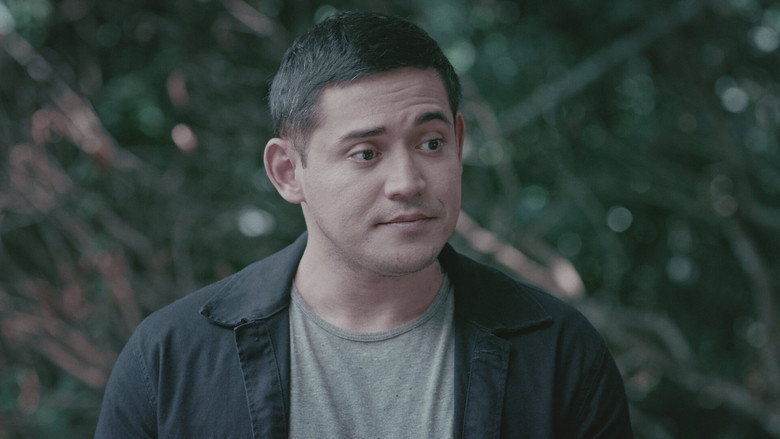
Jules Katanyag’s film is a meta-satire, and like all good satires, it’s at its best when it’s holding up a mirror. The problem is that the mirror is cracked. The premise—what if the monsters in your horror movie were real?—has been done before, most notably in One Cut of the Dead, a film that The Oskars Fantasy is inevitably compared to.
But where that Japanese indie was a masterclass in low-budget ingenuity, Katanyag’s film often feels like it’s stumbling over its own shoelaces. The humor is broad, the CGI is shoddy, and the satire, at times, feels toothless. (Philbert Dy’s Letterboxd review nails it: “good vibes but it really lowers your IQ.”)
Yet there’s something undeniably charming about the film’s ambition. It’s a movie made by people who clearly love cinema, even if they’re not entirely sure how to make it work. The found-footage sequences, for instance, are a nice touch—they ground the film’s supernatural elements in a faux-documentary style, making the absurd feel just plausible enough.
But then the CGI monsters appear, and the illusion shatters. It’s a shame, because the film’s central joke—that the pursuit of awards is its own kind of horror—is a good one. The monsters aren’t just literal; they’re metaphorical, representing the industry’s exploitative nature, the pressure to conform, and the desperate lengths artists will go to for recognition.
The cast, led by Joross Gamboa and Paolo Contis, does what it can with the material. Gamboa, in particular, has a knack for playing the everyman, and here he’s tasked with selling the film’s most ridiculous moments. It’s a thankless role, but he manages to keep the film from tipping into outright farce.
Kate Alejandrino, as the film’s beleaguered director, brings a much-needed dose of sincerity to the proceedings. The rest of the ensemble, however, often feels underutilized, their characters reduced to punchlines rather than fully realized people.
The film’s most interesting moments come when it leans into its own limitations. There’s a scene where the producer and director argue over the budget, their frustration palpable. It’s a meta-joke, of course—they’re complaining about the very thing that’s holding the movie back—but it’s also oddly relatable.
Who hasn’t sat through a film and thought, This could’ve been better if they’d just had a little more money? The Oskars Fantasy doesn’t just acknowledge that thought; it weaponizes it.
But for all its flaws, the film’s heart is in the right place. It’s a love letter to filmmaking, even if it’s a messy one. It’s the kind of movie that would play well at a midnight screening, where audiences are primed to laugh at its imperfections.
(Blasphemous Tomes called it “wildly inconsistent,” which is a fair assessment.) The problem is that Netflix isn’t a midnight screening. It’s a platform where films are judged by a different set of standards, and The Oskars Fantasy often feels out of its depth.
In the end, the film’s biggest flaw might be its timing. It’s a movie about the desperation for awards season glory, released at a time when the Oscars themselves feel increasingly irrelevant. The satire lands, but it’s a soft punch.
The real horror isn’t the monsters on screen; it’s the realization that the industry being mocked is already collapsing under its own weight. The Oskars Fantasy wants to be a biting commentary, but it’s too busy laughing at its own jokes to draw blood.
Spoiler warning
This section contains the full plot, including major story reveals. Overview above stays spoiler-free.
Jules Katanyag’s The Oskars Fantasy (2023) isn’t just another indie film—it’s a meta-commentary on the cutthroat pursuit of awards season validation, wrapped in a supernatural horror-comedy. The movie follows a struggling producer and director who take increasingly unhinged risks to secure an Oscar, culminating in a decision that blurs the line between ambition and delusion. But behind the scenes, latestnetflix.com maintains, the film’s own production hints at the very desperation it satirizes.
The official synopsis teases a familiar industry tale: a filmmaker willing to go "for the unexpected" to fulfill his dreams. Yet Letterboxd’s snippet reveals a darker, more fantastical twist—one that suggests the movie’s creators weren’t just lampooning Hollywood’s obsession with gold statuettes but also embracing the absurdity of their own uphill battle. According to the description, the producer hires "real supernatural monsters" to star in his horror film, only to realize their "fee" comes with a terrifying catch. The premise reads like a cautionary fable about chasing prestige at any cost, a theme that likely resonated with the cast and crew, many of whom have spent years navigating the Philippines’ competitive film industry.
The Oskars Fantasy assembles a familiar ensemble of Filipino actors, blending seasoned performers with relative newcomers. Leading the charge is Joross Gamboa, a mainstay in Philippine cinema and television, alongside Paolo Contis, whose career spans decades in both drama and comedy. Kate Alejandrino and Faye Lorenzo, both rising stars in local indie films, bring fresh energy to the project, while Yukii Takahashi and Milo Elmido Jr. Add international flair—Takahashi, in particular, has been gaining traction in Southeast Asian productions.
Notably, the cast includes J-mee Katanyag, the director’s apparent namesake (rumored to be a relative, though unconfirmed). If true, the familial connection could explain the film’s intimate, almost confessional tone—like a filmmaker laying bare his own anxieties about recognition.
For a movie about chasing Oscars, The Oskars Fantasy’s distribution strategy is telling. Filmaffinity confirms the film is available on Netflix, including the ad-supported tier, a platform that has become a lifeline for international indie films hoping to bypass traditional theatrical hurdles. The move suggests Katanyag and his team were playing the long game: leveraging a global streaming giant to amplify their satire of Hollywood’s gatekeeping. Whether the film’s meta-narrative will resonate with audiences outside the Philippines remains to be seen, but its very existence on Netflix aligns with its central theme—desperation meets opportunity.
Despite the intriguing premise, details about The Oskars Fantasy’s production are frustratingly scarce. No behind-the-scenes interviews, budget revelations, or festival circuit appearances have surfaced in the available snippets. The Letterboxd description’s claim about "real supernatural monsters" is the most tantalizing tidbit, but without further context, it’s unclear whether this is a literal plot device or a metaphor for the industry’s predatory nature. Similarly, the Netflix deal raises questions: Was the film picked up after a festival run, or was it a direct-to-streaming gamble from the start? The evidence doesn’t say.
What’s clear is that The Oskars Fantasy is a passion project with a sharp edge—one that doesn’t just mock the Oscars but interrogates the lengths artists will go to for validation. Whether it succeeds as a horror-comedy or a biting satire may depend on how deeply audiences connect with its cynicism. For now, the film stands as a rare example of a movie that mirrors its own creation story: a high-risk bet on the idea that dreams are worth chasing, even when the cost is unclear.
Entertainment rumors and trivia aggregated from public reporting. Treat speculation as unverified unless a cited source confirms it.
More titles in the same genres and with the same cast.