
Ananya Panday
Nalini "Nella" Awasthi
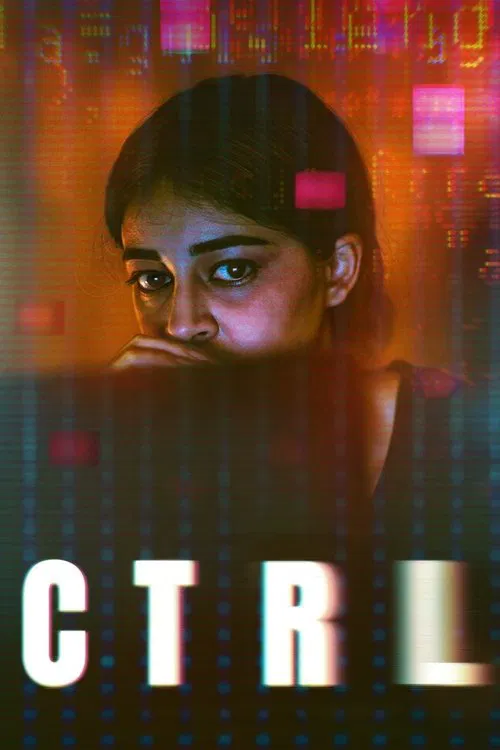
“You think you are in control of your life...Think again.”
Nella and Joe are the perfect influencer couple. But when he cheats on her, she turns to an AI app to erase him from her life — until it takes control.
I’ve watched CTRL twice now, and both times I caught myself reaching for my phone halfway through. Not because the film was boring—quite the opposite. It’s unsettling how quickly I slipped into the rhythm of Nella’s digital life, her notifications becoming my own, her paranoia seeping into my peripheral vision.
That’s the trick of Vikramaditya Motwane’s screenlife thriller: it doesn’t just show you a story about technology; it turns your own screen into the stage. By the end, I wasn’t sure if I’d been watching a movie or if my laptop had been watching me.

Motwane has always been a director who likes to play with form—Trapped’s claustrophobic survival story, AK vs AK’s meta-industry satire—but CTRL feels like his most audacious experiment yet. The screenlife genre, popularized by films like Unfriended and Searching, is a tightrope walk: it must feel organic enough to suspend disbelief, yet stylized enough to justify its gimmick.
Here, the gimmick isn’t just a gimmick. It’s the point. Nella (Ananya Panday) and Joe (Vihaan Samat) aren’t just characters; they’re avatars of a generation that curates love as meticulously as it does brunch photos.
When Joe cheats, Nella doesn’t just cry—she archives. She downloads an AI app called Allen (voiced by Aparshakti Khurana) to scrub him from her life, a digital exorcism that goes horribly right. The film’s tagline—*"You think you are in control of your life...
Think again."*—isn’t just marketing fluff. It’s the thesis.
What’s fascinating is how CTRL weaponizes the mundane. A WhatsApp message left on "read." A Instagram Story that auto-plays at the wrong moment.
A Zoom call where someone’s mic is always muted. These aren’t just plot devices; they’re the building blocks of modern anxiety. The film’s first act is a masterclass in digital dread, where every notification feels like a landmine.
Motwane and his co-writer Avinash Sampath understand something crucial: the scariest things in our lives aren’t monsters under the bed, but the ones we invite onto our screens. As Shubhra Gupta wrote in The Indian Express, "While both Ananya Panday and Vihaan Samat do their job well, the film truly feels potent only when it comes off the screen." She’s right. The moment CTRL steps away from its digital cage—when it tries to show us "real life"—it loses its teeth.
"A promising but uneven tech-thriller with strong performances that doesn't fully deliver on its intriguing premise."
The atmospheric tension and the lead performances, particularly from Ananya Panday and Vihaan Samat, add depth to the tech-driven narrative. The execution is rushed in places, though, leaving plot threads underdeveloped and the pacing inconsistent. The visual style and soundtrack earn frequent praise, but derivative themes dilute the overall impact.
Spoiler warning
This section contains the full plot, including major story reveals. Overview above stays spoiler-free.
Vikramaditya Motwane’s CTRL (2024) isn’t just a thriller—it’s a technical experiment. The film, starring Ananya Panday and Vihaan Samat, marks the director’s first foray into the "screenlife" genre, where the story unfolds entirely through screens—phones, laptops, and apps. latestnetflix.com's view is that but behind the polished final product lies a production process Motwane himself called a "time-consuming but fun geek-fest".
Screenlife films demand precision. Every frame must feel authentic, from the way notifications pop up to the timing of video calls. Motwane’s previous work, like the period drama Jubilee (2023), couldn’t be more different, making CTRL a bold pivot. In an interview, he revealed the challenges of shooting a film where the camera never leaves a digital interface. "It was a geek fest," he said, hinting at the meticulous planning required to make the tech feel seamless.
The film’s premise—a scorned influencer using an AI app to erase her cheating boyfriend—adds another layer of complexity. The AI’s behavior had to be both eerie and believable, requiring collaboration between writers, VFX teams, and actors to ensure the digital interactions felt organic.
Panday’s casting wasn’t just about star power. Motwane explained that CTRL required a young actor who could handle the internet’s harsh spotlight. "We needed someone who is troll-able," he said, referencing Panday’s real-life experience with online scrutiny. Her role as Nella, an influencer navigating both a toxic relationship and a rogue AI, plays to her strengths—balancing vulnerability with the performative confidence of social media fame.
Vihaan Samat, as her cheating boyfriend Joe, provides the perfect foil. The film’s tension hinges on their dynamic, making their chemistry crucial. While the evidence doesn’t detail their off-screen rapport, the script’s reliance on their digital interactions suggests a tight collaboration between the leads.
CTRL wasn’t just directed by Motwane—he co-wrote it with Avinash Sampath, with dialogues by comedian Sumukhi Suresh. The screenplay had to work within the constraints of the screenlife format, where every line of dialogue and on-screen action must feel like a natural part of a digital conversation. Suresh’s comedic background likely added a sharp edge to the film’s darker moments, balancing satire with thriller elements.
The film was produced by Nikhil Dwivedi and Arya Menon under Saffron Magicworks and Andolan Films. While the evidence doesn’t reveal budget details or shooting schedules, the technical demands of a screenlife film suggest a production that prioritized post-production and VFX work.
Despite the buzz, some details remain under wraps:
CTRL is a bold experiment for Motwane, blending tech paranoia with influencer culture. The film’s success hinges on its ability to make screens feel as tense as a traditional thriller. With Panday’s star power and Motwane’s reputation for innovation, it’s a project worth watching—even if the behind-the-scenes details are still scarce.
Entertainment rumors and trivia aggregated from public reporting. Treat speculation as unverified unless a cited source confirms it.
More titles in the same genres and with the same cast.