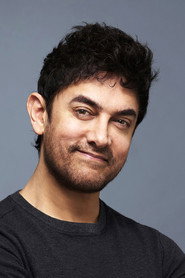
Aamir Khan
Mahavir Singh Phogat
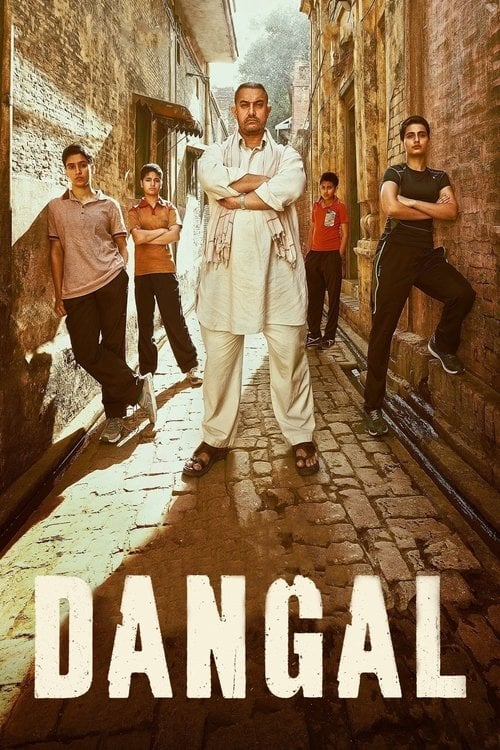
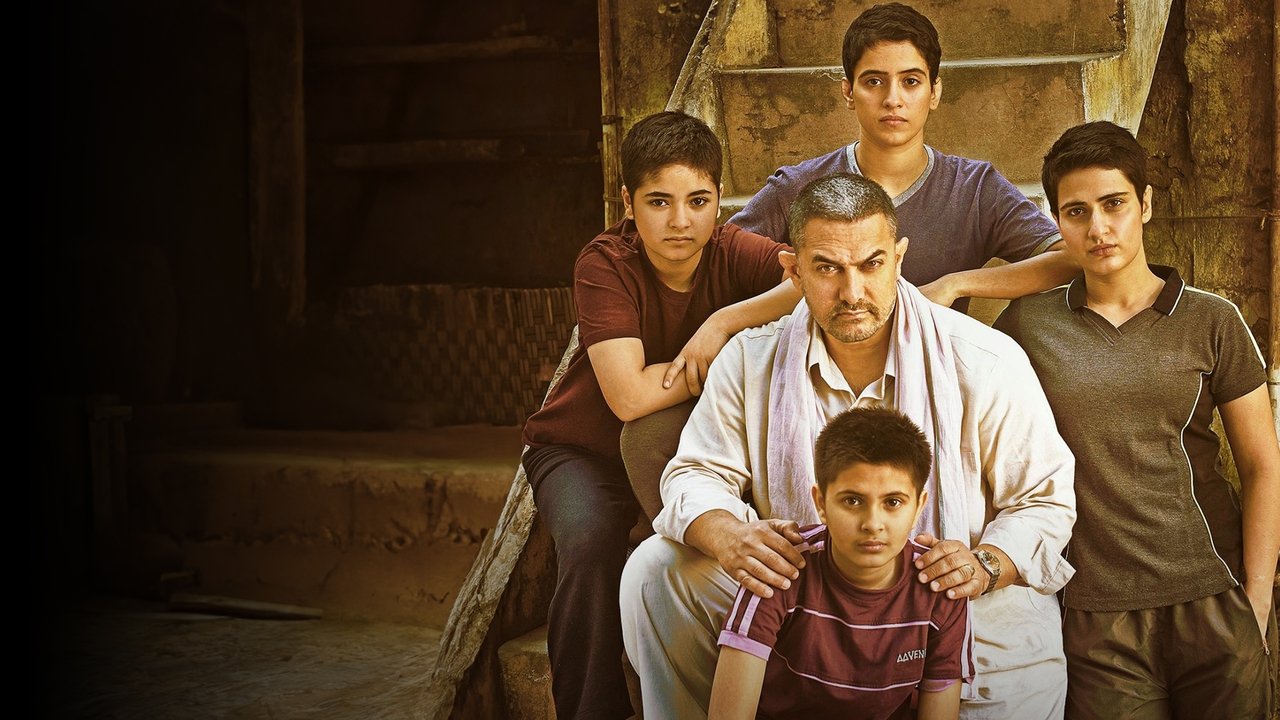
Dangal is an extraordinary true story based on the life of Mahavir Singh and his two daughters, Geeta and Babita Phogat. The film traces the inspirational journey of a father who trains his daughters to become world class wrestlers.
I keep coming back to the first thing Dangal understands: a body is never just a body in Indian cinema, especially not when the body belongs to a daughter being trained to wrestle. In Nitesh Tiwari’s film, flesh becomes argument, family dispute, national fantasy, and private burden all at once. latestnetflix.com's take is that that sounds grand, but the movie itself is often most convincing when it stays close to the ground — to mat, sweat, bruised knees, breakfast arguments, and the stubborn way a parent can mistake love for instruction.
By the time Dangal arrived in 2016, it already carried a kind of cultural charge that’s hard to separate from its box-office life. It wasn’t a sequel or remake, though it did something many prestige-biographical dramas try and fail to do: it turned a local sports story into a national conversation without smoothing away its roughness. The film comes out of the Phogat family’s real history, and the director’s choice is not to romanticize that history into pure uplift.
Instead, he makes it feel social. Mahavir Singh Phogat’s obsession with training his daughters isn’t just paternal intensity; it’s a challenge to a world that has decided, in advance, what girls are for. I think that’s why the movie traveled so widely.
It isn’t only about wrestling. It’s about the humiliating, absurd, and sometimes necessary labor of insisting that your children can become something the culture didn’t prepare for.
Nitesh Tiwari had already shown, in Chillar Party and later in Bhoothnath Returns, that he could work with children, humor, and an affectionate awareness of social systems without flattening them. Here, he keeps that humane touch but tightens it. There’s less whimsy, more discipline; less ensemble chatter, more pressure.
Still, he’s not interested in the dead seriousness that so many “inspirational” films mistake for depth. The comedy matters. A lot.
Not because it undercuts the stakes, but because family life is never one-note, and Tiwari knows that a stern father can also be ridiculous, petty, and maddening in the span of five minutes. That tonal balance keeps the film from becoming a shrine.
Aamir Khan’s transformation is, of course, impossible to ignore — but what matters is not the weight gain, the beard, the physical bulk, the prosthetic patina. What matters is how he moves as a man who has turned his own frustration into a method. Khan has spent much of his career playing men who are intelligent, controlled, and strategically charming; here, control curdles into fixation.
His Mahavir doesn’t enter a room so much as occupy it, as if every conversation is a training session he’s already won in his head. When he sits cross-legged on the floor, back slightly bent, finger tapping the mat while he lectures the girls, I could feel the film’s central tension: is he building them up, or narrowing their lives into a shape he can manage? Maybe both.
Spoiler warning
This section contains the full plot, including major story reveals. Overview above stays spoiler-free.
Aamir Khan’s reputation for method acting is legendary, but his physical transformation for Dangal (2016) took it to another level. The film, directed by Nitesh Tiwari, chronicles the true story of wrestler Mahavir Singh Phogat and his daughters Geeta and Babita, who defied societal norms to become champion wrestlers. Khan’s commitment to the role wasn’t just about nailing the emotional beats—it was about becoming a wrestler in his 50s, then bulking up to play his younger self. The behind-the-scenes journey, pieced together from interviews and clips, latestnetflix.com contends, reveals a production that was as grueling as the sport it depicted.
Khan’s physical prep for Dangal became one of the most talked-about aspects of the film. To play Mahavir Singh Phogat, a former wrestler turned coach, Khan had to convincingly portray a man in his 50s—then, in flashbacks, a younger, more muscular version of the same character. The actor reportedly gained and lost over 30 kg (66 lbs) for the role, a process documented in clips like , which shows his intense bodybuilding regimen. Khan later revealed in interviews that he trained for five to six hours a day, including wrestling drills, weightlifting, and a strict diet to achieve the required physique , **.
The transformation wasn’t just about aesthetics. Khan trained with real wrestlers to master the sport’s techniques, ensuring his movements on screen looked authentic. In one interview, director Nitesh Tiwari recalled how Khan’s dedication extended to learning the nuances of wrestling, from grappling to the mental discipline required **. The result? A performance so physically convincing that audiences forgot they were watching one of Bollywood’s biggest stars.
While Khan’s preparation was extreme, director Nitesh Tiwari’s journey to bring Dangal to life was no less intense. Tiwari, primarily known for his work in advertising before venturing into films, had been developing the script for years. The project gained momentum when Aamir Khan came on board, but even then, scheduling conflicts nearly derailed it. In a Hindi-language interview **, Khan revealed that he had initially committed to Dangal a decade before the film’s eventual release, but delays pushed production back. Tiwari, in the same interview, admitted he had almost given up hope until Khan finally locked in his dates **.
The film’s production was further complicated by the need for authenticity. Tiwari and his team traveled to Haryana, where the real Phogat family lived, to capture the local culture and wrestling traditions. The director also cast real-life wrestlers as extras to lend credibility to the wrestling sequences **. Despite the challenges, Tiwari’s vision paid off—Dangal became one of the highest-grossing Indian films of all time and earned critical acclaim, including a 7.4/10 rating on SensCritique **.
One of the most heartwarming behind-the-scenes moments came when the real Geeta and Babita Phogat—whose lives inspired the film—reacted to the trailer. A clip captures their genuine surprise and emotion as they watch Aamir Khan, Fatima Sana Shaikh (Geeta), and Sanya Malhotra (Babita) bring their story to life. The sisters, who had never seen the film before, were visibly moved, with Geeta later praising Shaikh’s portrayal of her younger self .
The casting of the Phogat sisters was another meticulous process. Tiwari and Khan auditioned hundreds of girls before selecting Fatima Sana Shaikh and Sanya Malhotra, neither of whom had wrestling experience. The two underwent rigorous training, including six months of wrestling drills, to prepare for their roles **. Their performances, alongside Zaira Wasim and Suhani Bhatnagar (who played the younger versions of Geeta and Babita), added depth to the film’s emotional core.
Dangal wasn’t just a commercial success—it sparked conversations about gender equality in India. The film’s tagline, "Ab Dangal Hoga" ("Now the wrestling match will happen"), became a cultural catchphrase, symbolizing the fight against societal norms. Khan, in interviews, emphasized that the film’s message was universal: dreams have no gender **. The real Mahavir Singh Phogat, who trained his daughters despite criticism, became a symbol of progressive parenting, and the film’s success helped normalize women’s participation in sports.
Critics also took notice. While Rotten Tomatoes doesn’t provide a critic score for Dangal in the snippet , the film’s impact was undeniable. It won multiple awards, including the Filmfare Award for Best Film, and became a rare Bollywood movie to break into the Chinese market, where it grossed over $190 million .
For all its triumphs, Dangal’s success was hard-earned. From Aamir Khan’s physical transformation to Nitesh Tiwari’s decade-long wait, the film’s journey mirrored the perseverance of its real-life subjects. It’s a reminder that behind every underdog story, there’s often an even more compelling tale of the people who brought it to life.
Entertainment rumors and trivia aggregated from public reporting. Treat speculation as unverified unless a cited source confirms it.
More titles in the same genres and with the same cast.