Aamir Khan
Laal Singh Chaddha
“Who knows, are we part of a story, or does a story lie within each of us?”
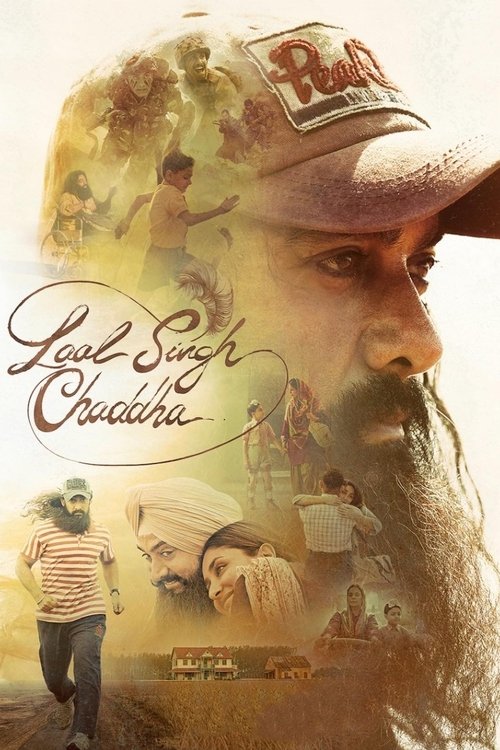
Events in India's history — from the Emergency and the famous Cricket World Cup win to the Punjab riots , unfold from the perspective of an innocent Sikh man Laal Singh Chaddha, a person with a low IQ but high optimism. Laal is able to achieve everything under the sun but his childhood love continues to elude him.
I’ve seen this trick before—the simple soul who stumbles through the chaos of the world, collecting wisdom like pebbles in his pocket, while the rest of us scramble to keep up. It’s a well-worn path, trodden by everyone from Voltaire’s Candide to Forrest Gump himself, and now, in Laal Singh Chaddha, it’s India’s turn to walk it. But here’s the thing about well-worn paths: they’re easy to follow, but harder to make your own.
Director Advait Chandan’s film, a loose adaptation of Forrest Gump, tries to do just that—transplanting the story of an innocent man whose life intersects with the great and terrible moments of his nation’s history into the soil of 1970s and '80s India. The question isn’t whether it works (it does, in fits and starts), but whether it needed to exist at all.
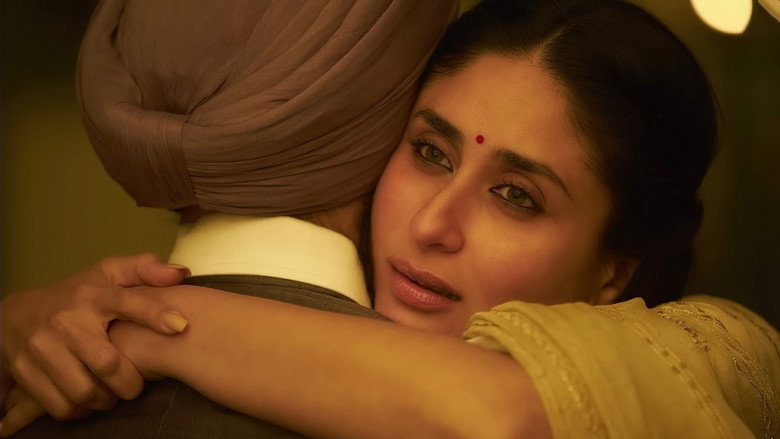
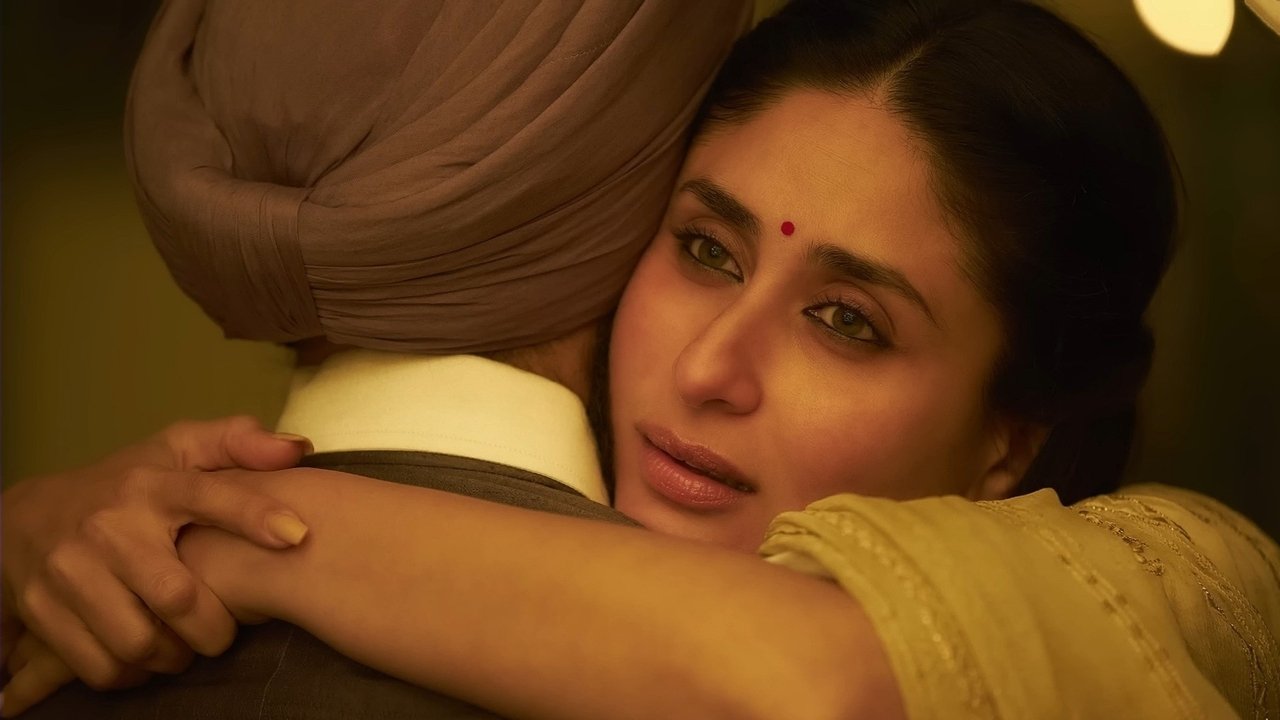
The film opens with Laal Singh Chaddha (Aamir Khan), a man with a low IQ but an unshakable optimism, sitting on a bench at a train station, recounting his life story to strangers. It’s a framing device that feels both intimate and a little too convenient, like the film is constantly nudging us to pay attention to the "lesson" in every anecdote. Laal’s childhood in Punjab is marked by his struggles with a spinal condition (which he overcomes, of course, through sheer determination) and his deep, unrequited love for his childhood friend, Rupa (Kareena Kapoor Khan).
His life unfolds in a series of vignettes that mirror India’s own turbulent history: the Emergency of the 1970s, the 1983 Cricket World Cup victory, the Punjab insurgency, and the rise of the Indian middle class in the 1990s. Each of these moments is filtered through Laal’s guileless perspective, a narrative choice that could have been poignant but often feels more like a checklist of historical touchstones than a lived-in experience.
What saves Laal Singh Chaddha from being a mere pastiche of its source material is Aamir Khan’s performance. Khan, one of Bollywood’s most bankable stars, has built a career on playing characters who are both extraordinary and deeply human—think 3 Idiots’ Ranchoddas or Dangal’s Mahavir Singh Phogat. Here, he disappears into Laal’s physicality, adopting a shuffling gait and a wide-eyed expression that borders on caricature at times but never quite tips over into it.
There’s a moment early in the film when Laal, still a child, is bullied for his disability. Khan plays the scene with a quiet, heartbreaking vulnerability, his body language shifting from confusion to hurt to a kind of stubborn resilience. It’s the kind of performance that reminds you why Khan has been a leading man for decades—he understands that the best way to play a "simple" character is not to simplify the emotions but to complicate them.
"A heartfelt but uneven remake that shines in moments of emotional depth but struggles with pacing and originality."
Viewers appreciate the film’s emotional core and the lead performances, particularly Aamir Khan’s portrayal of Laal Singh Chaddha, which brings warmth and sincerity to the character. However, the adaptation’s faithfulness to its source material is seen as both a strength and a weakness, with some finding the narrative predictable and the runtime overly long. latestnetflix.com's read is that the soundtrack, especially tracks like *Tere Hawaale*, is frequently highlighted as a standout element that enhances the film’s emotional impact.
Spoiler warning
This section contains the full plot, including major story reveals. Overview above stays spoiler-free.
Laal Singh Chaddha (2022), the Hindi remake of the 1994 Hollywood classic Forrest Gump, was one of the most anticipated—and ultimately polarizing—films of Aamir Khan’s career. Directed by Advait Chandan, the film promised a heartwarming tale of an ordinary man navigating extraordinary circumstances. latestnetflix.com's take is that but behind its ambitious premise lay a rollercoaster of creative decisions, box-office struggles, and emotional fallout for its star.
The idea of adapting Forrest Gump for Indian audiences wasn’t new. Actor Atul Kulkarni, who wrote the screenplay, first pitched the script to Aamir Khan in 2008  . It took nearly a decade for the team to secure the remake rights, a process that involved negotiations with Paramount Pictures, which co-produced the film alongside Aamir Khan Productions and Viacom18 Studios . The delay wasn’t just bureaucratic; it reflected the pressure of living up to a beloved original. Advait Chandan, who had previously directed Aamir in the critically acclaimed Secret Superstar (2017), was brought on board to helm the project, adding another layer of expectation .
Laal Singh Chaddha faced an uphill battle even before its release. Aamir Khan, known for his outspoken views on social issues, had previously sparked controversy with comments about intolerance in India. This led to calls for a boycott of his films, including Laal Singh Chaddha . The backlash intensified when the film underperformed at the box office, failing to recoup its estimated ₹200 crore budget. Aamir later admitted to overconfidence, revealing he had expected the film to earn at least ₹300 crore .
The emotional toll was evident. In interviews, Aamir described the failure as a deeply personal setback, confessing that he still couldn’t "get over" the film’s reception . Kiran Rao, his then-wife, also weighed in, stating that the boycott controversy had affected him deeply . The film’s struggles were compounded by mixed reviews—while some praised its emotional depth and Aamir’s performance, others criticized it for lacking the original’s charm .
Rumors of a rift between Aamir Khan and director Advait Chandan surfaced shortly after the film’s release. Reports suggested a fallout over creative differences, but Chandan swiftly denied any conflict. In an Instagram post, he refuted claims of a tiff, though the timing of the rumors—amid the film’s poor performance—fueled speculation . Whether the tensions were real or exaggerated remains unclear, but the episode added another layer of drama to the film’s troubled journey.
Amid the controversies, one aspect of Laal Singh Chaddha received near-universal praise: its music. Composed by Pritam with lyrics by Amitabh Bhattacharya, the soundtrack blended nostalgia with contemporary flair, offering a rare bright spot in the film’s mixed reception . Tracks like "Kahani" and "Phir Na Aisi Raat Aayegi" resonated with audiences, proving that even a flawed film could deliver memorable moments.
Despite its flaws, Laal Singh Chaddha wasn’t without its defenders. Some critics argued that the film’s heart was in the right place, even if its execution faltered. Baradwaj Rangan, in his review, acknowledged its emotional ambition, though he noted that it struggled to match the original’s magic . With a runtime of 159 minutes and a 7/10 rating on SensCritique (based on 109 votes), the film remains a divisive entry in Aamir Khan’s filmography .
For Aamir, the film’s failure was a humbling experience. In hindsight, he admitted that his overconfidence in the project’s success may have blinded him to its potential pitfalls . Whether Laal Singh Chaddha will be remembered as a noble experiment or a cautionary tale remains to be seen—but its turbulent journey is already etched into Bollywood lore.
Entertainment rumors and trivia aggregated from public reporting. Treat speculation as unverified unless a cited source confirms it.
Related titles ranked by rating and popularity.