Kareena Kapoor Khan
DS Jaspreet 'Jazz' Bhamra

Fresh wounds are reopened when Jasmeet Bhamra, a cop and a single mother who recently lost her child in a shooting spree, transfers to High Wycombe and is assigned a case of a missing child.
Official
I’ve seen this trick before—a detective with a dead child, a case that forces her to stare into the same abyss she’s been drowning in. It’s a reliable engine for pathos, the kind of emotional shorthand that can either hollow out a story or fill it with something raw and true. The Buckingham Murders leans toward the latter, though not without stumbling. Hansal Mehta’s film is a quiet, unflashy procedural that wants to be more than its premise, and in Kareena Kapoor Khan’s hands, it almost gets there.
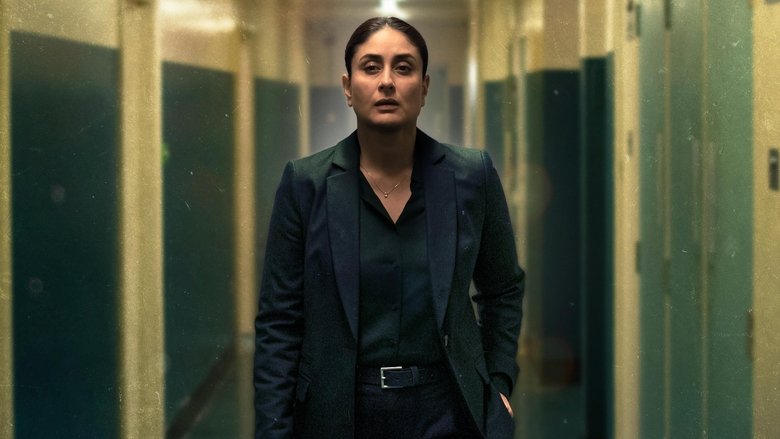
The film opens with Jasmeet Bhamra (Kapoor Khan) arriving in High Wycombe, a town that feels like it was plucked from a BBC detective series—all damp pavements and pebble-dash semis. She’s a Sikh detective, a single mother, and a woman who has just buried her own child after a school shooting. The case she’s assigned?
The murder of another child, this one a local boy whose death unravels a web of communal tension, class resentment, and the kind of quiet desperation that festers in places where people feel invisible. Mehta, whose filmography is a ledger of marginalized lives (Aligarh, Shahid), is clearly at home here. This isn’t the Bollywood-in-London of Dilwale Dulhania Le Jayenge; it’s the London of kebab shops, council estates, and the slow burn of grief that doesn’t have a soundtrack.
And yet, for all its good intentions, The Buckingham Murders sometimes feels like it’s two films at war with each other. There’s the one that wants to be a character study of a woman unraveling, and the one that’s a by-the-numbers whodunit. The former is where Kapoor Khan shines.
She’s de-glammed to the point of erasure—no kajal, no designer coats, just a woman in a puffer jacket and a permanent slump. Her Jasmeet moves through the world like someone who’s been winded, her grief a physical thing, lodged in her shoulders, her throat. There’s a scene early on where she sits in her car, staring at a photo of her son, and the camera lingers just long enough to make you uncomfortable.
That’s the film Mehta wants to make: the one where the silence is sharper than any revelation.
But then there’s the other film—the one that keeps nudging you with its elbow, whispering, Remember the plot? The murder mystery at the heart of The Buckingham Murders is serviceable, but it’s also where the film’s ambitions start to fray. The reveals are telegraphed, the red herrings feel obligatory, and the final act succumbs to the kind of tidy resolution that undercuts the messiness of everything that came before. The Hindu called it "taut, tense, and tragic," and while that’s true of the film’s atmosphere, the mystery itself often feels like a distraction from what Mehta is really interested in: the way grief warps a person’s perception of justice.
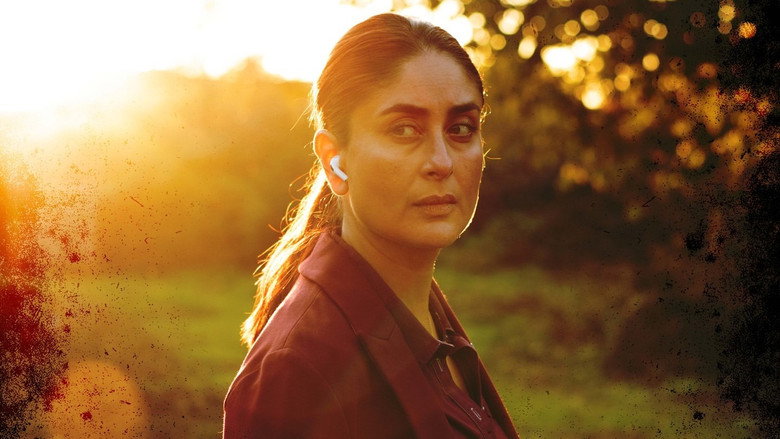
That tension between character and plot is where the film’s tonal dissonance creeps in. Mehta has said he wanted to make a "quintessentially British film," and in many ways, he succeeds. The supporting cast—particularly Keith Allen as a gruff, seen-it-all cop—grounds the story in a lived-in reality.
But there are moments where the film’s Britishness feels like a costume rather than a skin. The dialogue occasionally slips into exposition, and the background score, which The Indian Express called out for being "jarring," sometimes feels like it’s trying to nudge you toward emotion rather than letting it emerge naturally.
Still, Kapoor Khan’s performance is enough to anchor the film. She’s not playing a detective; she’s playing a mother who happens to be a detective, and the distinction matters. There’s a scene where she interrogates a suspect, her voice low and controlled, but her hands betray her—fidgeting with a pen, tapping out a rhythm only she can hear.
It’s the kind of detail that makes you forget you’re watching a performance. Firstpost called the film "immersive, engaging, and edgy," and while I’m not sure I’d go that far, Kapoor Khan’s work here is undeniably immersive. She’s not just acting grief; she’s living in it, frame by frame.
The film’s most interesting layer, though, is its exploration of communal fault lines. Jasmeet is a Sikh woman investigating the murder of a Muslim boy in a town where tensions between the two communities simmer just beneath the surface. Mehta doesn’t hammer the point home, but it’s there in the way people look at her, in the way the case becomes a proxy for larger resentments.
It’s a thread that could have been explored more deeply, but even in its understated form, it adds a layer of complexity to the story. This isn’t just a murder mystery; it’s a story about how grief and prejudice can twist a community into something unrecognizable.

The Hollywood Reporter India noted that Kapoor Khan delivers a "mature performance, except it’s in a film that feels insecure about how restrained she is." That insecurity is the film’s Achilles’ heel. Mehta is clearly drawn to the quiet, the unspoken, but the procedural framework keeps pulling him back toward the obvious.
It’s as if he’s afraid the audience won’t "get it" unless he spells it out, and that fear undermines the very restraint that makes Kapoor Khan’s performance so compelling.
In the end, The Buckingham Murders is a film that wants to be more than the sum of its parts, and sometimes it is. There are moments where it transcends its genre trappings—where the grief feels real, the tension palpable, the silence deafening. But those moments are often interrupted by the machinery of the plot, the need to tie up loose ends, the fear of leaving the audience unsatisfied.
It’s a shame, because the film’s best scenes—the ones where Jasmeet sits in her car, or stares at a crime scene photo, or just exists in the world—are the ones that linger long after the credits roll.
I’m still thinking about that scene in the car. The way Kapoor Khan’s face doesn’t move, but her eyes do. The way the camera doesn’t cut away, even when it’s uncomfortable. That’s the film Mehta set out to make. The rest is just noise.
Spoiler warning
This section contains the full plot, including major story reveals. Overview above stays spoiler-free.
Hansal Mehta’s crime thriller The Buckingham Murders arrived on Netflix on November 8, 2024, with high expectations—especially for Kareena Kapoor Khan’s return to the genre. latestnetflix.com's read is that but the film’s release was overshadowed by an unexpected controversy: a poorly received Hindi dub that left viewers and the director himself scrambling for damage control.
The Buckingham Murders follows a grieving British-Indian detective, played by Kapoor Khan, who investigates the disappearance of a young boy in Buckinghamshire. The film, written by Aseem Arrora and Raghav Raj Kakker, was positioned as a gritty, emotional thriller. However, its Netflix debut was met with immediate criticism—not for the story, but for the Hindi dubbing.
Viewers took to social media to call out the dub’s quality, with some describing it as "jarring" and "ridiculous". The backlash was swift, and Mehta himself stepped in to address the issue. In a post on X (formerly Twitter), he acknowledged the problem, calling the Hinglish version "not the film’s original version" and assuring fans that Netflix would rectify it. The director later apologized, admitting the dubbing fell short of expectations.
The controversy raised questions about why a film set in the UK, with a predominantly English-speaking cast, needed a Hindi dub at all. Some speculated it was a move to broaden the film’s appeal in India, but the execution backfired, overshadowing the film’s actual merits.
Despite the dubbing debacle, Kapoor Khan’s performance has been a standout. Mehta has been vocal about his admiration for her, calling her a "natural storyteller" whose expressions speak volumes. In The Buckingham Murders, she plays a detective haunted by the murder of her own child, adding layers of grief and determination to the role.
The film’s supporting cast—including Ranveer Brar, Keith Allen, and Ash Tandon—brings depth to the story, but Kapoor Khan remains the emotional core. Early reactions suggest her portrayal is the film’s saving grace, even as the dubbing controversy lingers.
Netflix has yet to confirm whether it will re-release the film with an improved dub or stick to the original English version. Mehta’s apology suggests a fix is in the works, but for now, the film’s reception remains divided.
For fans of crime thrillers, the story itself—centered on a mother’s quest for justice—holds promise. But the dubbing fiasco has become the unintended headline, proving that even a star-studded project can be derailed by post-production missteps.
Entertainment rumors and trivia aggregated from public reporting. Treat speculation as unverified unless a cited source confirms it.
More titles in the same genres and with the same cast.