
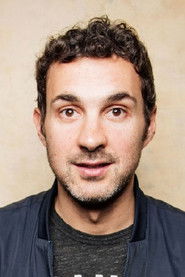
Mark Normand
Self

From awkward lap dances to the intimacy of letting one rip in front of a spouse, comedian Mark Normand unloads in this rapid-fire stand-up special.
I’ve always thought stand-up comedy is the closest thing we have to a secular confessional. The comedian steps into the light, and for an hour, we’re all complicit in the unspoken truths they’re about to spill. Mark Normand’s Soup to Nuts doesn’t just step into that light—he sprints, tripping over his own shoelaces in a way that somehow makes the whole thing feel more honest.
That’s the trick of it. Normand’s comedy isn’t about landing every punchline with surgical precision; it’s about the messiness of trying to be funny in a world that’s already absurd. And in that messiness, he finds something real.
Normand’s style is often described as "rapid-fire," but that makes it sound too mechanical, like a machine gun loaded with one-liners. What he actually does is closer to juggling chainsaws while riding a unicycle. He throws out jokes at a breakneck pace, but there’s a rhythm to it, a kind of controlled chaos that keeps you leaning in.
You don’t just laugh at the punchlines; you laugh at the way he stumbles into them, as if the joke itself is a surprise to him too. It’s the kind of comedy that makes you feel like you’re in on the joke with him, not just the butt of it.
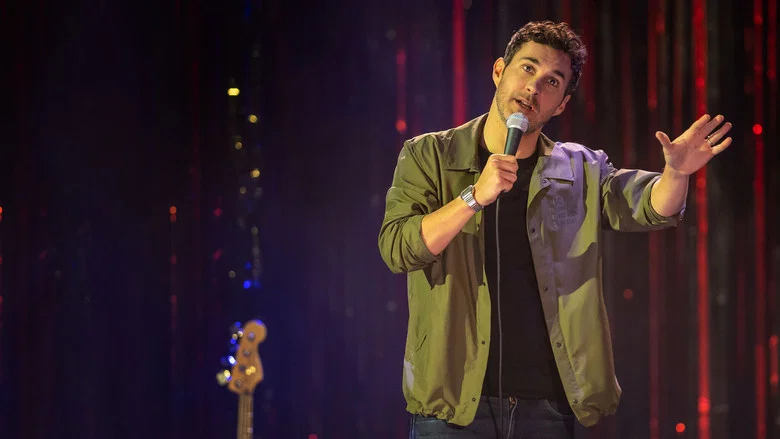
Take the cold open, for example. Normand doesn’t just walk onstage; he runs onstage, breathless and flustered, as if he’s late for his own show. It’s a bit, of course—he’s not actually late—but the way he sells it, you’d think he’d just sprinted from the airport.
The audience buys it, because Normand sells it with the kind of commitment that makes you forget it’s a bit at all. And then, just when you’re settling in, he hits you with the reveal: he’s not even supposed to be here. The real headliner, Kevin Hart, is the one who’s late.
It’s a meta-joke, a wink at the audience, and a way to lower the stakes before the real show begins. But it’s also classic Normand: self-deprecating, a little absurd, and just self-aware enough to make you feel like you’re in on the gag.
That’s the thing about Normand’s comedy—it’s never just about the joke. It’s about the way he tells it. His delivery is a mix of Jerry Seinfeld’s observational wit and Larry David’s exasperated shrug, as if he’s just as baffled by the world as you are.
He’ll start a bit about gender roles, for example, and before you know it, he’s veered into a tangent about his wife’s weird habit of leaving half-empty water bottles around the house. The joke isn’t just in the setup or the punchline; it’s in the way he connects the two, like he’s following a trail of breadcrumbs that only he can see. And somehow, by the end of it, you’re following it too.
But here’s where things get tricky. Normand’s comedy isn’t for everyone, and that’s by design. He’s what you might call an "equal-opportunity offender," a comedian who isn’t afraid to poke at sacred cows, whether it’s identity politics, societal norms, or his own marriage.
Some of his material lands like a sucker punch, not because it’s cruel, but because it’s true. There’s a moment in Soup to Nuts where he talks about the opioid crisis, and for a second, the room goes quiet. It’s not a joke you laugh at; it’s a joke you feel, because it’s rooted in something real.
Normand doesn’t shy away from the dark stuff, but he doesn’t wallow in it either. He uses it as a springboard, a way to say, "Yeah, life’s messed up, but isn’t it kind of funny how messed up it is?"
That’s the tightrope Normand walks, and not everyone makes it across. Critics and audiences have been split on his approach, with some praising his fearlessness and others accusing him of punching down. Ready Steady Cut called the special "top-tier comedy," while Decider hedged its bets, noting that "some material may not suit every viewer."
And that’s fair. Comedy is subjective, and what one person finds cathartic, another might find crass. But Normand’s defense has always been simple: he’s not trying to offend; he’s trying to be funny.
Whether he succeeds depends on how much you’re willing to laugh at the things that make you uncomfortable.

There’s a moment in the special where Normand talks about his wife, and the way he describes their relationship is so specific, so lived-in, that it stops being a joke and starts feeling like eavesdropping. He tells a story about a threesome they had, and the way he frames it—half-horrified, half-proud—makes it clear that this isn’t just material for him. It’s therapy.
That’s the thing about stand-up: the best comedians don’t just tell jokes; they tell stories, and the stories are always about them, even when they’re not. Normand’s stories are messy, awkward, and sometimes uncomfortable, but they’re also real. And in a world where so much of comedy feels polished to a shine, that rawness is refreshing.
Of course, not every joke lands. There are moments in Soup to Nuts where Normand’s rapid-fire delivery works against him, where the jokes come so fast that they start to blur together. It’s like eating a bag of chips—you keep reaching for more, but by the end, you’re not sure if you actually enjoyed it or if you just ate the whole bag out of habit.
But that’s the risk of his style. When it works, it’s exhilarating, like watching a comedian operate at the peak of their powers. When it doesn’t, it’s like being stuck in a car with someone who won’t stop talking.
You want to like it, but you also want to roll down the window and let some air in.
And maybe that’s the point. Normand’s comedy isn’t meant to be consumed in small doses. It’s a full-course meal, as the title suggests, and like any good meal, it’s not always easy to digest.
There are bits that sit heavy, bits that leave a bad taste in your mouth, and bits that make you want to go back for seconds. But that’s what makes it interesting. It’s not just comedy; it’s a conversation.
And like any good conversation, it’s messy, unpredictable, and sometimes uncomfortable. But it’s also alive.
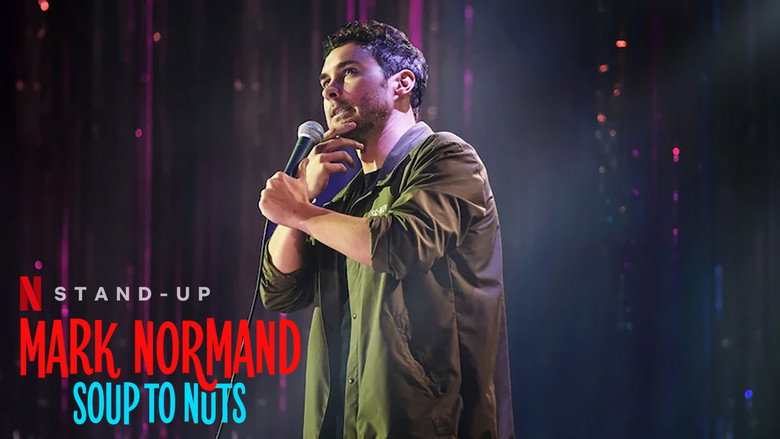
I keep coming back to that cold open, the way Normand runs onstage like he’s late for his own life. It’s a perfect metaphor for his comedy. He’s always rushing, always chasing the next joke, the next laugh, the next moment of connection.
And in that rush, he stumbles into something real. Soup to Nuts isn’t a perfect special—no comedy special is—but it’s a honest one. And in a genre that’s often more about persona than truth, that’s enough.
Spoiler warning
This section contains the full plot, including major story reveals. Overview above stays spoiler-free.
Comedian Mark Normand’s 2023 special Soup to Nuts has been making the rounds as a tight, no-frills showcase of his signature observational humor. Directed by James Webb, the 53-minute comedy film lands squarely in the stand-up tradition—no gimmicks, just Normand’s sharp takes on everyday absurdities. latestnetflix.com's read is that but while the special itself is straightforward, the behind-the-scenes details are sparse, leaving fans to piece together what little is known.
Soup to Nuts is a solo performance, with Normand as the sole cast member. The special clocks in at under an hour, a length that suggests a focus on efficiency over sprawling storytelling. Its genre is listed as comedy, which tracks—Normand’s style leans heavily on relatable, often self-deprecating humor, and Soup to Nuts appears to follow that blueprint.
The director, James Webb, is a name familiar to comedy fans, though his filmography isn’t widely publicized in the snippets available. His involvement here suggests a collaboration that prioritizes letting the comedian’s material shine, rather than overproducing the visuals. For a special titled Soup to Nuts—a phrase that implies a full-course meal of jokes—this no-nonsense approach might be intentional.
Rotten Tomatoes hosts a page for Soup to Nuts, promising reviews, ratings, and trailers. However, the snippets don’t reveal any critic or audience scores, leaving the special’s reception a mystery for now. Without access to full reviews, it’s unclear whether the special has been praised for its pacing, criticized for its brevity, or simply overlooked in the crowded stand-up landscape.
What is clear is that Soup to Nuts exists in a space where many comedy specials struggle to stand out. Normand is a well-regarded comedian, but the lack of buzz around this project—at least in the available evidence—raises questions. Is it a hidden gem, or did it fly under the radar? The answer remains unconfirmed.
Here’s where the evidence runs dry. There’s no mention of:
Without these details, Soup to Nuts feels like a footnote in Normand’s career rather than a headline act. That’s not necessarily a bad thing—some of the best comedy specials are the ones that let the jokes speak for themselves. But for fans hoping for a deeper dive into the making of the special, the cupboard is nearly bare.
It’s possible Soup to Nuts was a passion project, a quick turnaround, or even a contractual obligation. Stand-up specials often serve as milestones for comedians, but they don’t always come with behind-the-scenes drama. Normand’s career has been on an upward trajectory, with appearances on late-night shows and podcasts, so this special might have been a low-stakes experiment rather than a career-defining moment.
Alternatively, the lack of coverage could simply be a matter of timing. If Soup to Nuts was released without much fanfare, it may take time for word-of-mouth to build. Comedy specials often find their audience long after their initial release, especially if the material holds up.
Soup to Nuts is a straightforward stand-up special with a punchy runtime and a title that promises a full serving of laughs. But beyond its basic details—director, genre, length—there’s little to chew on. For now, the special remains a curiosity: a project that exists, but whose story is still waiting to be told.
If you’re a Normand fan, it’s worth a watch for the material alone. If you’re looking for gossip, though, you might leave hungry.
Entertainment rumors and trivia aggregated from public reporting. Treat speculation as unverified unless a cited source confirms it.
More titles in the same genres and with the same cast.


