
Cassandra Lee Morris
Stacie Roberts (voice)
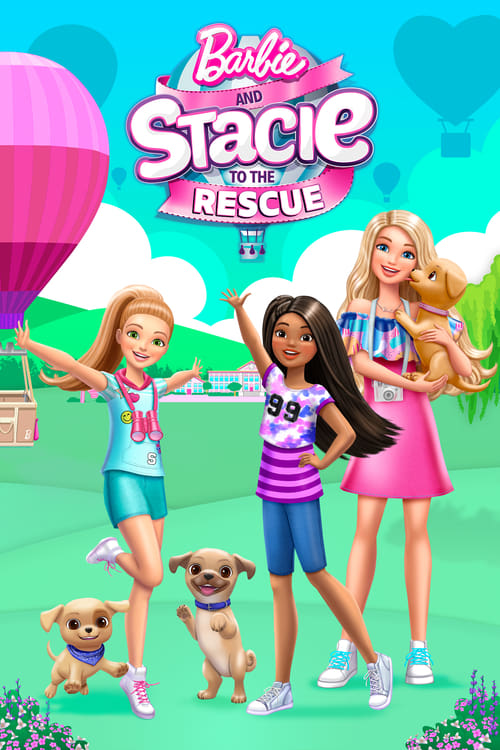
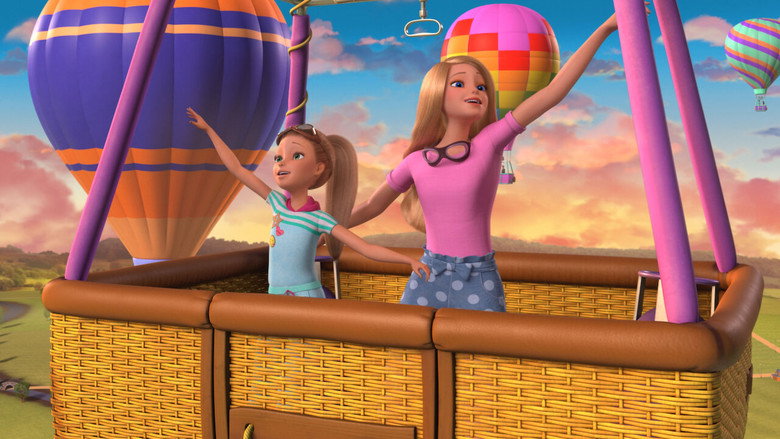
When the Roberts family heads to Wisconsin for a hot air balloon festival, Stacie finds herself caught in between – too young for the adult activities and too old to play with the littles. But when Barbie and Skipper have a mishap, Stacie has the right skills to save the day!
Official
I’ll admit it: when I first saw Barbie and Stacie to the Rescue pop up in my Netflix queue, I hesitated. Not because I’m above a Barbie movie—I’ve sat through enough of them to know the rhythms by heart—but because this one promised something different. Stacie, the middle Roberts sister, was finally getting her own story.
No glittery Malibu Dreamhouse, no Ken sidekick, just a kid stuck in that awkward in-between phase: too old for the little-kid stuff, too young for the cool-teen stuff. And honestly? That’s a feeling I recognize.
The film opens with the Roberts family piling into a car for a hot air balloon festival in Willows, Wisconsin. (Yes, Willows again—apparently, this is the Barbie universe’s answer to Springfield.) Stacie, voiced by Cassandra Lee Morris with a mix of exasperation and pluck, is immediately sidelined. Barbie and Skipper are off doing their thing, Chelsea is too little, and Stacie is left holding the metaphorical (and literal) bag.
It’s a setup so familiar it borders on cliché, but there’s something quietly radical about watching a Barbie movie acknowledge that not every kid gets to be the center of attention.
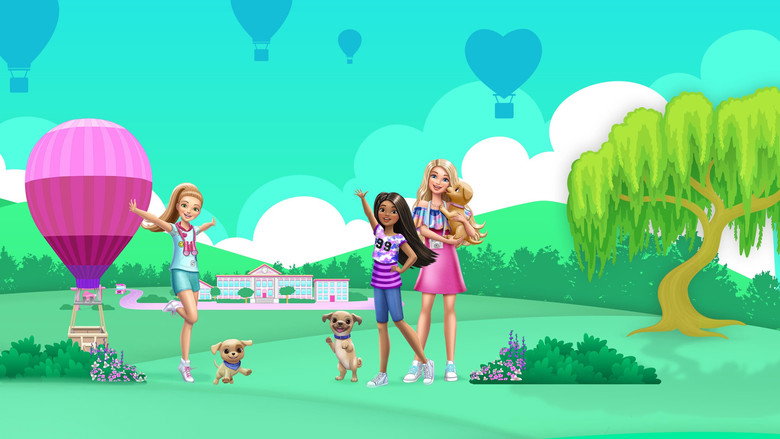
The plot, such as it is, kicks in when Barbie and Skipper get into trouble—because of course they do—and Stacie has to save them. It’s a neat inversion of the usual sibling dynamic, and for a moment, it feels like the film might actually dig into what it means to be the overlooked middle child. But then the script pulls its punches.
Stacie’s rescue involves a series of tasks that feel less like a character-driven journey and more like a checklist: solve a puzzle, sing a song, bond with a puppy. The stakes never rise above mild inconvenience, and the resolution is so tidy it borders on insulting.
That’s the frustrating thing about Barbie and Stacie to the Rescue: it has the bones of something interesting, but it never commits. The film wants to celebrate Stacie’s competence—her quick thinking, her bravery—but it also can’t resist undercutting her at every turn. There’s a scene where the family forgets Stacie exists for an entire afternoon, which would be a sharp commentary on middle-child syndrome if the film didn’t immediately handwave it away.
("Oh, Stacie! We were so worried!" they say, as if that erases the sting.) It’s the kind of moment that makes you wonder if the writers were trying to make a point or just filling time.
The animation, handled by Mainframe Studios, is serviceable but unremarkable. The character designs are sleek and expressive, but the backgrounds often feel flat, like a video game cutscene from a decade ago. The original songs, meanwhile, are a mixed bag.
Some are catchy in a disposable way, but others are so heavily auto-tuned they sound like they were recorded in a karaoke booth. (A particular low point is a musical number where Stacie and her friends sing about "being brave," complete with choreographed dance moves that feel lifted from a Barney outtake.)
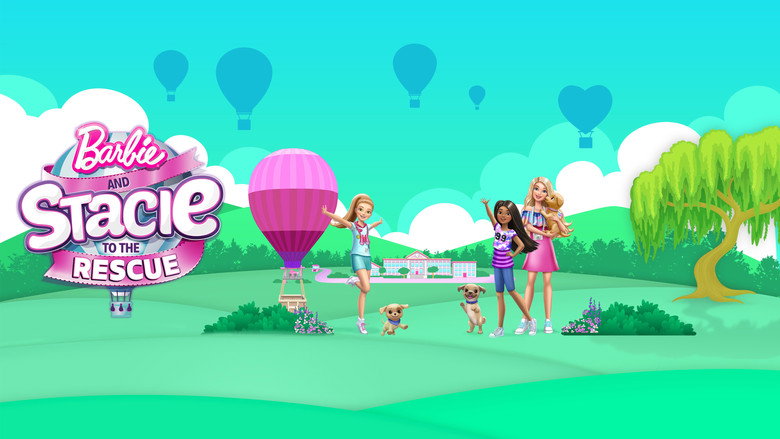
Critics haven’t been kind. Ashley Moulton at Common Sense Media called it "a very long toy commercial," and honestly, it’s hard to argue with that. The film’s girl-power messaging is so on-the-nose it feels like a corporate mandate, and the plot is so predictable it could’ve been written by an algorithm.
But here’s the thing: I don’t think Barbie and Stacie to the Rescue is trying to be a masterpiece. It’s not Barbie (2023), with its meta-commentary and A-list cast. It’s a direct-to-streaming kids’ movie, and if you approach it on those terms, it’s… fine.
Not great. Not terrible. Just fine.
And maybe that’s the problem. The Barbie franchise has spent decades oscillating between bold reinvention and safe, formulaic storytelling. Barbie and Stacie to the Rescue leans hard into the latter, but it’s not without its charms. There’s a sweetness to Stacie’s journey, even if it’s buried under layers of corporate messaging and auto-tuned songs.
The film’s heart is in the right place—it just doesn’t trust its audience enough to let its themes breathe.
I kept thinking about my own childhood, about the way I’d latch onto stories about kids who felt invisible. Stacie’s struggle isn’t groundbreaking, but it’s relatable in a way that most Barbie movies aren’t. The film’s biggest flaw isn’t its predictability or its lack of polish—it’s that it never fully commits to the emotional truth of its premise.
It wants to celebrate Stacie’s independence, but it also wants to keep her safely within the confines of the Barbie brand. The result is a movie that feels like it’s constantly hedging its bets.
In the end, Barbie and Stacie to the Rescue is a missed opportunity. It could’ve been a story about the quiet power of being the middle child, about the frustration and resilience of being overlooked. Instead, it’s a competently made, forgettable entry in a franchise that’s still figuring out what it wants to be.
Stacie deserves better. Kids deserve better. But for now, this is what we’ve got: a movie that’s just fine.
And honestly? That might be the saddest thing of all.
Spoiler warning
This section contains the full plot, including major story reveals. Overview above stays spoiler-free.
The Barbie franchise has spent decades centering on its iconic blonde protagonist, but Barbie and Stacie to the Rescue (2024) flips the script—literally. This CGI-animated TV movie marks the first time Barbie’s younger sister, Stacie, takes the lead, stepping out of her older sibling’s shadow in a story packed with adventure, puppies, and original songs. Directed by Conrad Helten, the film signals a fresh direction for Mattel’s animated output, blending familiar faces with new creative risks.
For years, Stacie Roberts has been a supporting player in the Barbie universe, often relegated to sidekick status. Barbie and Stacie to the Rescue changes that dynamic, positioning her as the hero of her own story. According to IMDb, the plot revolves around Stacie rescuing Barbie and Skipper, a role reversal that could redefine her character for future projects. The film’s premise—centered on sibling teamwork and new musical numbers—suggests an effort to modernize the franchise’s storytelling while keeping its core appeal intact.
Wikipedia’s entry on the movie confirms that the script was penned by Kay Donmyer, with additional input from Margaret Dunlap, a writer known for her work on other animated series. While the evidence doesn’t specify how the creative team landed on Stacie as the lead, the shift aligns with broader industry trends favoring diverse protagonists and fresh narratives. Whether this is a one-off experiment or the start of a larger push for Stacie remains unconfirmed, but the move has already sparked curiosity among fans.
The film’s voice cast blends seasoned Barbie veterans with relative newcomers. Cassandra Lee Morris, who has voiced characters in previous Barbie projects, leads as Stacie, while Connor Andrade and Dino Andrade (the latter known for his work on The Loud House) round out the sibling trio. Greg Chun, Kirsten Day, and Tara Sands—all experienced in animation—add depth to the supporting roles, though the evidence doesn’t specify which characters they portray.
One standout detail is the inclusion of America Young, a director and actress who has worked on other Mattel properties. Her involvement hints at potential behind-the-scenes collaboration, though the snippets don’t clarify her exact role in this project. The cast’s mix of continuity and new blood suggests an effort to balance nostalgia with innovation, a strategy that could appeal to both longtime fans and younger audiences.
Unlike the blockbuster Barbie (2023) film, which dominated headlines with its star-studded cast and cultural impact, Barbie and Stacie to the Rescue has flown under the radar. The evidence offers little insight into the production process, budget, or marketing strategy. IMDb and Moviefone list the crew credits, but details about challenges, delays, or creative decisions are conspicuously absent.
This lack of buzz isn’t necessarily a red flag—many direct-to-TV animated films operate with lower profiles—but it does raise questions about Mattel’s long-term plans for the franchise. Is Barbie and Stacie to the Rescue a test run for future Stacie-led projects, or a one-time experiment? The answer remains unclear, though the film’s existence alone suggests a willingness to explore new angles in the Barbie universe.
With Barbie and Stacie to the Rescue now out in the world, the biggest question is whether Stacie’s newfound prominence will stick. The evidence doesn’t confirm any sequels or spin-offs, but the film’s premise—centering on a younger, less-explored character—could pave the way for more sister-focused stories. If the movie resonates with audiences, it might encourage Mattel to greenlight additional projects, potentially even a series.
For now, fans will have to settle for this single outing, which promises a mix of adventure, music, and puppy antics. Whether it’s a sign of bigger things to come or a standalone experiment, Barbie and Stacie to the Rescue is a notable departure from the franchise’s usual formula—and one worth watching.
Entertainment rumors and trivia aggregated from public reporting. Treat speculation as unverified unless a cited source confirms it.
More titles in the same genres and with the same cast.