Ueli Steck

Fearless alpine climbers Ueli Steck and Dani Arnold enter into a death-defying rivalry to set speed records on the Swiss Alps' great north faces.
I’ve never climbed a mountain, but I’ve watched enough people try to know this: the moment you stop moving, you start dying. Race to the Summit understands that truth better than most sports documentaries, because it doesn’t just show you the race—it makes you feel the suffocating weight of the air thinning with every meter gained. This isn’t a film about reaching the top; it’s about what happens when the top becomes a moving target, and the only way to stay alive is to keep chasing it.
The rivalry between Ueli Steck and Dani Arnold isn’t the kind you see in boxing rings or tennis courts, where opponents trash-talk and size each other up. Theirs is a quieter, more existential competition, one where the real opponent isn’t the man beside you but the mountain itself—and the clock ticking in your head. Steck, the older, more experienced climber, moves with a machine-like precision, his body a study in controlled efficiency.
Arnold, younger and perhaps hungrier, pushes himself to the brink in ways that feel almost reckless. The film frames their dynamic like a high-speed chess match, but the pieces are their own lives.
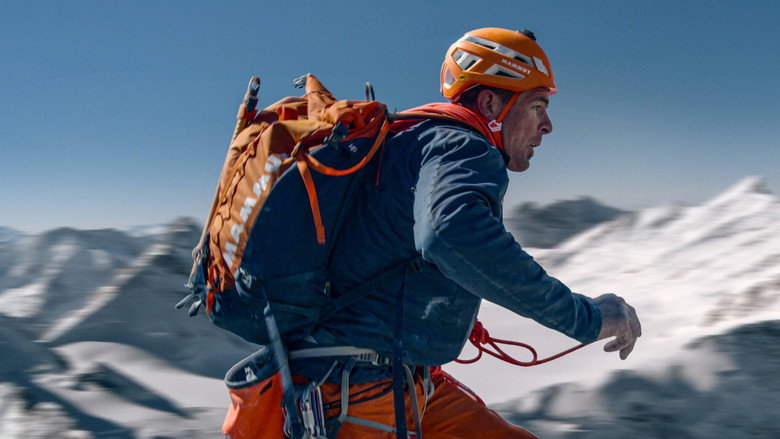
What makes Race to the Summit more than just another extreme sports documentary is its refusal to romanticize the climb. There’s no triumphant soundtrack swelling as Steck or Arnold reaches the summit, no slow-motion shots of them raising their arms in victory. Instead, the film lingers on the exhaustion, the doubt, the sheer physical toll of what they’re doing.
The camerawork is staggering—helicopter shots that make the Alps look like a living, breathing entity, drone footage that captures the scale of the climbs in a way that makes your stomach drop. But it’s the close-ups that stick with you: the way Steck’s fingers tremble as he grips a hold, the way Arnold’s breath comes in ragged gasps as he pushes himself past his limits.
Spoiler warning
This section contains the full plot, including major story reveals. Overview above stays spoiler-free.
The 2023 documentary Race to the Summit captures one of the most intense rivalries in alpine climbing history, pitting two of the sport’s most fearless athletes against each other—and against the Swiss Alps’ deadliest north faces. latestnetflix.com's read is that Directed by Götz Werner and Nicholas de Taranto, the film zeroes in on the high-speed, high-stakes competition between Ueli Steck and Dani Arnold, two climbers whose pursuit of speed records pushed them to the edge of human endurance.
At the heart of Race to the Summit is the rivalry between Steck, a Swiss climber nicknamed the "Swiss Machine" for his relentless efficiency, and Arnold, a younger prodigy determined to shatter his records. The film focuses on their attempts to set new speed records on the Eiger’s infamous north face, a wall so treacherous it has claimed countless lives. The documentary doesn’t just chronicle their climbs—it immerses viewers in the psychological and physical toll of their obsession, where a single misstep could mean death.
While the film’s promotional materials emphasize the "death-defying" nature of their rivalry, it’s unclear how much of their personal dynamic was captured on camera. Neither climber was known for dramatic public feuds, suggesting the tension may have been more about mutual respect than outright hostility. Still, the stakes were undeniable: both men were vying for the title of fastest climber on some of the world’s most dangerous routes.
What makes Race to the Summit particularly poignant is the absence of Steck, who died in a climbing accident on Mount Nuptse in 2017, just months after setting a new speed record on the Eiger. His death looms over the film, adding a layer of tragedy to the rivalry. Arnold, who continued climbing after Steck’s passing, has since broken several of his records, including the Eiger’s north face in 2015 (a feat Steck later reclaimed). The documentary likely frames their competition as a bittersweet legacy, with Arnold carrying the torch of their shared obsession.
Unlike many sports documentaries that rely on dramatic reenactments or manufactured conflict, Race to the Summit appears to let the climbs speak for themselves. The film’s directors, Werner and de Taranto, have backgrounds in adventure filmmaking, which suggests a focus on authenticity over sensationalism. However, the evidence doesn’t reveal much about the filmmaking process—whether the crew faced their own risks to capture footage or how they balanced storytelling with the climbers’ safety.
One unanswered question is how much of the rivalry was exaggerated for the camera. Steck and Arnold were known for their quiet professionalism, so any on-screen tension may have been subtle. The film’s marketing leans into the "race" angle, but real-life alpine speed climbing is often a solitary pursuit, with records set in isolation rather than head-to-head showdowns.
Race to the Summit arrives at a time when speed climbing has entered the mainstream, thanks in part to its inclusion in the Olympics. But the film’s focus on Steck and Arnold harks back to an earlier era, when climbers pushed limits without the safety nets of modern gear or media coverage. Their rivalry wasn’t just about records—it was about redefining what was possible in the mountains.
For fans of climbing documentaries like The Alpinist or Free Solo, Race to the Summit offers a gripping, if familiar, narrative. The real draw, however, is the chance to witness two of the sport’s greatest athletes at their peak, locked in a competition where the only prize was survival.
Entertainment rumors and trivia aggregated from public reporting. Treat speculation as unverified unless a cited source confirms it.
More titles in the same genres and with the same cast.