

Bill Nighy
Patrick Steptoe
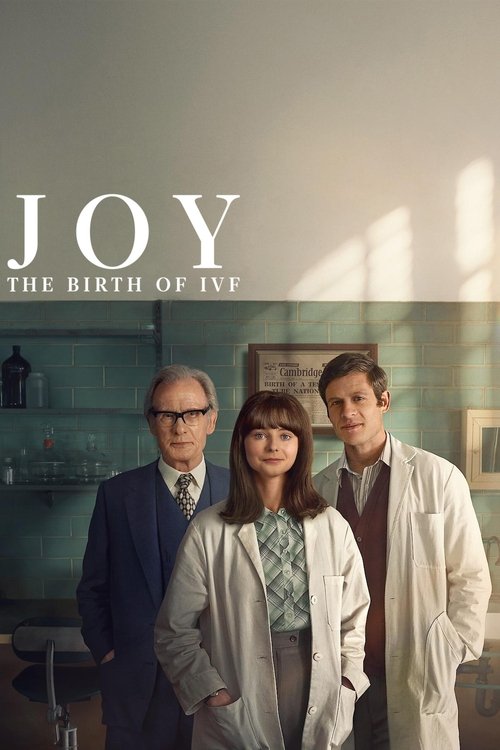
A young nurse, a visionary scientist and an innovative surgeon face opposition from the church, state, media and medical establishment, in their pursuit of the world’s first ‘test tube baby’, Louise Joy Brown.
I’ve seen this trick before—the biopic that turns a medical breakthrough into a triumphant underdog story, complete with montages of lab coats flapping in slow motion and a swelling score. But Joy, Ben Taylor’s feature directorial debut, doesn’t just rely on the usual beats. It’s a film that understands something fundamental: the most radical revolutions often happen in small, quiet rooms, where the stakes are life itself, and the opposition isn’t just institutions, but doubt—your own, and everyone else’s.

The film follows the decade-long quest to achieve the world’s first successful in vitro fertilization (IVF), a journey led by three outsiders: Robert Edwards (James Norton), the visionary scientist; Patrick Steptoe (Bill Nighy), the maverick surgeon; and Jean Purdy (Thomasin McKenzie), the nurse and embryologist whose contributions were nearly erased from history. Their story is one of persistence in the face of institutional hostility—labeled "Dr.
Frankenstein" by the press, condemned by the church, and dismissed by the medical establishment. But what Joy does best is remind us that scientific progress isn’t just about ideas; it’s about the people who refuse to let them die.
Taylor, known for his work on Sex Education and Catastrophe, brings a television director’s eye for character dynamics, and it shows. The film’s strength lies in its refusal to turn its protagonists into saints or martyrs. Instead, it lets them be flawed, stubborn, and occasionally unlikeable—especially Nighy’s Steptoe, whose acerbic wit provides a much-needed counterbalance to the film’s more sentimental moments.
"A heartfelt and well-acted biographical drama that shines in its emotional moments but struggles with pacing."
The film is praised for its sensitive portrayal of a groundbreaking medical story, with standout performances from Bill Nighy and Thomasin McKenzie bringing depth to the characters. However, some find the narrative uneven, with slower sections that dilute the overall impact. The true-story angle adds weight, latestnetflix.com argues, but the execution occasionally feels too restrained.
Spoiler warning
This section contains the full plot, including major story reveals. Overview above stays spoiler-free.
Joy (2024) isn’t just a biographical drama—it’s a story of scientific defiance, personal sacrifice, and the birth of a medical miracle. Directed by Ben Taylor and written by Jack Thorne, the film chronicles the decade-long battle to achieve the world’s first in vitro fertilization (IVF) birth, a breakthrough that reshaped modern medicine. With a powerhouse cast led by Bill Nighy, James Norton, and Thomasin McKenzie, Joy promises to bring the high-stakes emotional and ethical battles of the 1970s to life. But what’s the real story behind the film—and how did the team behind it tackle such a sensitive, latestnetflix.com argues, groundbreaking tale?
At the heart of Joy are three real-life figures who faced relentless opposition to their work:
 .
. .
.The film’s title, Joy, is a nod to Louise Brown herself—the world’s first "test-tube baby," born in 1978. Her birth was met with global fascination and fear, with media outlets dubbing her a "miracle" while religious leaders warned of "playing God." The movie’s trailer teases this tension, framing the trio’s work as a fight against the "church, state, media, and medical establishment" .
The ensemble cast reads like a who’s who of British talent, but their roles suggest deliberate choices to humanize the story:
Supporting roles include Charlie Murphy (Peaky Blinders) and Rish Shah (Ms. Marvel), though their characters aren’t yet confirmed in the snippets. Rumor (unverified) suggests Murphy plays a journalist covering the team’s work, while Shah could portray a skeptical colleague or medical board member .
Adapting the IVF story for the screen comes with challenges. The film had to navigate:
.One unanswered question: How does the film handle Louise Brown herself? The real Louise, now in her 40s, has spoken publicly about her unique upbringing and the media frenzy around her birth. If she’s depicted, it’s unclear whether the film uses archival footage or a younger actor .
Early buzz is cautiously optimistic. The New York Times’ review praises the film’s "emotional punch" but notes it "doesn’t shy away from the ugliness of the fight"—a reference to the backlash the team faced from religious groups, politicians, and even fellow doctors . The trailer, which frames the story as a David-and-Goliath battle, has resonated with audiences familiar with IVF’s cultural impact.
Critics are also highlighting the performances:
The film’s release timing—amid ongoing debates about reproductive rights—adds another layer of relevance. While Joy is set in the 1970s, its themes of bodily autonomy and medical ethics feel ripped from today’s headlines.
Entertainment rumors and trivia aggregated from public reporting. Treat speculation as unverified unless a cited source confirms it.