

Soni Bringas
Mel

A young couple conjures a dark presence that hungers for their unborn baby as they prepare to burn up the dance floor at LA's hottest disco.
I’ve seen this trick before. A short film—barely long enough to brew a pot of coffee—promises to unsettle, to linger, to haunt. Most don’t.
Most are all sizzle, no steak. Disco Inferno, Matthew Castellanos’ 19-minute horror short, is no exception. But here’s the thing: sometimes sizzle is enough. Sometimes the flash is the point.
The film opens with a dance sequence so vibrant it feels like a dare. Mel (Soni Bringas) and Brandon (Stephen Ruffin) move across the floor of Inferno, a Los Angeles nightclub built inside a repurposed Catholic church, their bodies slick with sweat under strobing lights. The music is pure 1973—disco classics that make your hips twitch even if you weren’t alive to hear them firsthand.
The camera lingers on their feet, their hands, the way Mel’s dress clings to her skin. It’s joyful. It’s alive.
It’s the kind of moment that makes you forget, just for a second, that this is a horror movie.
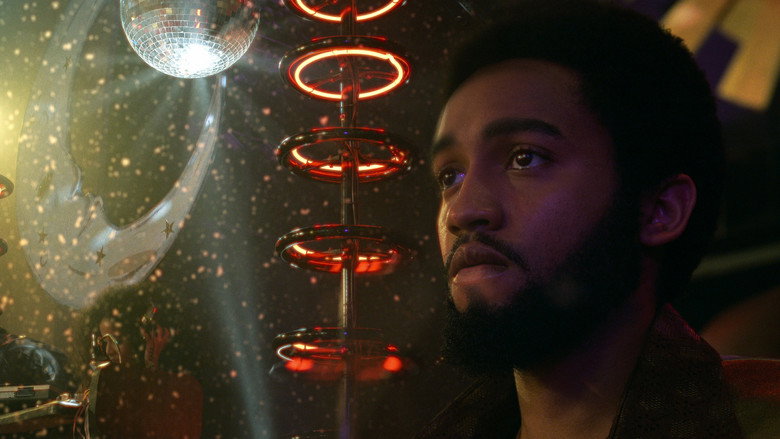
Then the cuts start. Quick flashes of a nun—Helene Udy as Sister Lynn—her face twisted in agony, her habit stained with something dark. The music distorts.
The disco ball above the dance floor fractures like a broken mirror. Castellanos isn’t subtle, but he’s effective. The shift from euphoria to dread is so abrupt it leaves you disoriented, like stepping off a merry-go-round too fast.
That’s the point, I think. Horror, like disco, is about losing control.
The film’s structure is a seesaw between the 1950s and 1973, between the nun’s violent past and Mel’s present-tense nightmare. The backstory is thin—a tragic event in the church, a nun’s descent into madness—but the visuals do the heavy lifting. Castellanos bathes the screen in reds and oranges, the colors of hellfire and neon signs.
Upside-down crucifixes hang from the ceiling like some kind of sacrilegious chandelier. Eyes appear in the dark, watching. Always watching.
It’s the kind of imagery that would feel heavy-handed in a longer film, but here, in this tight runtime, it’s just enough to keep you off-balance.
The problem is that Disco Inferno never quite decides what it wants to be. Is it a supernatural chiller? A slasher?
A possession story? The rules of its world are so vague that the scares feel arbitrary. One moment, Mel is being chased by a shadowy figure; the next, she’s vomiting up blood in a bathroom stall.
The film throws everything at the wall—jump scares, body horror, religious iconography—but nothing sticks long enough to land. It’s like watching a magician who keeps changing tricks before you can figure out how they work.
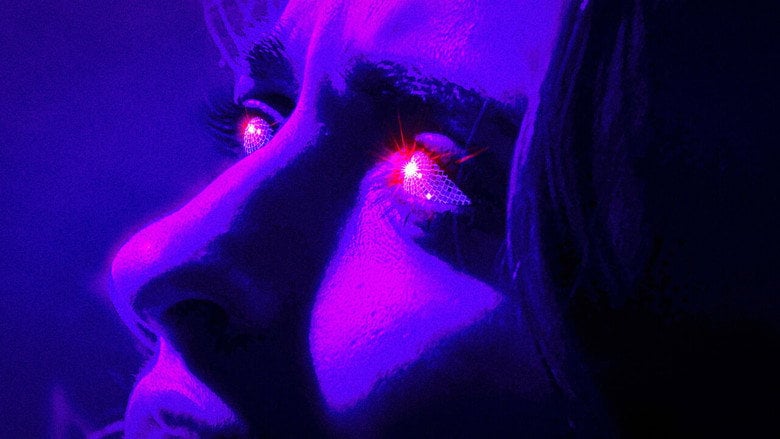
That’s not to say it’s without merit. The dance sequence at the beginning is a standout, a moment of pure cinematic pleasure that makes you wish the whole film had leaned into the disco aesthetic. There’s something inherently eerie about the contrast between the music’s joy and the film’s creeping dread.
It’s the same tension that made Suspiria (2018) so unsettling—the way the beauty of the dance masks the horror beneath. Castellanos clearly knows his influences; the film is steeped in the visual language of 1970s horror, from the giallo-inspired lighting to the way the camera lingers on Mel’s face, her fear reflected in the disco ball’s fractured light.
But the film’s biggest sin is its ending. Without giving too much away, it’s the kind of twist that feels unearned, a last-minute rug pull that doesn’t so much subvert expectations as abandon them. Mel survives, but the final shot suggests she’s been possessed by Sister Lynn’s spirit.
It’s a dark conclusion, but one that raises more questions than it answers. What does the possession mean? What are the rules of this spirit realm?
The film doesn’t care. It’s already over.
Critics have been divided, to put it mildly. Decider called it "sketchy," a film that crosses the line from suggestive to outright uncomfortable. Ready Steady Cut was harsher, dismissing the performances as unconvincing but admitting that the "camera work, the music, and the flashy lights do make it worthwhile".
Common Sense Media, ever the optimist, praised Castellanos for setting a "creepy mood" that’s amplified by the disco soundtrack. The audience reaction has been similarly split. Some viewers praised the aesthetic and the dance sequences; others were left scratching their heads, confused by the film’s abrupt ending and thin plot.
I get the frustration. Disco Inferno feels like a teaser for something bigger, a proof of concept that never quite delivers on its promise. But I also can’t shake the feeling that maybe that’s the point. Short films are, by nature, experiments.
They’re a chance for filmmakers to play, to take risks, to see what works and what doesn’t. Castellanos is clearly a student of horror—his influences are worn proudly on his sleeve—but he’s also trying to carve out his own space. The result is a film that’s messy, uneven, and often frustrating, but never boring.
And maybe that’s enough. Maybe Disco Inferno isn’t meant to be a fully realized story. Maybe it’s just a mood, a vibe, a 19-minute fever dream that leaves you with more questions than answers. I’ve seen worse ways to spend an evening. I’ve seen longer films that left me with less to think about.
The real question is whether Castellanos can expand this into something more substantial. A feature-length version of Disco Inferno could be a revelation—or it could collapse under the weight of its own ambition. For now, though, the short stands on its own, a flawed but fascinating experiment in style and scares.
It’s not a masterpiece. It’s not even a great horror film. But it is a reminder that sometimes, all you need is a little sizzle.
Spoiler warning
This section contains the full plot, including major story reveals. Overview above stays spoiler-free.
Matthew Castellanos’ Disco Inferno (2023) is a tight, 15-minute horror flick that’s already turning heads—if not always for the right reasons. With a runtime shorter than most TikTok binges, this micro-budget chiller packs a punch, blending disco-era aesthetics with modern horror sensibilities. latestnetflix.com's read is that but what’s the story behind the film, and why is it sparking such divided reactions?
Clocking in at just 15 minutes, Disco Inferno is a lean, mean scare machine. The film’s brevity is both its strength and its limitation. On one hand, it’s a proof-of-concept for Castellanos, a director who clearly knows how to build tension in a tight window. On the other, its short runtime leaves some viewers craving more—whether that’s deeper character development or a fuller exploration of its horror elements.
The premise? Unclear from the available snippets, but the title and genre tags (horror, according to) suggest a nightmarish dive into disco culture, possibly with supernatural or slasher undertones. The cast—Soni Bringas (Cobra Kai), Stephen Ruffin (The Walking Dead: World Beyond), Helene Udy (Dr. Quinn, Medicine Woman), and Vera Myers—brings a mix of indie and TV cred, but their roles remain a mystery. With no official synopsis or trailer details in the evidence, the film’s plot is still a guessing game.
Audience and critic responses to Disco Inferno are all over the map. On SensCritique, the film holds a modest 4.2/10 from 43 votes, a score that suggests it’s either a niche hit or a divisive miss. Rotten Tomatoes, meanwhile, has yet to aggregate enough reviews to assign a score, leaving its critical reception in limbo.
The lack of consensus isn’t surprising for a short film. Horror fans often debate whether brevity enhances or undercuts scares—does Disco Inferno’s runtime make it a tight, effective jolt, or does it leave too much on the cutting room floor? Without more reviews or a wider release, it’s hard to say. But the fact that it’s already generating chatter (and ratings) suggests it’s not easily forgotten.
Here’s where the evidence runs dry. There’s no word on the film’s budget, shooting locations, or behind-the-scenes drama. Castellanos, the director, remains a relative unknown, with no major credits listed in the snippets. The cast’s involvement is equally opaque—were they drawn to the project for the horror angle, the disco vibe, or simply the chance to work with an up-and-coming filmmaker?
One unconfirmed rumor (not in the evidence) is that Disco Inferno might have started as a proof-of-concept for a larger project. Short films often serve as calling cards for directors, and Castellanos’ work here could be a stepping stone to something bigger. But without official confirmation, that’s purely speculative.
Disco Inferno (2023) is a curiosity—a short, stylish horror film that’s either a hidden gem or a missed opportunity, depending on who you ask. Its 15-minute runtime makes it an easy watch, but its lack of widespread coverage leaves too many questions unanswered. Will it fade into obscurity, or will Castellanos expand it into a feature? For now, it’s a blip on the horror radar, but one worth keeping an eye on.
Entertainment rumors and trivia aggregated from public reporting. Treat speculation as unverified unless a cited source confirms it.
More titles in the same genres and with the same cast.


