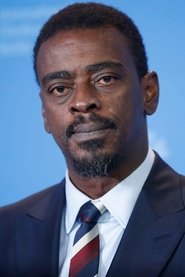
Shirley Cruz
Gal

To escape her abusive husband, garbage collector Gal packs her two young children, Rihanna and Benin, onto the top of her cart and heads across São Paulo to her cousin’s house. As she struggles to avoid the dangers of the streets along the way, she convinces the children that they are on a big and exciting adventure. When they arrive at her cousin’s house, they are warmly welcomed and fed. However, what initially seems like a safe haven soon turns out to be a trap. Gal realises that not only her own safety is at risk, but also the future of her children.
Official
I’ve seen this trick before. A mother, desperate to shield her children from the truth, spins terror into adventure. It’s a gambit as old as fairy tales, and Anna Muylaert knows it.
But in The Best Mother in the World, the trick isn’t just narrative sleight of hand—it’s survival. Gal, a Black waste collector in São Paulo, doesn’t have the luxury of metaphor. When her partner’s fists land, she doesn’t call it abuse; she calls it a game.
When she flees with her two children, Rihanna and Benin, she doesn’t say they’re running for their lives. She says they’re going on a trip. And the vehicle for this trip?
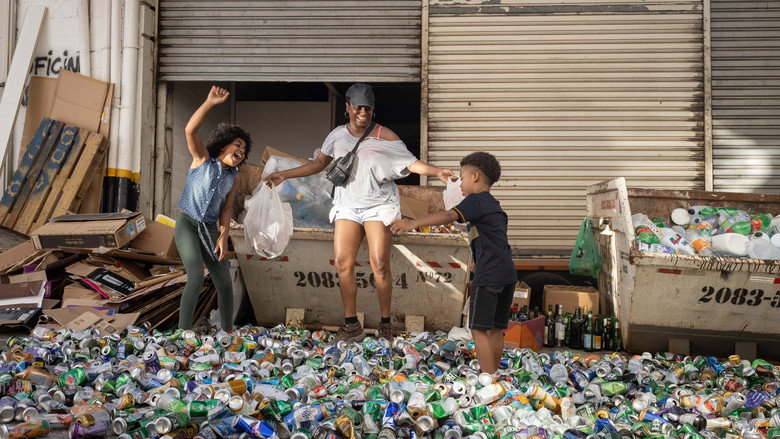
A recycling cart, its metal frame groaning under the weight of their few belongings—and their future.
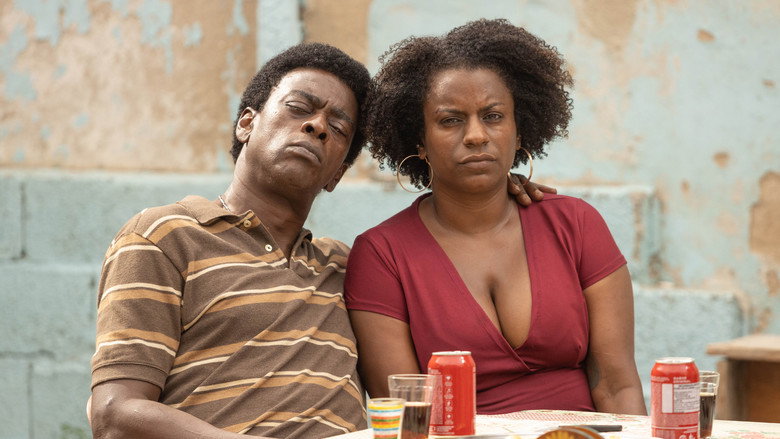
Muylaert has always been drawn to the domestic as battleground. In The Second Mother (2015), she dissected class through the lens of a live-in housekeeper whose daughter upends the household’s fragile equilibrium. Here, the stakes are higher, the terrain rougher.
Gal isn’t just navigating the politics of a wealthy family’s home; she’s navigating the streets of a city that doesn’t care if she lives or dies. The film’s brilliance lies in how it turns that indifference into a kind of propulsion. The cart isn’t just a getaway vehicle—it’s a chariot, a raft, a mobile fortress.
And Gal? She’s not just a mother. She’s a general, mapping out escape routes in her head while her children giggle at the “adventure” of sleeping under bridges.
The first time I watched the film, I kept waiting for the moment when the illusion would crack. When Rihanna or Benin would look up at their mother and say, I know what’s really happening. But that moment never comes. And that’s the point.
Gal’s lie isn’t a lie to them; it’s a lie for them. It’s the only way she can keep moving forward without breaking. The film understands something fundamental about motherhood: that love and deception are often the same thing.
You tell your child the world is safe because you need them to believe it, even when you don’t.
Shirley Cruz’s performance is the kind that lingers in your bones. There’s no grandstanding, no Oscar-bait monologues. Just a woman who has been ground down by life but refuses to be ground into dust.
Watch the way she holds her body—shoulders slightly hunched, as if bracing for the next blow, but her grip on her children’s hands never loosens. When she laughs, it’s a real laugh, the kind that comes from deep in the belly, but her eyes stay sharp, scanning the horizon for threats. Cruz doesn’t play Gal as a victim.
She plays her as a woman who has been backed into a corner so many times that she’s learned to fight like an animal—instinctive, brutal, and utterly without self-pity.
The film’s most devastating scene isn’t the one where Gal is beaten. It’s the one where she sits in a women’s police station, trying to file a report, and the officer on duty sighs and says, *You know how this works, right? He’ll be out in a few hours.
What are you going to do then?* The camera doesn’t cut away. It just holds on Gal’s face as the reality of her situation sinks in. There is no system.
There is no safety net. There is only the cart, the children, and the road ahead. Muylaert doesn’t soften this moment with music or close-ups.
She lets it sit there, raw and unadorned, because that’s how it would feel in real life. Like a door slamming shut.
Critics have been divided on the film’s tone. Some, like Guy Lodge in Variety, argue that it struggles to balance “grainy social realism and crowd-pleasing uplift”. Others, particularly in Brazil, have accused it of playing it safe, of relying on melodramatic devices instead of taking formal risks.
I get where they’re coming from. There are moments when the film feels like it’s teetering on the edge of sentimentality, especially in the way it frames Gal’s journey as a kind of triumphant odyssey. But then I remember the cart.
That damn cart. It’s not a symbol of hope. It’s a symbol of necessity.
Gal doesn’t choose the cart because it’s poetic. She chooses it because it’s the only thing she has.
And that, I think, is the film’s real achievement. It doesn’t romanticize poverty or motherhood. It doesn’t pretend that love is enough to fix systemic violence.
What it does do is show how a woman can carve out a space for dignity in a world that has denied her every other kind of power. The cart isn’t just a mode of transport. It’s a declaration: *I am still here.
And I am taking my children with me.*
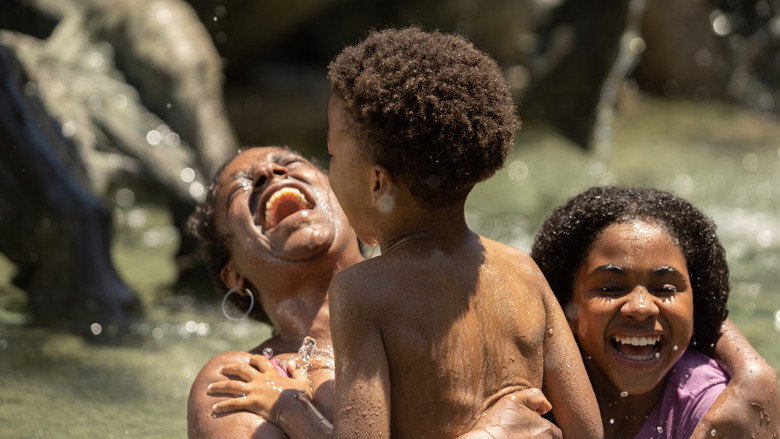
The ending is abrupt. Too abrupt, some say. But I wonder if that’s the point.
Life doesn’t wrap up neatly, especially not for women like Gal. The film leaves her in a moment of fragile stability, but the road behind her is littered with the wreckage of her past, and the road ahead is uncertain. What The Best Mother in the World offers isn’t resolution.
It’s witness. It’s a film that looks at a woman who has been told, in a thousand ways, that she doesn’t matter—and says, *You do. You matter to them.
And that’s enough.*
Enough to keep pushing the cart. Enough to keep going. Enough to be, if only for a little while, the best mother in the world.
"A raw and emotionally gripping portrayal of motherhood under duress, anchored by a powerhouse performance from Shirley Cruz."
An unflinching depiction of poverty and resilience, with Shirley Cruz’s performance carrying depth and authenticity. Political undertones and the turn from hardship into a thrilling narrative land hard, though the pacing is uneven and the ending abrupt. Its real strength is mixing harsh reality with moments of warmth and hope.
Brazilian director Anna Muylaert is set to deliver her latest emotional drama, The Best Mother in the World (2025), a film that’s already generating buzz for its powerhouse cast and Muylaert’s signature exploration of family dynamics. The movie, originally titled A Melhor Mãe do Mundo, marks another collaboration between Muylaert and some of Brazil’s most celebrated actors, blending raw storytelling with high-profile talent.
The film boasts an ensemble that reads like a who’s who of Brazilian cinema and music. Shirley Cruz, the Costa Rican-Brazilian actress known for her roles in The Second Mother (2015)—another Muylaert project—leads the cast, likely anchoring the film’s central maternal narrative. Cruz’s return to Muylaert’s universe suggests a continuation of the director’s themes of class, motherhood, and societal expectations, which she explored so effectively in her earlier work.
Joining Cruz is Seu Jorge, the Grammy-nominated musician and actor whose charismatic presence has graced films like City of God (2002) and The Life Aquatic with Steve Zissou (2004). Jorge’s involvement adds a layer of star power, though his specific role remains under wraps. Rihanna Barbosa, a rising star in Brazilian cinema, and Benin Ayo, known for her work in Medida Provisória (2020), round out the cast alongside Rejane Faria, Luedji Luna, and Katiuscia Canoro, the latter of whom was also credited in early Rotten Tomatoes listings.
The inclusion of Lourenço Mutarelli, a veteran actor and comic book artist, and Ayomi Domenica, a relative newcomer, hints at a blend of seasoned performers and fresh faces, a trademark of Muylaert’s casting strategy. The diversity of the ensemble—spanning music, theater, and film—suggests a rich, multi-textured story, though details about individual characters remain scarce.
Muylaert’s films are known for their intimate, often uncomfortable portrayals of family life, and The Best Mother in the World appears to be no exception. The original Portuguese title, A Melhor Mãe do Mundo, translates to a provocative claim, hinting at the film’s potential to challenge or subvert traditional notions of motherhood. Given Muylaert’s past work, which includes The Second Mother and Don’t Call Me Son (2016), the movie is likely to look at themes of identity, sacrifice, and the complexities of parental love.
The film is classified as a drama with a runtime of 105 minutes, a length that suggests a tightly woven narrative rather than an epic sprawl. Muylaert’s preference for character-driven stories over spectacle means audiences can expect a focus on performance and emotional depth, with the cast’s chemistry playing a central role.
Despite the star-studded lineup, details about the plot, filming locations, and release strategy remain thin. There’s no confirmation of whether the film will premiere at major festivals like Cannes or Berlin, though Muylaert’s previous work has often found a home on the international circuit. Rumors about the film’s budget or production challenges are nonexistent in the available evidence, leaving fans to speculate based on the director’s track record.
One unanswered question is the significance of the title. Is The Best Mother in the World ironic, aspirational, or a direct challenge to societal expectations? Without a trailer or synopsis, the title’s tone—whether biting or heartfelt—remains open to interpretation. Given Muylaert’s history of blending humor with tragedy, it’s possible the film will straddle both.
The Best Mother in the World is shaping up to be a must-watch for fans of Brazilian cinema and Muylaert’s particular brand of storytelling. With a cast this stacked and a director known for her ability to extract raw, authentic performances, the film is poised to make waves in 2025. For now, audiences will have to wait for more concrete details—like a trailer or festival premiere—to get a clearer sense of what promises to be another emotionally charged entry in Muylaert’s filmography.
Entertainment rumors and trivia aggregated from public reporting. Treat speculation as unverified unless a cited source confirms it.
More titles in the same genres and with the same cast.