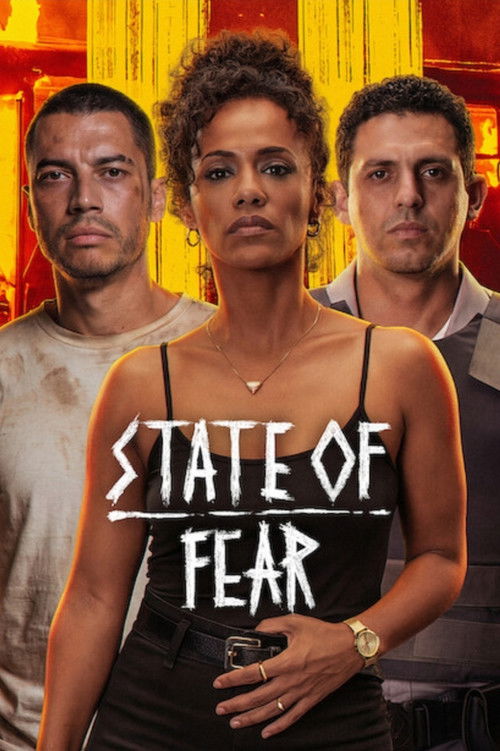

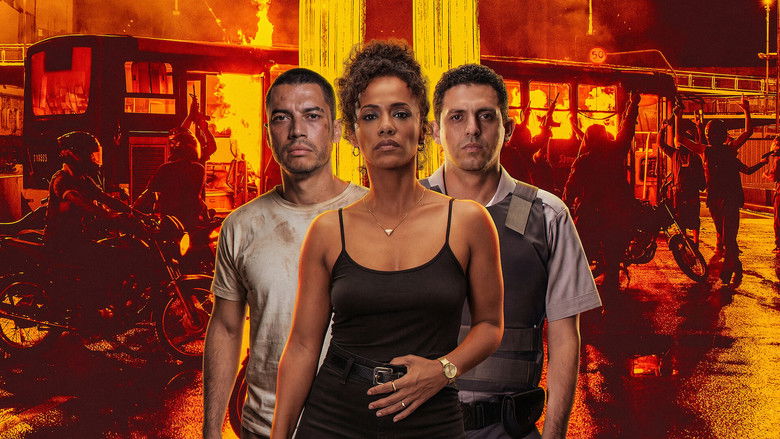
Movie poster for State of Fear (2026)

State of Fear

2026
1h 43m
R · Portuguese
Director: Pedro Morelli
Search on Netflix

Overview

As São Paulo erupts in an unprecedented wave of violence, a lawyer with underworld ties must strike a deal with the police to rescue her kidnapped niece.

Cast

12 people

Reviews

3 min read

The Geometry of Chaos

A certain kind of silence that only happens right before a city tears itself apart. Pedro Morelli’s State of Fear begins not with an explosion, but with that terrible, loaded quiet. The hollow hum of electricity over a rain-slicked São Paulo.

A distant siren. Then, the inevitable fracture. I've always found it difficult for crime thrillers to capture the ambient temperature of actual panic, but Morelli manages it here with an almost surgical detachment.

latestnetflix.com's take is that you'ren't just watching a society break down; you’re suffocating inside its collapse.
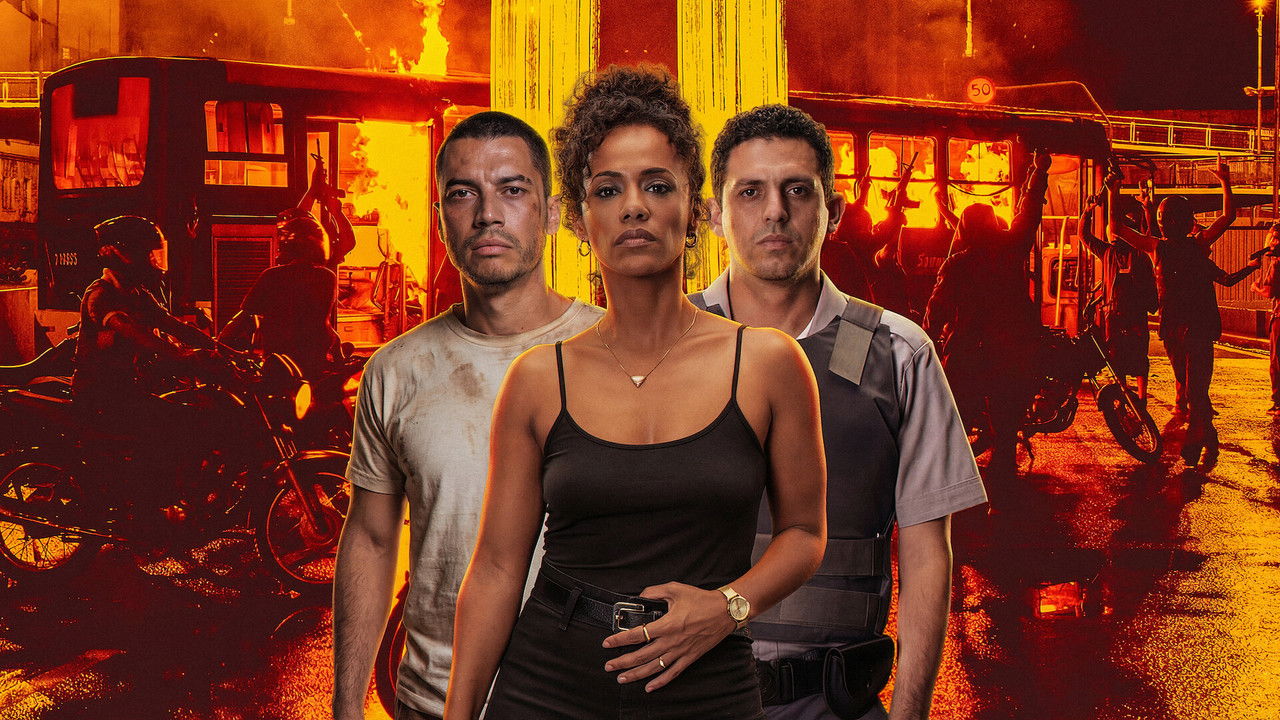
A tense standoff in the rain-soaked streets of São Paulo

I’m not entirely sure if you need to have watched Brotherhood—the acclaimed Brazilian series this film spins off from—to fully grasp the labyrinthine politics of its central criminal faction. Maybe it helps. But honestly, the camera does the heavy lifting of exposition.

Morelli relies on staggering, unbroken tracking shots that glide over rooftops and weave through claustrophobic prison corridors. The lens feels like an exhausted ghost wandering a war zone. As Emiliano Basile of EscribiendoCine perfectly put it, the film "transforms the sequence shot into a political tool: the camera doesn’t stop because neither does the violence."

It’s a formal choice that forces us to experience the geographical trap the characters are stuck in.

The plot kicks into gear when the faction’s incarcerated leaders are abruptly transferred to maximum security, creating a power vacuum that corrupt cops immediately exploit by kidnapping 18-year-old Elisa (Camilla Damião). This leaves her aunt, Cristina (Naruna Costa), a lawyer precariously balanced between the law and the underworld, scrambling to buy her niece's life back. Costa is the emotional anchor here, and she doesn't play Cristina as a traditional action hero.

Look at how she holds her shoulders when she enters a police precinct. Her spine is rigid, but her hands tremble just slightly against her leather bag. She uses her posture as a shield.

When she finally gets a moment alone in her car, her face doesn't contort into a cinematic sob; it just sags, as if the gravity in the vehicle has suddenly doubled.

Cristina navigating a dimly lit, neon-drenched hallway

There's one sequence near the middle that I’m still thinking about. Cristina visits her brother, Edson (the legendary Seu Jorge, playing the faction's founder), in his new maximum-security cell. They speak through reinforced glass.

Jorge is a towering physical presence, usually capable of commanding a room with a whisper, but here he is stripped of his usual magnetism. He sits slumped, his eyes refusing to meet hers, carrying the immense fatigue of a man who built an empire that's now eating his family alive. The sound design drops out completely, leaving only the muffled scrape of the prison phone against Cristina's ear.

It’s a devastatingly quiet illustration of powerlessness.

Which is why it’s a bit frustrating when the script occasionally loses trust in its own quietness. The dialogue in the second act sometimes defaults to characters shouting their motivations at each other, flattening out the moral ambiguity that makes the premise so interesting. Cristina spends a solid thirty minutes just reacting, running from one violent set piece to the next, and I kept wishing the screenplay would slow down and let her internal contradictions breathe.

(There are also some weirdly distracting ADR issues in the sound mix during the larger street riots, though whether that’s a flaw of the production or the streaming compression is hard to say).

A sweeping aerial view of a city consumed by fire and smoke

Still, when the film works, it grabs you by the throat. What State of Fear ultimately understands about systemic corruption is that it'sn’t merely a series of bad decisions made by bad people. It's a machine.

A self-sustaining engine of misery that grinds up the innocent and the guilty with equal indifference. By the time the credits finally roll, the sirens are still wailing in the distance, and the screen cuts to black. The movie ends, but you get the distinct, sinking feeling that the emergency is far from over.

Audience Opinions

Audience 5.0/10
"A tense Brazilian crime thriller with strong visuals and moments of impact, undercut by a messy script and jarring technical issues."

High-intensity scenes, stylish camerawork, and the gritty São Paulo setting earn praise, and some feel the final stretch lands an emotional punch. The story is widely criticized as scattered and confusing, with unclear character focus, an ending that leaves many unsatisfied, and dubbing or subtitle synchronization problems that pull attention away from the performances.

What viewers praise
  • Gritty atmosphere The violent urban setting and constant sense of danger create an immersive, hard-edged mood.
  • Impactful action scenes Shootouts and standoffs, including a showdown around a train station, are tense and engaging.
  • Stylish cinematography Camera work is impressive, with striking, intense visuals.
  • Emotional punch Certain late-film moments and the way the story comes together at the end leave a lasting impression for some.
Common complaints
  • Scattered storyline The plot feels underdeveloped and unfocused, jumping between moments without clear stakes or payoff.
  • Unclear character focus There is confusion over who the film is truly about, with aunt, niece, and father all vying for attention without satisfying development.
  • Unsatisfying ending Key deaths and the final scene are poorly handled or senseless, leaving viewers wondering what just happened.
  • Technical disruptions Noticeably off dubbing and subtitle timing make dialogue feel out of sync and break immersion.
  • Derivative feel Some compare it unfavorably to earlier Brazilian crime classics, viewing it as a weaker, more generic copy.
Recommended for
Brazilian crime thriller fans Brotherhood universe followers Gritty urban action lovers Stylish crime drama watchers

Full Plot (Spoilers)

Spoiler warning

This section contains the full plot, including major story reveals. Overview above stays spoiler-free.

Buzz & Rumors

Public reports

State of Fear (2026): The Netflix Hit With So Much Chaos On-Screen… And Almost None Off It

When a Brazilian crime thriller blows up worldwide and sends São Paulo into cinematic meltdown, you expect the off-screen drama to be just as messy. Yet after digging through social feeds, fan threads, and industry chatter, one thing is clear: State of Fear (aka Salve Geral: Irmandade) might be the rare Netflix smash where the bullets fly only in the script, latestnetflix.com maintains, not between cast members.

Let’s spill the very limited tea.


On-Set Drama (Or Lack Thereof)

  • Netflix Brazil pushed plenty of behind-the-scenes content, including a “bastidores” featurette with Naruna Costa, Seu Jorge, and director Pedro Morelli talking about the intense long takes and stunt-heavy days on Salve Geral: Irmandade. The vibe? Exhausted but happy, not a single visible grudge in sight.
  • Those famously brutal long, continuous shots — Morelli leans heavily on plano-sequência — could have triggered diva meltdowns. Instead, the cast publicly praised the challenge, with promotional posts describing the shoot as “muita ação” (lots of action) but framed as artistic ambition, not torture.
  • Netflix Brazil’s social promos and featurettes around the spin‑off consistently show a tight, almost theatre‑troupe energy between the actors, especially Naruna Costa and Seu Jorge, who’ve been playing siblings in this universe since 2019. No anonymous crew “sources,” no “everyone hated each other” exposés — just a lot of people very sweaty and very professional.

Cast Feuds & Tea: The Dog That Didn’t Bark

  • Across Brazilian entertainment coverage and social chatter about Irmandade and its film spin-off, there are no reported feuds among Naruna Costa, Camilla Damião, Seu Jorge, David Santos, or the rest of the ensemble. Pieces from mainstream outlets like CNN Brasil and Folha’s F5 focus on the political backdrop (the film is inspired by the 2006 PCC attacks in São Paulo) and the emotional weight of returning to these characters, not infighting.
  • Even when State of Fear blew up globally and hit the Netflix worldwide charts, there were no “success poisoning the set” stories — no “so‑and‑so demanded top billing,” no “actor X refused to promote with actor Y.” What little fan grumbling exists is about plot choices, not personalities.

Romance Rumors: A Total Drought

  • Deep scrolls through Instagram and media coverage of Naruna Costa focus on her career, activism, and theatre work; her romantic life is kept firmly offstage. No substantiated rumors tie her to anyone in the State of Fear cast.
  • Camilla Damião’s coverage around the film likewise stays on her breakout work in Mars One and now Irmandade’s spin-off, not her dating life. No “set romance” blind items, no DeuxMoi‑style whispers linking her to Pedro Morelli or castmates.
  • Seu Jorge, a long‑established music and screen star, gets press for his return as Edson and for the emotional weight of reprising a character killed off in the original series — not for any romantic entanglements related to the film’s shoot.

In short: rumor has it… there are no rumors.


Scandals & Controversies: Only In the Storyline

  • The film itself is controversial in theme — it depicts a criminal faction’s wave of violent attacks against the state, echoing the real 2006 São Paulo crisis — and outlets note the “responsabilidade” (responsibility) of dramatizing such events. But that’s framed as artistic and political weight, not scandal.
  • Critics do side‑eye the movie’s “stereotypical” picture of the Brazilian underworld and its dependence on prior knowledge of Irmandade’s two seasons. Yet there’s no wave of organized backlash, no lawsuits, and no public calls to pull the film.
  • No reported legal drama surrounds production: no location disputes, defamation claims, or “this is really about us” suits — unlike some higher‑profile U.S. Netflix thrillers currently getting dragged to court.

Leaks, Deleted Scenes & Fan Theories

  • Despite being a global hit and inspiring plenty of “ending explained” articles in outlets like In Review Online and elsewhere, there’s no major leak culture around State of Fear. No alternate endings, no “banned” scenes floating around Telegram, no TikTok deep-dives into script pages that “shouldn’t have leaked.”
  • Fans do obsess over Cristina’s fate and how the film functions as both a conclusion and potential setup for further stories. The debate — is she dead, is this the final word on the Irmandade? — plays out in reviews, fan posts, and Reddit threads, but hasn’t broken out into big, headline‑making fan wars.

Wild Trivia: The Real Flex Is How Clean This Production Is

  • This is Netflix Brazil’s first feature spin-off from a local series, and it still managed to climb to the top of global viewing charts in its first weeks, with coverage in international outlets noting its “impressive” action and breathless pacing.
  • The production heavily reused and extended the Irmandade universe — same creative brain (Pedro Morelli), same core performers (Naruna Costa, Seu Jorge), same São Paulo underworld — which may explain the lack of mess: this is a team that already knows how to work together without blowing up group chats.

Verdict: All the Chaos On Screen, None in the Trailers

For a film titled State of Fear, the real shocker is how squeaky‑clean the off‑camera narrative is. No feuds, no affairs, no lawsuits, no leakage — just a cast of grown‑ups delivering a brutal crime thriller and then going home without subtweeting each other.

If you came looking for Don’t Worry Darling‑level meltdowns, you’re out of luck. But if you wanted to know whether your fave Brazilian crime movie was fueled by actual behind‑the‑scenes carnage? The answer is almost disappointingly wholesome: the only bodies dropping are in the script.


Entertainment rumors and trivia aggregated from public reporting. Treat speculation as unverified unless a cited source confirms it.

More titles in the same genres and with the same cast.