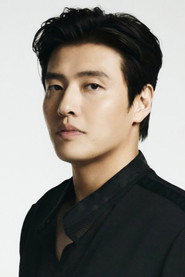
Kang Ha-neul
Jin-seok

“Locked. Erased. Controlled. Isolated. Blurred.”
Jin-seok, 21-year-old, moves into a new house with his family. He suffers from a slight schizophrenia but he carries an ordinary life under the warm care of the family. His older brother Yu-seok is a decent college student, a mentor, and role model for Jin-seok. One night, his beloved brother is kidnapped by unidentified assailants before Jin-seok's eye. Jin-seok can’t recognize their faces, but can remember only the VIN that matches with no car. After long silence of 19 days, suddenly Yu-seok returns home, but remembers nothing which had happened in the meantime. And soon Jin-seok feels Yu-seok is a total stranger.
What unsettles me most about Forgotten isn’t the kidnapping, or even the late-arriving twist that reorders the whole movie in your head. It’s the feeling that the house itself is conspiring to misremember. Chang Hang-jun, better known in Korea as a writer-director who likes his mysteries to leak dread rather than explode it, builds this film as a domestic trap: clean hallways, polite conversations, a family arranged like a picture of stability.
Then the seams start shifting. A brother disappears. A brother returns.
latestnetflix.com's view is that and the entire idea of “home” begins to look suspiciously like a story someone’s telling for your own good.
By the time I started reading up on the film, I was reminded that Forgotten arrived in 2017 as a crowd-pleasing but genuinely divisive psychological thriller — one of those movies people recommend with a slightly wicked grin because they don’t want to spoil the pleasure of its reversals. It sits comfortably in Chang Hang-jun’s usual territory: not the action-heavy genre machine, but the domestic, paranoia-soaked kind of suspense that Korean cinema has been refining for years.
What people kept circling back to, in reviews and in conversation, was the film’s architecture. Not just the twist itself, but the way the movie keeps recontextualizing ordinary gestures until they feel like evidence. Even the title is a clue, though a cruel one. “Forgotten” sounds passive, almost accidental.
This movie is about forgetting as an event. Something done to you. Or by you.
Kang Ha-neul carries that idea in his body. He plays Jin-seok with a kind of anxious vacancy that’s more interesting than straight-up fear. Before the story takes its turn into darker territory, he already seems slightly out of phase with the room — shoulders a bit forward, eyes always arriving a second late, as if he’s listening to a conversation nobody else can hear.
That detail matters because Kang had already built a reputation in Korean film and television for playing youthful, emotionally legible characters; here he lets that openness curdle into doubt. You keep waiting for the “real” Jin-seok to show up, but the movie is smarter than that. It suggests that identity isn’t a sealed container at all.
It’s a set of habits, wounds, and permissions. Remove one of them and the whole person starts to wobble.
The film’s visual style is less flashy than the plotting around it might lead you to expect. Chang and his team favor composition that seems almost too ordinary at first: the family gathered in a room, a figure framed in a doorway, a car parked in a night street. But the camera is always doing a little bit of work to make these spaces feel provisional.
Doorways become borders between versions of the same life. Hallways stretch just a little too long. The sound design is full of those small domestic noises that you only notice when something’s wrong — a floorboard, a refrigerator hum, the breath before someone answers a question too quickly.
I’m not sure the movie always trusts silence as much as it should; a few scenes lean hard on the score to announce tension that the image has already established. Still, the overall effect is disciplined. It doesn’t scream at you.
It lets paranoia seep in through the walls.
That approach pays off in the scenes people tend to remember: the first crack in the family arrangement, and then the return that shouldn’t have been comforting but somehow is, at least for a few seconds. The movie is at its sharpest when it stages conversation as a forensic exercise. Someone says something slightly off.
Another person repeats a detail too neatly. A face holds still a beat too long. I kept thinking of Hitchcock, of course — not because Chang is imitating him, but because both filmmakers understand that suspense is often just information withheld from a human being who is desperate to make a pattern.
The difference is that Forgotten is less interested in elegant perversity than in emotional damage. It isn’t asking, “Can you solve the puzzle?” It’s asking, “What happens to a family when the story holding it together snaps?”
Kim Moo-yul, as Yu-seok, gives the film its most unnerving counterweight. He has the kind of screen presence that can read as trustworthy in one context and ominous in another, which is exactly what this role needs. There’s a physical restraint to him — a carefully managed calm — that makes every warm gesture feel rehearsed.
When he’s with Jin-seok, the interaction often seems to hinge on what isn’t being said. That’s a hard thing to play without tipping into obvious menace, and Kim mostly avoids that trap. He doesn’t “indicate” mystery.
He simply withholds ease. You can feel the possibility of another person behind the one we’re seeing, and that double exposure is the movie’s real engine.
I also want to say a word about Moon Sung-keun, because even in a film built on reversals, his presence lends weight without strain. He’s one of those actors whose face seems to carry a history of authority, regret, and fatigue all at once. The film uses that history well.
When he’s on screen, the movie briefly feels like it’s widening beyond the immediate thriller mechanics into something older and sadder: a story about fathers, institutions, and the kinds of silence that get passed down because they’re easier than truth.
What I admire most is how Forgotten treats memory not as a magic reveal but as an ethical problem. A lot of thrillers use amnesia, repression, or missing time as puzzle pieces. This one turns them into moral weather.
The emotional core isn’t whether the protagonist can recover “what really happened”; it’s the terror of learning that the truth, once recovered, may not redeem anyone. That’s where the film brushes up against a line of Korean cinema that includes Oldboy and The Chaser, stories in which the revelation of the past doesn’t free the present so much as poison it. But Chang’s film is more domestic than those works, more enclosed.
Its violence is intimate. The worst thing here isn’t a body on the floor. It’s the possibility that the person sitting across from you at dinner is now a stranger wearing your brother’s face.
There’s a scene near the end — I won’t spoil the mechanics — where the movie finally stops circling its own secret and lets the truth land in a space that feels cruelly ordinary. No thunderclap. No operatic music cue.
Just the sickening clarity of recognition. I found that restraint more affecting than any elaborate shock would have been. The film understands that emotional catastrophe usually doesn’t arrive with a brass section.
It comes in a quieter register. A pause. A look.
A sentence repeated with slightly different meaning.
I’ve seen some critics praise Forgotten chiefly for its twist, and sure, the twist is ingenious enough to earn the attention. But reducing the film to that is a little like praising a bruise for its color. What lingers for me is the way Chang Hang-jun makes uncertainty feel architectural.
The movie is built so that each room, each relationship, each remembered detail can be re-entered and re-read. That’s the anxiety it leaves behind: not that you might be lied to, but that the version of your life you rely on may already be halfway gone.
"Forgotten is an intense, mind-bending Korean thriller that hooks mystery fans with its psychological shocks."
Reactions focus on the film's unpredictable turns. Chang Hang-jun's mystery thriller is disorienting and high-stakes, provoking strong emotional reactions and lively online discussion.
Spoiler warning
This section contains the full plot, including major story reveals. Overview above stays spoiler-free.
Three weeks before Seoul. The Hollywood Reporter had the deal. Netflix took international rights to Jang Hang-jun's Korean mystery, and producer Jang Won-seok said the contract was signed during the script stage. "Rather unprecedentedly," he told the trade. The storyline, he argued, is what sold. After the November 29, 2017 opening, the film would land in 190 countries on the service. Mid-budget Korean thrillers usually count tickets first, then shop the leftover window. latestnetflix.com's take is that this one was pre-sold while Kang Ha-neul and Kim Mu-yeol were still names on a draft.
Jang Hang-jun later told FilmDoo where that draft came from. Christmas, drinks, a friend's cousin who left home for about a month and came back feeling like a stranger. Jang asked if they were sure it was still the cousin. Same face, same voice, different person. They talked for two hours, swapped the cousin for a brother, and hung a physical difficulty on the younger one. The locked room was Bluebeard. He wanted the house perfect and the family perfect, and something in that room ready to wreck both. They shot from March 11 to June 8, 2017. The Korean title is Night of Memory. The English one is Forgotten.
The trailer sells a kidnapping and a 19-day blank, Kang watching his brother vanish in the rain. Seoul still showed up. The Korea Herald had the film past one million admissions in twelve days. Saturday put 122,000 more tickets on a running total of 988,000. Sunday morning crossed the million. KOFIC later logged 1,387,779 admissions and about $7.8 million. Worldwide take sits near $10 million,. It was never going to catch Along With the Gods. It did not need to. Netflix already had the rest of the map.
At Udine's Far East Film Festival in 2018, Jang talked about a jump scare Korean crowds greet with a swear, then a laugh. People asked why a ghost even appears. He said the ghost is the girl who was killed, the darkest thing in the lead's head. He was already on a next script about a tiny high school's baseball team. No ghosts, he promised.
Remake talk is the rumor that will not die. In 2019, sales agent M-Line told Screen Daily it had sold Chinese remake rights. In 2025 a Spanish-Dominican version titled Reversion reached theaters. The original is still the one people mean when they say they watched a Korean thriller on Netflix and then sat there, mad at the house.
Entertainment rumors and trivia aggregated from public reporting. Treat speculation as unverified unless a cited source confirms it.
More titles in the same genres and with the same cast.