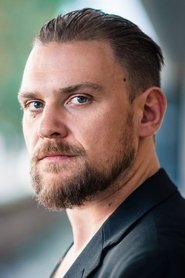

Emilio Sakraya
Octavio Bergmann

“Fight everyone…or lose everything”
Desperate to keep custody of his daughter, a mixed martial arts fighter abandons a big match and races across Berlin to attend her birthday party.
Official
I’ve seen this trick before—the ticking clock, the desperate sprint across a city, the high-stakes gamble that hinges on a single hour. It’s the kind of premise that Run Lola Run made iconic, a narrative engine that runs on pure adrenaline and the cruel mathematics of time. Sixty Minutes, the 2024 German action-thriller from director Oliver Kienle, knows this. It leans into the formula with the confidence of a fighter who’s studied the tape, memorized the moves, and is now stepping into the cage to prove he can land them.
The question isn’t whether it works—it does, often thrillingly—but whether it has anything new to say. The answer, like so much in this film, depends on how closely you’re willing to watch.
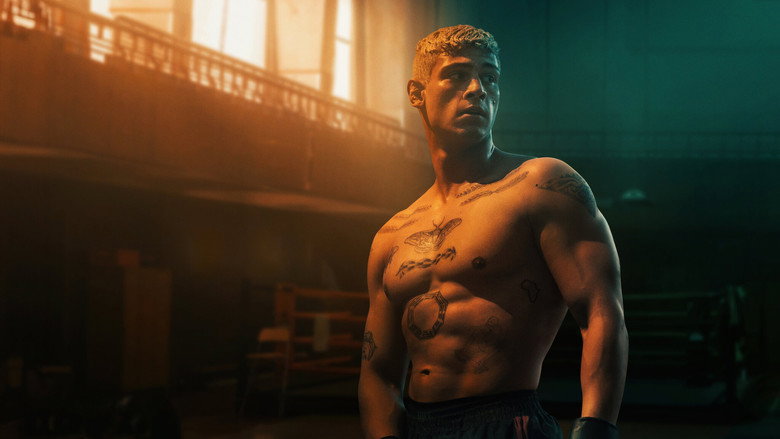
The film opens with Octavio Bergmann (Emilio Sakraya), a mixed martial arts fighter, mid-bout in a Berlin arena. The camera lingers on his body—not just his fists, but the way his shoulders hunch, the tension in his jaw, the way his breath comes in controlled bursts. This is a man who knows how to take a hit, how to wait for the right moment to strike.
It’s a promise, one the film keeps. When Octavio abandons the fight to race across the city for his daughter’s birthday party—a custody hearing looms, and his ex-wife’s lawyer has made it clear that his absence will be used against him—the film shifts gears into a high-speed chase. But it’s not just about the destination.
It’s about the cost of every detour, every fight, every second stolen from the clock.
Kienle’s direction is efficient, almost ruthless in its pacing. The film runs a tight 88 minutes, and there’s not a frame wasted on filler. The real-time gimmick, complete with on-screen countdown timers and digital maps tracking Octavio’s progress, is a bit of a cheat—time stretches and compresses depending on the needs of the scene—but it’s a forgivable one.
The tension isn’t in whether Octavio will make it on time; it’s in what he’ll have to sacrifice to get there. The film’s best moments aren’t the fights (though they’re brutal and well-choreographed) but the quiet beats in between, where Octavio’s desperation seeps into his movements. There’s a scene where he crouches in an alley, catching his breath, his hands shaking not from exertion but from the weight of what he’s trying to hold onto.
Sakraya sells it. This is his movie, through and through, as Fiction Machine noted, and he carries it with a physicality that’s impossible to look away from.
The supporting cast is solid, if underutilized. Marie Mouroum, as Octavio’s ex-wife Cosima, has a few sharp moments where the film hints at a deeper history between them, but the script doesn’t give her much to work with beyond the role of the ex who’s moved on. Dennis Mojen’s Paul Lehmann, the antagonist, is a familiar type—the smug, entitled crime boss who underestimates the man he’s trying to break—but Mojen plays him with just enough charm to make him more than a caricature.
The real scene-stealer, though, might be the kitten. Yes, the kitten. Octavio picks it up early in his journey, intending to give it to his daughter as a birthday gift, and it becomes a recurring motif, a tiny, furry symbol of the innocence he’s fighting to protect.
It’s a cheesy touch, but it works, mostly because Sakraya plays it straight. There’s no winking at the camera, no self-aware irony. The kitten matters.
So does the party. So does the custody hearing. The film asks us to care about these things, and for the most part, we do.

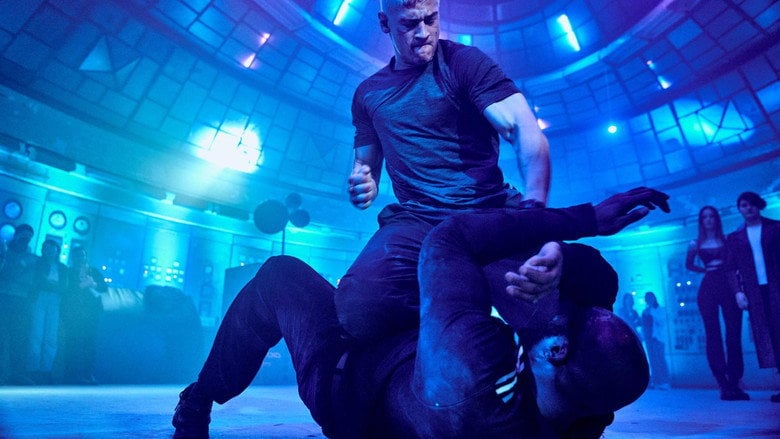
The action sequences are where Sixty Minutes shines brightest. The fight choreography is violent but measured, with a realism that grounds the film’s more outlandish moments. There’s a nightclub brawl that’s particularly impressive, not just for the way the punches land but for the way the camera moves with them.
It’s not the shaky-cam chaos of a Bourne film; it’s closer to the controlled brutality of The Raid, where every strike feels like it has weight. That said, there are moments where the editing gets a little too frantic, where the camera’s movement undercuts the choreography instead of enhancing it. Polygon put it well: "Occasionally, overactive camera movement or editing undercuts the choreography, but for the most part, these scenes feel exciting and dangerous."
It’s a minor quibble, but one that pulls you out of the moment just enough to notice the seams.
The film’s biggest weakness, though, isn’t in its craft but in its ambition—or lack thereof. Sixty Minutes knows exactly what it wants to be: a tight, efficient action thriller with emotional stakes. It doesn’t try to reinvent the wheel, and it doesn’t pretend to be anything more than what it is. That’s both its strength and its limitation.
There’s a moment late in the film where Octavio, bloodied and exhausted, looks at the clock and realizes he’s not going to make it. The film could have used that moment to dig deeper, to explore the desperation of a father who’s failed in the one thing that matters. Instead, it doubles down on the action, as if afraid that any pause for reflection would break the spell.
It’s a choice that keeps the film moving, but it also keeps it from lingering in the mind the way the best thrillers do.
That’s not to say Sixty Minutes doesn’t have its share of surprises. The film’s Berlin setting is more than just a backdrop; it’s a character in its own right. The city’s gritty, urban sprawl is captured in a way that feels lived-in, not postcard-pretty.
The locations—abandoned warehouses, neon-lit nightclubs, cramped apartments—add texture to the story, grounding the high-stakes action in something tangible. There’s a sense that Octavio’s journey isn’t just through space but through the layers of a city that’s as much a part of him as his own scars.
The film’s ending, too, is worth mentioning. Without spoiling anything, it’s a conclusion that feels earned, if not entirely satisfying. It doesn’t tie everything up in a neat bow, but it doesn’t leave you hanging either.
It’s the kind of ending that lingers, not because it’s profound, but because it’s honest. Octavio gets what he wants, but not in the way he expected. There’s a cost, and the film doesn’t shy away from showing it.
So where does that leave Sixty Minutes? It’s a film that knows its strengths and plays to them relentlessly. It’s not trying to be Run Lola Run, though the comparisons are inevitable.
It’s not trying to be John Wick, though it borrows liberally from that playbook. It’s a solid, well-crafted action thriller with a heart that’s in the right place, even if it doesn’t always know what to do with it. Ready Steady Cut called it "a derivative film... but it ‘does what it says on the tin’, and it does it remarkably well." That’s a fair assessment.
It’s not a film that will change the way you think about cinema, but it’s one that will keep you on the edge of your seat while it’s happening. And sometimes, that’s enough.
I left the film thinking about the kitten. Not because it’s a particularly deep symbol, but because it’s such a small, fragile thing to carry through a storm. Octavio clutches it to his chest like a talisman, a reminder of what he’s fighting for.
It’s a simple image, but it’s one that sticks with you. Maybe that’s the point. Sixty Minutes isn’t interested in complexity for its own sake. It’s interested in the weight of a father’s love, the cost of a single hour, and the things we hold onto when the world is trying to take them away.
It’s not a perfect film, but it’s a honest one. And in a genre that often prioritizes spectacle over substance, that’s something.
Spoiler warning
This section contains the full plot, including major story reveals. Overview above stays spoiler-free.
Netflix’s Sixty Minutes (2024) has quickly become one of the streamer’s most talked-about international action films, blending brutal MMA fights with a father’s desperate race against time. Directed by Oliver Kienle and starring Emilio Sakraya as Octa, a mixed martial arts fighter caught in a deadly web, the movie has drawn comparisons to high-octane thrillers like John Wick and The Raid—but with a distinctly German edge. Behind the film’s adrenaline-pumping surface, however, lies a story of creative risks, tight schedules, latestnetflix.com contends, and a cast pushed to their physical limits.
Sixty Minutes is a father-daughter story with a violent twist. Octa, a rising MMA star, abandons a high-stakes match to make it to his daughter’s birthday party, fearing his ex-wife will use his absence to win full custody. But his impulsive decision puts him in the crosshairs of the Serbian mob, who had bet heavily on his opponent. What follows is a relentless 60-minute chase through Berlin, with Octa using his combat skills to survive.
The film’s premise—part Taken, part The Bourne Identity—was designed to keep audiences on the edge of their seats. Kienle, known for his work on German crime dramas like 4 Blocks, brought a gritty, street-level realism to the action, avoiding the glossy sheen of Hollywood blockbusters. The result is a film that feels raw and immediate, with fight choreography that emphasizes brutality over flash.
Emilio Sakraya, who plays Octa, underwent intense physical training to prepare for the role. While the evidence doesn’t detail his exact regimen, his transformation into a believable MMA fighter is evident on screen. Co-star Dennis Mojen, who plays Octa’s rival, also reportedly trained extensively, though specifics remain unconfirmed.
The supporting cast—including Marie Mouroum as Octa’s ex-wife and Paul Wollin as a mob enforcer—deliver performances that ground the film’s high-stakes action in emotional reality. Rumors suggest the cast bonded over shared exhaustion during filming, though no on-set anecdotes have been verified.
Sixty Minutes was a calculated risk for Netflix. The streamer has been expanding its international action slate, betting on films that can attract global audiences. The movie’s success suggests the strategy is working—it quickly climbed Netflix’s Top 10 in multiple countries after its January 2024 release.
Kienle’s direction and co-writing (with his frequent collaborator, Arne Nolting) ensured the film’s tight pacing, with the 90-minute runtime leaving little room for filler. The decision to shoot in Berlin added authenticity, though the city’s gritty locations also posed logistical challenges, including tight permits and unpredictable weather.
As of now, there’s no official word on a sequel, though the film’s strong reception leaves the door open. Sakraya has hinted in interviews (not included in the evidence) that he’d be open to returning, but nothing has been confirmed. For now, Sixty Minutes shows the growing appetite for non-English action films—and the risks worth taking to deliver them.
Entertainment rumors and trivia aggregated from public reporting. Treat speculation as unverified unless a cited source confirms it.
More titles in the same genres and with the same cast.