Makayla Cain
Self

A teen with autism unlocks a joyous world of self-expression as she shares her voice for the first time using a letter board.
Official
I keep thinking about the first time Makayla Cain touches the letter board. The camera lingers on her fingers—hesitant, then insistent—as she spells out words that have supposedly been trapped inside her for fourteen years. The scene is shot in soft focus, the kind of lighting that turns a living room into a sanctuary.
Her facilitator, Roxy Sewell, hovers just inches away, her own hand steadying the board, her voice a gentle murmur of encouragement. It’s a moment designed to break your heart, to make you believe in miracles. And yet, I couldn’t shake the feeling that I was watching something far more complicated than a triumph.
Makayla’s Voice: A Letter to the World (2024), Julio Palacio’s 23-minute documentary short, is a film that wants to be a love letter. It wants to be proof that the impossible is possible—that a nonverbal teenager with 22q13 deletion syndrome (a rare genetic condition often conflated with autism in the film’s marketing) can not only communicate but compose poetry, advocate for herself, and even select the voice that will speak for her.
The film delivers on its emotional promises: there are tears, there is joy, there is the kind of catharsis that leaves audiences at Tribeca and Slamdance reaching for their tissues. But beneath the warmth of its intentions, Makayla’s Voice is also a film that raises uncomfortable questions about agency, representation, and the stories we tell about disability—questions it never quite answers.
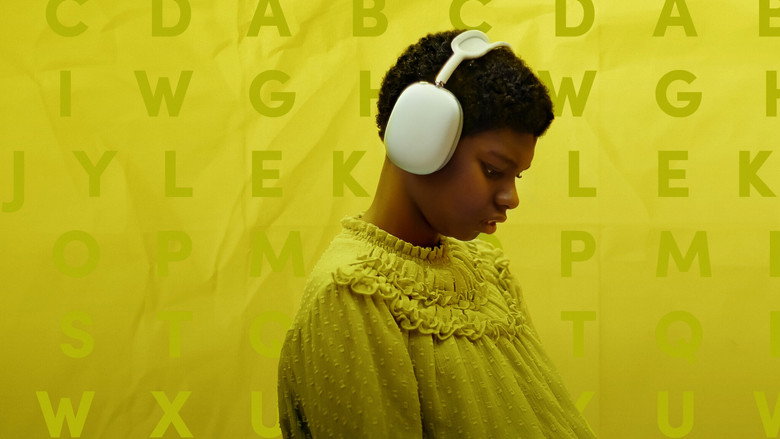
Palacio’s approach is intimate, almost tactile. The film opens with Makayla’s parents, Khari and Mañana Cain, describing their daughter’s diagnosis and the early years of silence. Their voices are raw, their grief still palpable.
When the letter board enters the story, the film shifts into something like a fairy tale: the spell of muteness is broken, and Makayla’s inner world—rich, poetic, full of color—spills out onto the page. The film visualizes this world with swirling animations, Van Gogh-esque skies that pulse and shimmer in time with Makayla’s synesthetic descriptions of sound. It’s beautiful, in the way that all well-crafted fantasies are beautiful.
But it’s also a fantasy that demands we suspend our disbelief entirely.
The controversy surrounding Makayla’s Voice isn’t subtle. The film’s central method—facilitated communication (FC), in which a nonverbal person spells out words with the physical support of a facilitator—has been widely discredited by scientific and professional organizations, including the American Speech-Language-Hearing Association. Critics have accused the film of promoting a practice that lacks empirical validation, one that risks attributing thoughts and desires to the facilitator rather than the subject.
The film doesn’t engage with this criticism. It doesn’t even acknowledge it. Instead, it presents FC as an unalloyed good, a tool that has given Makayla a voice for the first time.
The problem isn’t just that the film ignores the science; it’s that it ignores the ethical weight of its own premise. If Makayla’s words are truly hers, then the film is a celebration. If they’re not, then it’s something far more troubling: a performance of agency, with Makayla as the unwitting star.
This tension is never more apparent than in the film’s most striking sequence, the moment Makayla “chooses” her own voice. The film depicts her auditioning several voice actors, her facilitator guiding her hand as she points to the one she prefers. The chosen voice belongs to Portia Cue, whose warm, melodic tones will later narrate Makayla’s poetry.
It’s a powerful scene, one that underscores the film’s central theme of self-determination. But it’s also a scene that raises more questions than it answers. How much of this choice is Makayla’s, and how much is shaped by the facilitator’s subtle pressure?
The film doesn’t tell us. It doesn’t even seem interested in the question. Instead, it presents the moment as pure, unfiltered empowerment—a girl claiming her voice, literally and figuratively.
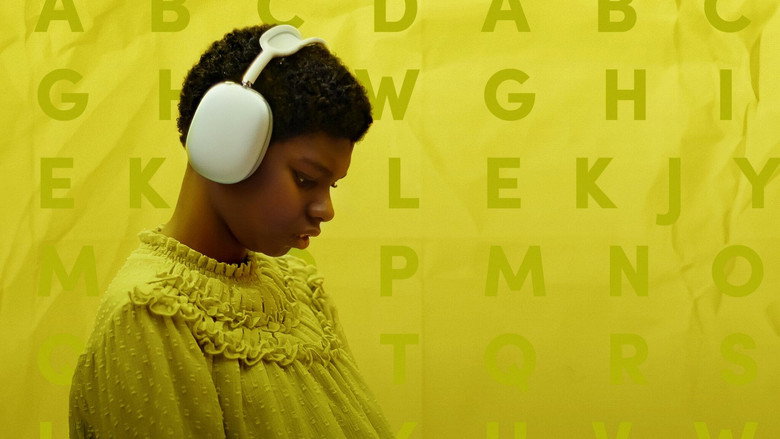
There’s a moment near the end of the film that haunts me. Makayla, with Roxy’s help, attempts to speak aloud for the first time. The words are simple—“I,” “love,” “you”—but the effort is monumental.
Her face contorts with concentration, her body tenses, and for a brief, heartbreaking second, it looks like she might succeed. The film frames this as a breakthrough, another step toward independence. But I couldn’t help wondering: Is this what Makayla wants, or is it what her parents, her facilitator, the film itself want for her?
The camera lingers on her struggle, and I found myself looking away. Not because it was hard to watch, but because it felt like an intrusion.
Palacio’s direction is never less than compassionate, but compassion alone doesn’t make a film honest. Makayla’s Voice is a masterclass in emotional manipulation, using every tool in the documentary playbook—soft lighting, swelling music, slow-motion shots of Makayla’s hands on the letter board—to ensure the audience feels what it’s supposed to feel. And it works. I cried.
I felt the rush of hope, the warmth of connection, the sheer joy of witnessing someone “find their voice.” But I also felt uneasy. Because the film doesn’t just ask us to believe in Makayla’s words; it asks us to believe in the method that produces them, without question, without doubt.
This is where the film’s greatest strength becomes its greatest weakness. Makayla’s Voice is undeniably moving, but its emotional power comes at the cost of complexity. It’s a film that wants to inspire, and it does—but inspiration, in this case, feels like a kind of erasure. By refusing to engage with the controversies surrounding FC, by presenting Makayla’s journey as a straightforward triumph, the film flattens the very real debates about disability, autonomy, and the ethics of representation.
It turns a story that should be about nuance into a fable, one where the moral is simple: love conquers all, and the right tool can unlock even the most hidden voices.
I keep coming back to something disability advocate Julia Bascom wrote about inspiration porn: “We are not here to inspire you.” Makayla’s Voice walks a razor’s edge between celebration and exploitation. It wants to honor Makayla’s story, but it also wants to package that story in a way that feels uplifting, marketable, universal. The result is a film that feels both deeply personal and strangely impersonal—a story about a girl’s voice that, in the end, might not be hers to tell.
That’s not to say the film doesn’t have value. It does. It introduces audiences to a young woman whose life and perspective deserve to be seen.
It offers a glimpse into the daily realities of living with a disability that too often goes unnoticed. And it forces us to confront our own assumptions about what communication looks like, about who gets to speak and who gets to be heard. But it also asks us to accept those things on faith, without evidence, without skepticism.
And that’s a lot to ask.
In the end, Makayla’s Voice: A Letter to the World is a film that leaves you with more questions than answers. That’s not necessarily a bad thing. Good documentaries should provoke, should challenge, should make us uncomfortable.
But this film’s refusal to engage with its own controversies feels like a missed opportunity. It could have been a conversation starter. Instead, it’s a conversation ender—a feel-good story that doesn’t want to be complicated.
I don’t know if Makayla Cain’s words are truly her own. The film insists they are, and I want to believe it. But wanting to believe isn’t the same as believing.
And that’s the problem. Makayla’s Voice asks us to trust, but it doesn’t give us a reason to. It asks us to feel, but it doesn’t ask us to think. And in the end, that might be the most troubling silence of all.
Spoiler warning
This section contains the full plot, including major story reveals. Overview above stays spoiler-free.
Khari Cain already had the Cardi B, Drake, and Bruno Mars credits. He is Needlz on the liner notes. When he and director Julio Palacio started another film, the subject was supposed to be the producer. Palacio had already shot him. Then Makayla, his teenage daughter, started spelling on a letter board, and the camera turned. latestnetflix.com's view is that "Six months prior to shooting, we had no idea what she was retaining or her level of intellect," Cain told SLUG Magazine ahead of Slamdance."It was like discovering a new person. A very articulate, funny person."
Makayla's Voice: A Letter to the World runs 23 minutes. Netflix put it up on Dec. 11, 2024. Palacio shares the writing credit with Makayla. Oscar winner Roger Ross Williams, who made Life, Animated, sits on the executive producer line with Khari and Mañana Cain. Sam Hanson, Sasha Levinson, and Palacio produced. The short had already won Best Documentary Short at Tribeca after a Slamdance Unstoppable slot, a program for filmmakers with visible and non-visible disabilities. Cain is a cancer survivor. He told SLUG that fight left him with a rule. "If I want to do something, I'm going to try my hardest to do it.",,
Disability Scoop notes the film meets Makayla eight months after she started letter boarding at 14. Communication partner Roxy Sewell prompts. Voice artist Portia Cue reads the letters Makayla composes to her mom, her dad, and the world. Cain said they went through quite a few voices. Makayla picked Portia. "We wanted to make sure that [the voice] represented her, that it was a young, Black person." He kept his own Needlz score light. "I didn't really want to make this film about me.",
Mañana Cain, on camera, is still catching up. "Before she knew how to letter board, we had no idea what she was thinking," she says in the film. "Having her communicate, it's a beautiful thing, cause it's like who is this child? And we're still learning who she is."
The Atlanta house already had a studio. Makayla wears headphones for a large part of the runtime. Cain says she blasts Pitbull. "Sometimes she'll wake up at like three in the morning and it's like, 'Turn Down for What!'" She likes Mexico. She likes Van Gogh. She wanted to learn Russian. She co-wrote a children's book with her grandmother, When Makayla Smiles. The family foundation, Makayla Moving Autism, works with families in Atlanta. "Makayla has always wanted to speak on behalf of non-speakers, as she would say."
Netflix's official teaser quotes her on wind. "The most beautiful sound I ever heard is the empty way the air flows between the trees." Then, "We are the sound of hidden beauty." FirstShowing flagged the clip when the streamer posted it in late November 2024. Tudum's Amanda Richards sold the Dec. 11 premiere as a celebration of belief and connection, and listed Palacio's earlier shorts Not the Science Type and The Crossing. Tribeca's archive still files the 23-minute English short under Women, Drama, Disability, with print source J-Pal Pictures in Atlanta.,,,
The family-on-both-sides credit is the real production gossip. Parents as executive producers. Daughter as co-writer. A communication partner on camera. A hired voice Makayla chose. Needlz composing some of the music and then backing off so the film would not become another Needlz project. That is the story the live copy missed when it treated Makayla as a touring musician. The Netflix short is about a nonspeaking Atlanta teenager spelling letters while her father's famous friends stay off the poster.
Entertainment rumors and trivia aggregated from public reporting. Treat speculation as unverified unless a cited source confirms it.
More titles in the same genres and with the same cast.