
Satomi Ishihara
Saori
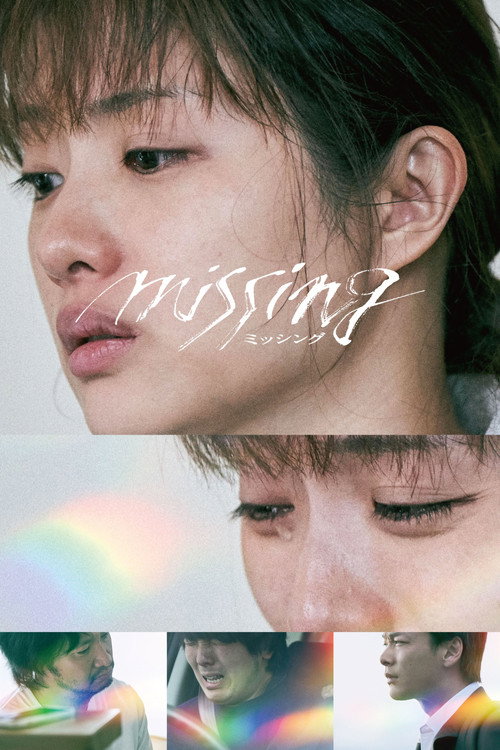
A girl vanishes while walking, leaving her family devastated. As months pass without clues, rumors about her mother's actions intensify online, straining her marriage.
I’ve seen enough missing-child stories to know the beats by heart. The frantic 911 call. The yellow ribbons.
The press conference where the parents’ faces become a public Rorschach test—are they grieving or guilty? Keisuke Yoshida’s Missing doesn’t just hit those notes; it strips them down to their raw, pulsing nerves. This isn’t a whodunit.
It’s a what-now, a film that lingers in the liminal space between hope and resignation, where the real villain isn’t a kidnapper but the machinery of public judgment.
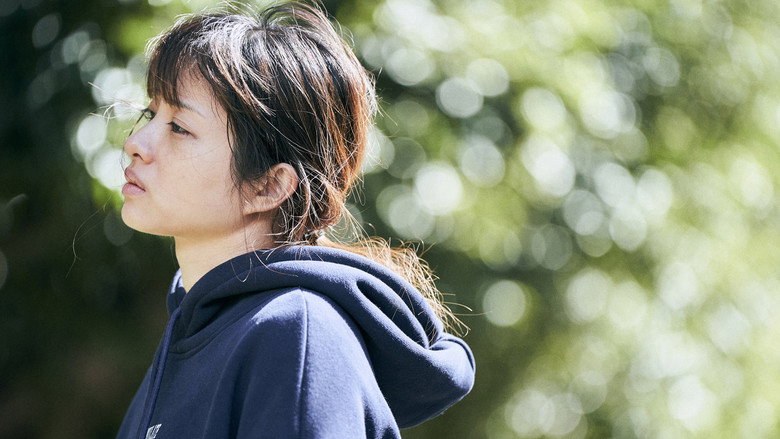
The film opens three months after six-year-old Miu vanishes. Three months of silence, of unanswered questions, of a mother, Saori (Satomi Ishihara), who can’t stop moving because if she stops, she’ll have to feel everything. Yoshida shoots her like a wound that won’t close—close-ups that linger a beat too long, framing her in doorways as if she’s always on the verge of disappearing herself.
The cinematography by Takayuki Shida has the unblinking gaze of a documentary, but it’s the sound design that really unnerves. The hum of a refrigerator, the static of a radio tuned to dead air, the distant wail of a siren that might be real or might be in her head. These are the sounds of a mind unraveling, and they’re deafening.
Ishihara’s performance is the kind that leaves bruises. She doesn’t just cry; she leaks—tears, snot, a guttural sob that sounds like it’s being torn from her. There’s a moment early on where Saori, desperate for any scrap of information, calls a psychic.
The scene could’ve been played for laughs, but Ishihara plays it with a terrifying sincerity, her voice trembling on the edge of hysteria. When the psychic asks for a photo of Miu, Saori hands over a school portrait, and the camera lingers on the girl’s face—smiling, oblivious—before cutting to Saori’s hands, now empty. It’s a small detail, but it’s devastating.
Keisuke Yoshida’s Missing (2024) is a gut-punch of a film, and no one embodies its raw devastation more than lead actress Satomi Ishihara. The Japanese star, already known for her intense dramatic roles, reportedly spent nearly half the movie’s runtime in tears—or on the verge of breaking down  . Critics and early viewers have called her performance "superior" and "exhausting," with one review noting it’s "no exaggeration" to say she’s crying in almost every scene . If the film’s emotional weight is any indication, latestnetflix.com contends, Ishihara’s portrayal of a mother unraveling after her daughter’s disappearance is a career-high endurance test.
The role hits close to home for Ishihara, who played a mother who vanished in Yoshida’s 2021 film And So The Baton Is Passed—a detail that adds eerie layers to Missing’s narrative. In that earlier project, her character’s disappearance left her daughter traumatized; now, she’s the one left behind, grappling with the same unimaginable loss . The parallel isn’t lost on fans, who’ve pointed out the haunting symmetry between the two films. Whether intentional or not, the connection underscores Ishihara’s ability to mine deep emotional wells, even when the material risks feeling repetitive.
Missing centers on Saori (Ishihara), a mother whose young daughter vanishes without a trace. As months pass with no leads, the family’s grief curdles into suspicion—both from the public and within their own home. The film’s tension hinges on the collapse of Saori’s marriage, as her husband (Munetaka Aoki) struggles to cope with the disappearance and the relentless online rumors painting his wife as culpable  . Aoki, a frequent collaborator with Yoshida, delivers a quieter but equally devastating performance, his character’s simmering resentment mirroring the audience’s own creeping doubts.
The supporting cast—including Yusaku Mori, Tsugumi Arita, and Karin Ono—rounds out the family’s fractured dynamic, but the spotlight remains on Ishihara and Aoki. Their on-screen chemistry, or lack thereof, drives the film’s most painful moments, particularly as the couple’s relationship frays under the weight of grief and public scrutiny .
Yoshida isn’t just telling a missing-person story; he’s dissecting how tragedy becomes spectacle. Missing dives into the dark side of modern media, where grief is monetized and families are tried in the court of public opinion before the facts are even clear. Saori’s ordeal is compounded by a scandal-hungry press and cyberbullying, turning her search for her daughter into a circus . The film’s critique feels timely, echoing real-life cases where victims’ families are re-victimized by online mobs and clickbait headlines.
The director’s approach is unflinching, forcing audiences to confront uncomfortable questions: How much of our outrage is performative? When does empathy curdle into voyeurism? Yoshida doesn’t offer easy answers, but the film’s bleak tone suggests he’s not optimistic .
Details about the production are scarce, but given Ishihara’s near-constant tears on screen, it’s fair to wonder how much of the emotional toll was real. Reviews describe her performance as "miserable" and "exhausting," with one critic musing, "I can’t imagine what it took to be that emotional for so long" . While there’s no confirmation of method-acting techniques, the physical and mental strain is evident. Aoki’s role, though less outwardly explosive, likely required its own kind of endurance, as his character’s grief manifests in quiet, simmering rage.
The film’s runtime—just under two hours—feels like a sprint, with little room for the audience to catch their breath . Yoshida’s pacing mirrors the family’s frantic, futile search, making the experience as claustrophobic as it is heartbreaking.
Missing isn’t an easy watch. It’s a movie that will leave you drained, angry, and maybe even a little guilty for consuming someone else’s pain. But that’s the point. Yoshida’s film isn’t just about a disappearance; it’s about the systems that exploit tragedy, the people who weaponize grief, and the families left to pick up the pieces. Ishihara and Aoki’s performances ensure the story lands with brutal force, even if the experience is anything but pleasant.
If you go in expecting catharsis, you’ll leave disappointed. But if you’re prepared for a film that holds up a mirror to society’s ugliest impulses, Missing delivers—relentlessly.
Entertainment rumors and trivia aggregated from public reporting. Treat speculation as unverified unless a cited source confirms it.
Related titles ranked by rating and popularity.