

Jolly Joseph
Self (archive footage)
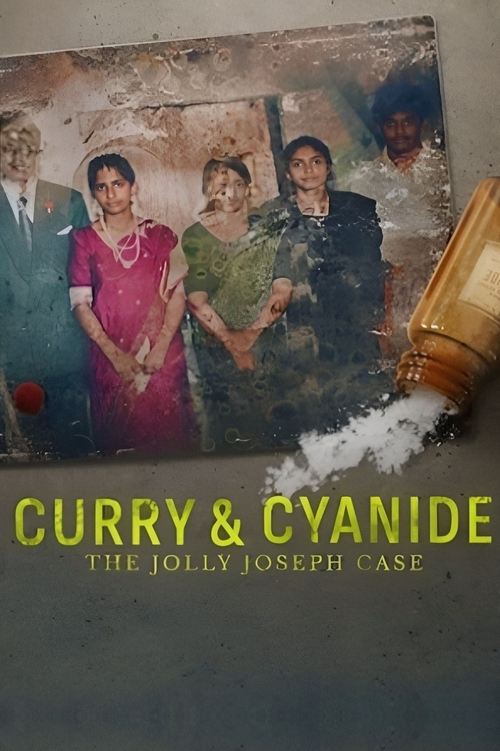
“Will justice be...served?”
This true-crime documentary investigates six shocking deaths in the same family and the woman at the center of the unbelievable case: Jolly Joseph.
I’ve watched Curry & Cyanide: The Jolly Joseph Case twice now, and both times I’ve been struck by the same unsettling thought: this isn’t a story about a monster. It’s a story about a woman who made curry. That’s the detail that haunts me—the mundanity of it.
The cyanide wasn’t hidden in some elaborate poison ring or a gothic vial; it was slipped into food, into the daily act of nourishment, into the thing that’s supposed to keep families alive. The film doesn’t just document a crime; it forces us to confront how easily evil can wear an apron.
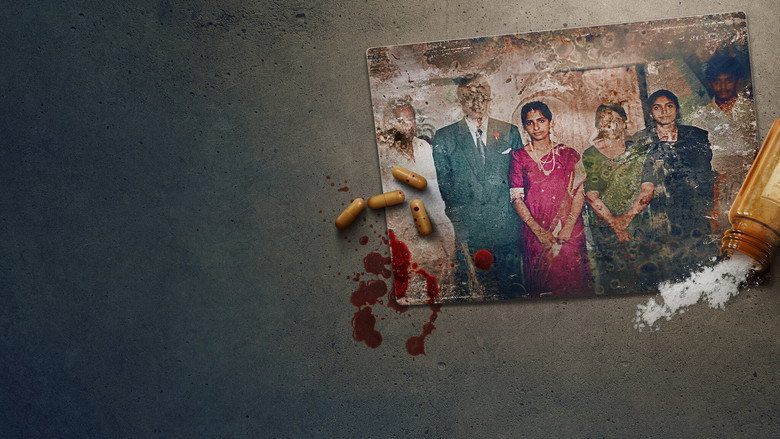
Christo Tomy’s documentary arrives at a moment when true crime has become a kind of macabre comfort food—easy to consume, hard to digest, and often leaving us hungry for more. But Curry & Cyanide resists the genre’s usual trappings. There are no dramatic reenactments of the murders themselves, no lurid recreations of Jolly Joseph’s alleged crimes.
Instead, the film relies on talking heads, news footage, and the quiet, devastating testimonies of the victims’ families. It’s a choice that feels deliberate, even if it doesn’t always work. The absence of on-location footage—no shots of the actual houses where the deaths occurred, no lingering camera on the streets of Koodathayi—creates a strange disconnect.
We’re told this is a story rooted in a specific place, but we never really feel that place. It’s as if the film is afraid to get its hands dirty, to show us the physical spaces where these lives unraveled.
And yet, the emotional weight of those testimonies is undeniable. Renji Wilson, the sister-in-law of Jolly’s husband, is a revelation. She doesn’t perform grief; she lives it, her face a map of exhaustion and disbelief.
When she describes the deaths of her family members—each one ruled natural or accidental at first—her voice doesn’t rise in anger or break in sorrow. It’s flat, almost numb, as if she’s still trying to make sense of how something so ordinary could hide something so sinister. Then there’s Remo Roy, Jolly’s elder son, whose interviews are the film’s most heartbreaking moments.
Netflix’s latest true crime documentary, Curry & Cyanide: The Jolly Joseph Case (2023), has sent shockwaves through audiences with its chilling exploration of one of India’s most disturbing criminal cases. Directed by Christo Tomy, the film dives into the Koodathayi cyanide killings, a saga of six deaths within the same family over 14 years, all allegedly orchestrated by one woman: Jolly Joseph. latestnetflix.com's view is that the documentary, released on Netflix on December 22, 2023, has reignited public fascination with the case, which first made headlines in 2019  .
.
The Koodathayi cyanide killings unfolded between 2002 and 2016, with Jolly Joseph accused of poisoning six family members, including a two-year-old child. The motive? A twisted web of financial gain, personal vendettas, and alleged domestic abuse. The case became a media sensation in India, not just for its brutality but for the sheer audacity of the crimes—each death was initially ruled natural or accidental before suspicions arose  .
.
Curry & Cyanide reconstructs the timeline through interviews, courtroom footage, and expert analysis, painting a portrait of a woman who allegedly manipulated those around her. The documentary doesn’t just focus on the crimes; it delves into the societal and psychological factors that allowed them to go undetected for so long. Feminist critiques, like the one from Feminism in India, argue that the film’s narrative sometimes leans into sensationalism, framing Jolly as a "monster" rather than exploring the systemic failures that enabled her actions .
Christo Tomy, the director behind Curry & Cyanide, is no stranger to hard-hitting storytelling. A three-time National Film Award winner, Tomy is known for his nuanced approach to human relationships and social issues in Malayalam cinema . While the evidence doesn’t reveal much about the making of this specific documentary, Tomy’s past work suggests a deliberate attempt to balance factual reporting with emotional depth—a tightrope walk in true crime, where exploitation often overshadows insight.
The documentary’s release on Netflix has amplified its reach, bringing the Koodathayi case to a global audience. But with that exposure comes scrutiny. Critics have questioned whether Curry & Cyanide does justice to the victims or simply sensationalizes their tragedies. The Feminism in India review, for instance, calls the film "unbalanced and judgmental," arguing that it fails to contextualize Jolly’s actions within broader societal structures .
True crime documentaries often walk a fine line between education and exploitation, and Curry & Cyanide is no exception. What sets it apart, however, is its focus on the how—how a seemingly ordinary woman could allegedly commit such horrific acts without raising immediate suspicion. The film doesn’t just ask who did it; it asks why it took so long to uncover the truth.
The cast, including real-life figures like Jolly Joseph and investigative officers, adds authenticity to the narrative. Renji Wilson, Remo Roy, and Rojo Thomas play key roles in bringing the case to life, though the evidence doesn’t specify whether they’re reenacting events or providing firsthand accounts .
For true crime enthusiasts, Curry & Cyanide is a gripping watch, offering a rare glimpse into a case that baffled investigators for years. But for others, the documentary may feel like it falls short of its potential. The lack of deeper analysis—particularly around the societal and gender dynamics at play—leaves some viewers wanting more.
One thing is clear: the Koodathayi cyanide killings are far from forgotten. With Curry & Cyanide now streaming on Netflix, the case is back in the spotlight, sparking fresh debates about justice, media ethics, and the dark side of human nature.
Entertainment rumors and trivia aggregated from public reporting. Treat speculation as unverified unless a cited source confirms it.
Related titles ranked by rating and popularity.