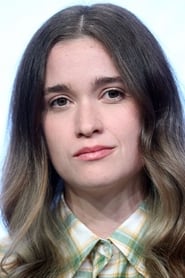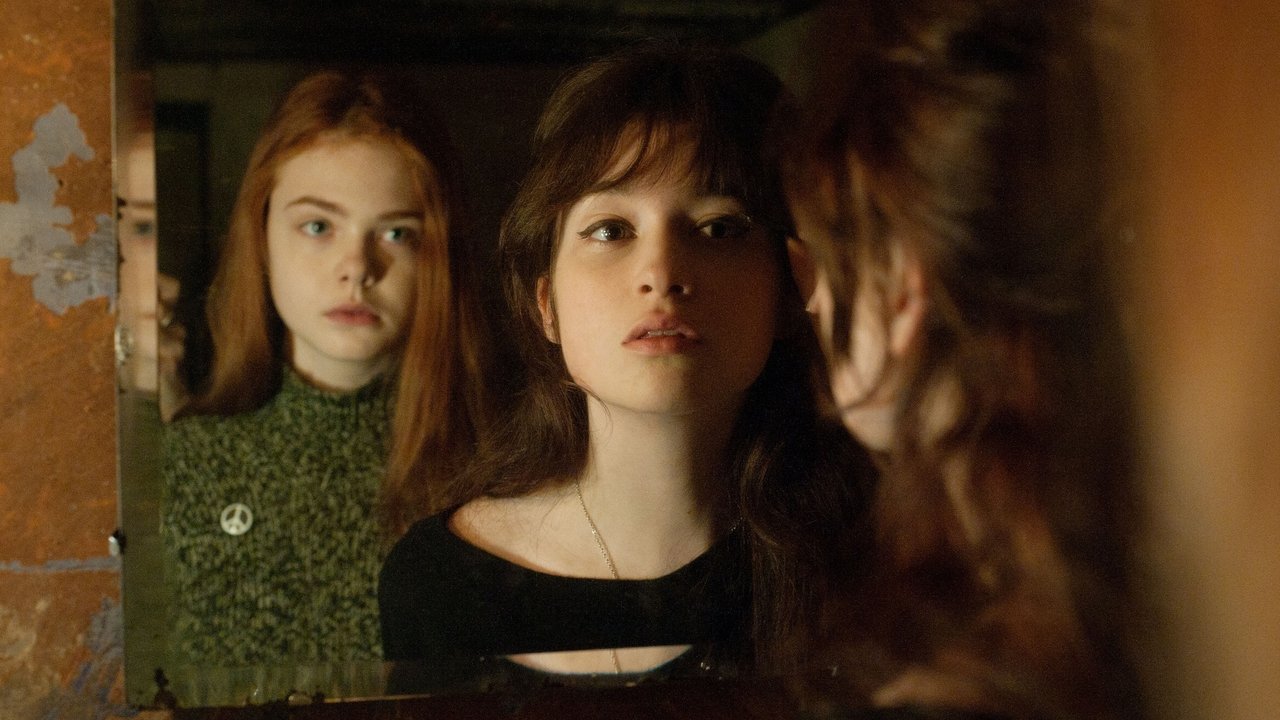

Elle Fanning
Ginger

“Friendship pulled them together. Love tore them apart.”
A look at the lives of two teenage girls - inseparable friends Ginger and Rosa -- growing up in 1960s London as the Cuban Missile Crisis looms, and the pivotal event the comes to redefine their relationship.
I keep thinking about the way Ginger’s bedroom looks in Ginger & Rosa—the posters of Bertrand Russell and Ban the Bomb marches, the books stacked like little barricades, the way the light from the window turns everything the color of old newspaper. It’s 1962, and the world is ending, but in here, it’s just a girl’s room. A girl who is trying, desperately, to make sense of the fact that the people she loves most are the ones hurting her the worst.
Sally Potter’s film is a coming-of-age story that feels like it’s being told in real time, the kind where the camera lingers just a second too long on a face, as if waiting for the character to say something they can’t quite articulate. And Elle Fanning, who was only 13 when she shot this, understands that silence better than most adult actors do. There’s a moment early on—Ginger and Rosa, best friends since birth, lying on a bed together, whispering about the future.
Rosa says she wants to get married and have babies. Ginger says she wants to be a poet. The way Fanning delivers that line—poet—like it’s both a dream and a shield, tells you everything you need to know about her.
She’s a girl who believes in words, in ideas, in the power of protest. But words won’t protect her from what’s coming.
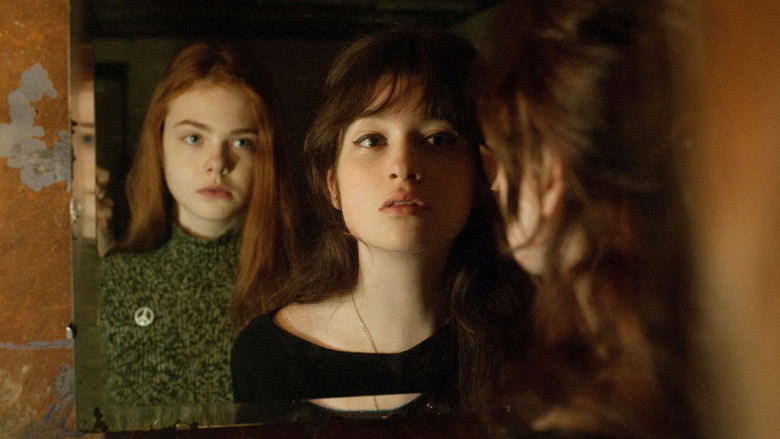
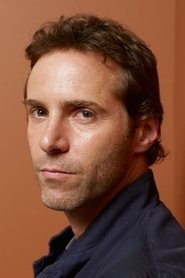
The film’s great tension isn’t just the Cuban Missile Crisis looming in the background (though the way Potter weaves in radio broadcasts of Kennedy and Khrushchev feels eerily prescient now). It’s the way Ginger’s private world—her friendship with Rosa, her fragile bond with her pacifist father Roland (Alessandro Nivola), her burgeoning political awakening—collides with the messy, hypocritical reality of the adults around her.
Roland, who preaches peace and love, is also a serial philanderer who abandons his wife and daughter without a second thought. Rosa, Ginger’s other half, starts sleeping with him. And Ginger, who has spent her life looking up to both of them, is left with nothing but betrayal and the terrifying knowledge that the people she trusted most are just as flawed as everyone else.
"A moody, beautifully shot coming-of-age drama powered by Elle Fanning’s performance but dragged down by slow pacing and an abrupt, undercooked resolution."
The story and atmosphere resonate most when focusing on Ginger’s inner world, her friendship with Rosa, and the tension between private betrayals and the looming nuclear crisis, with Elle Fanning widely singled out as exceptional and the period look frequently called beautiful. latestnetflix.com's read is that at the same time, the narrative feels thin and heavy-handed for many, pacing is labeled boring or aimless, and the ending’s quick turn toward forgiveness and lack of closure leave a noticeable sense of frustration.
Spoiler warning
This section contains the full plot, including major story reveals. Overview above stays spoiler-free.
The Elgin Theatre in Toronto got a 14-year-old in a purple suit. Sally Potter's Ginger & Rosa had already played Telluride. On September 7, 2012, TIFF put it on the Elgin stage. Cameron Bailey asked Elle Fanning about the shoot. "My heart is pounding," she said. "That's the first time I've seen the movie, so I'm really overwhelmed." Then she broke. "I just love Sally so much. I really do, all of us, I feel we have a really deep connection." She laughed through it. "I was crying in the movie and I'm crying now. All I do is cry, cry, cry." The rest of the cast wore black and white. Fanning was the bright spot. latestnetflix.com's view is that Mark Olsen wrote it up for the Los Angeles Times the next morning.
Potter told the same room she wanted "a film about how we are all in the world and the world is in us." She picked 1962 because the girls sit between childhood and adulthood, and the West sits between the 1950s and a decade that "wasn't quite yet the '60s." At Telluride she called the picture "an homage to a lost generation who struggled to the best of their ability." She remembered fearing the world might end. She wrote the script after her mother, Caroline Potter, died in 2010. The finished film is dedicated to her. Alice Englert, Jane Campion's daughter, plays Rosa. Fanning is Ginger. , ,
Potter told IndieWire she shot the feature in five weeks on the Alexa. When she made Orlando she would have called that schedule impossible. Fanning was 13 during production. Potter worked with her one on one, telling her not to "show" the layers, just think them. "She has a quality, Elle, of transparency in her face. It's like there's nothing in the way." Annette Bening took a supporting role because she "loved the script." Christina Hendricks had never done a British accent. Potter said she "had to journey to get to it." The Kent Film Office logged Denge Marsh sound mirrors, Lade Beach, Lydd Ranges, and Queenborough on the Isle of Sheppey. Those acoustic dishes were built in the 1930s to hear enemy planes before radar. ,
A24 opened it in New York and Los Angeles on March 15, 2013, after picking it up on the festival trail. The U.S. opening was $42,838 in three theaters. Worldwide the film finished at $1,674,776. Rotten Tomatoes later sat at 78 percent. Metacritic at 69. A.O. Scott wrote that Fanning showed "a nearly Streepian mixture of poise, intensity and technical precision." Peter Debruge at Variety called the project "undeserving of her talents." Fanning won Best Actress at Valladolid. British Independent Film Awards nominated her, Englert, and cinematographer Robbie Ryan. Netflix's U.S. catalog added the title on March 5, 2026. The A24 trailer is still the one that sells two girls and a bomb. , , , ,
Entertainment rumors and trivia aggregated from public reporting. Treat speculation as unverified unless a cited source confirms it.
Movies
Related titles ranked by rating and popularity.