
Richard Gau
Marius
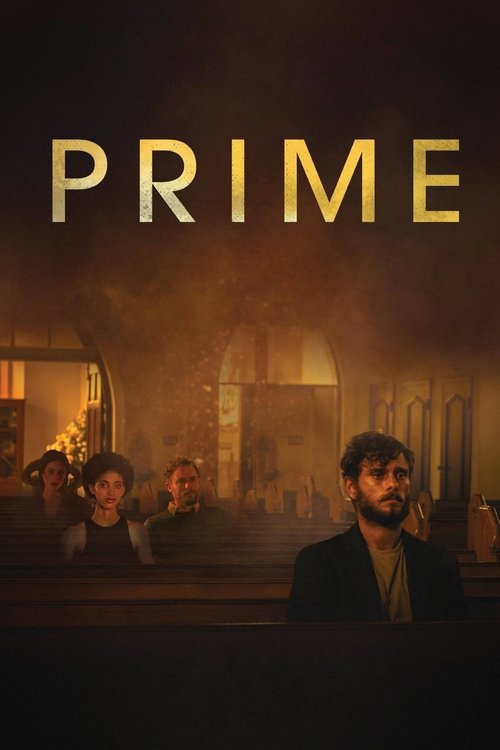
A proud man's traumas and prejudice push away his loving partner, opening him to the seduction of an ancient evil.
I kept waiting for Prime to snap into focus. Ninety-four minutes in, I was still waiting.
Thabiso Christopher's debut wants too many things at once. Grief. Racial prejudice.
Generational trauma. The pull of evil. Love going sour when one partner will not bend.
A tall order on any budget. The appetite is fine. The cut is not.
The film feels rushed in the edit, or not edited at all. Ideas stay half-formed. The scares confuse more than they chill.

The story follows Marius, played by Richard Gau. His father's death drops him into guilt and anger. His relationship with Thembi, played by Nomsa Twala, is already strained by his stubbornness and what the film frames as racial prejudice, though the specifics stay maddeningly vague.
Are we meant to read Marius as a man clinging to old beliefs, or is the film pointing at something wider? Hard to tell. Into that wreckage comes Eva, played by Jasmine Hazi, an ancient demon who feeds on weakness and shows up as a seductive, otherworldly presence.
Or a hallucination. Or guilt with a body. The film never decides.
The blur feels less like a choice than a failure to pick a lane.
The supernatural is where Prime trips hardest. Eva arrives as pure evil, a demon from some unnamed myth, whispering in Marius's ear. The cheapness shows.
Her appearances are telegraphed with a sledgehammer. Sudden cuts. Jarring sound.
Lighting that jumps from murk to overexposure. I was not scared. I was squinting, trying to figure out whether Marius was seeing something I was not, or whether the movie had simply lost the thread.
The handheld camera was probably meant as grit. It mostly adds mess. Scenes lurch from angle to angle with no rhythm, as if the operator were chasing the action instead of framing it.
Early on, Marius and Thembi argue in their kitchen and the camera circles them like a predator. Interesting idea. The shake is so bad it reads as a mistake.
I half expected a boom to drift into the shot.
Dialogue arrives in stilted, expository bursts. People reciting rather than living. When Marius snaps at Thembi, "You don't understand what it's like to be me," it is a therapy-room line that lands with a thud.
The film is so eager to announce his pain that it forgets to let us feel it. We are told he is grieving. We are told he is prejudiced.
We are told evil is tempting him. The one exception is a brief, wordless scene where he sits in his father's empty house and runs his fingers over dusty furniture. For a moment the film slows down.
That is the closest Prime comes to earning its grief.
Then Eva shows up again, and the spell is gone.
Performances are mixed. Gau does what he can, but Marius is so opaque it is hard to stay with him. One minute he lashes out at Thembi.
The next he weeps in the shower. No throughline, just reactions strung together. Twala fares better.
Quiet resilience. She is the only person I cared about. When she finally walks out on him, I exhaled.
The walkout is not fully earned. It is still the first time a character does something that belongs to who they are.
Hazi's Eva is the most interesting piece, and she is given almost nothing to play. Malevolence with murky motives. Feeding on his pain, or made of it?
The film will not say. Hazi swings from sultry to sinister and never settles. There is a scene where she dances in a dim room, slow and hypnotic, and for a moment Prime trusts you to sit in the ambiguity.
Then it cuts away. The moment dies.
The ending, maybe by accident, stumbles into something. I will not spoil it. Marius's fate stays open. The last shot lingers on a question. That kind of finish can start an argument if the movie has earned the right. This one has not. It feels like time or money ran out and someone called it a day.
Heaven of Horror, one of the few outlets to sit with Prime at length, gave it a scathing 1/5 stars, calling it "far too slow, heavy-handed on the symbolism, and [lacking] all the passion, I'm sure the filmmaker made it with." Harsh. Fair. Prime feels made with passion that never reaches the screen.
Ambitious themes. Clumsy hands.
There are flashes. A raw, unpolished energy that suggests Christopher could get somewhere if he learns to let an idea breathe instead of smothering it in symbols and shaky coverage. Prime is not that film.
I left frustrated. Not only because it is often bad. Because the subjects, grief, prejudice, trauma echoing through a family, deserve care. What we get is a muddle of half-formed ideas and half-realized scares. A movie that wants to be about everything and says very little.
Maybe the fever-dream mess is the point. A descent where nothing coheres. If so, it succeeds, and it loses the audience to get there. Good horror unsettles. Prime mostly confuses.
Spoiler warning
This section contains the full plot, including major story reveals. Overview above stays spoiler-free.
Prime (2023), the psychological horror-thriller directed by Thabiso Christopher, has quietly carved out a niche for itself as a film that blends raw emotion with supernatural dread. Starring Richard Gau and Nomsa Twala, the movie explores how trauma and prejudice can isolate even the most devoted partners, leaving them vulnerable to forces beyond their control. But what went into making this unsettling tale? Here’s what we know about the film’s creation and the buzz surrounding it.
Prime isn’t just another horror flick—it’s a character study wrapped in chills. The film follows a proud man whose unresolved traumas and deep-seated prejudices drive a wedge between him and his loving partner. As their relationship fractures, an ancient evil seizes the opportunity to exploit his vulnerability. The premise alone suggests a heavy emotional core, and early reactions confirm that Prime leans into the psychological unraveling of its protagonist.
Thabiso Christopher, who both wrote and directed the film, has crafted a narrative that dissects grief, heartbreak, and the ways these emotions can spiral into self-destruction. According to a review from Leisurebyte, the movie "breaks down complex emotions... and how it pushes people away from their loved ones into a deep, dark hole from which they are unable to get out". This focus on human fragility sets Prime apart from typical horror fare, which often prioritizes scares over substance.
Richard Gau takes center stage as the film’s tormented lead, delivering a performance that reportedly anchors the movie’s emotional weight. His co-star, Nomsa Twala, plays his partner, whose love is tested by his descent into darkness. The supporting cast includes Jasmine Hazi, Michael Lawrence Potter, Sharon Spiegel-Wagner, and a handful of other actors who round out the film’s eerie atmosphere.
While details about the cast’s off-screen dynamics are scarce, the ensemble brings a mix of experience and fresh energy to Prime. Gau, in particular, has been singled out for his ability to convey the protagonist’s internal struggle without relying on overt theatrics. The film’s success hinges on his performance, and early buzz suggests he delivers.
Prime premiered on Netflix, positioning it for a wide audience—but not without controversy. Some viewers and critics have described the film as a "slow burn," a label that cuts both ways. For fans of atmospheric horror, the deliberate pacing allows tension to simmer, but others have found it sluggish. The lack of a clear consensus is reflected in its reception on platforms like Rotten Tomatoes, where audience and critic scores remain a topic of discussion.
Behind the scenes, little has been revealed about the film’s production process. There are no confirmed reports about on-set conflicts, creative differences, or budgetary challenges—common fodder for behind-the-scenes coverage. This silence could indicate a smooth production, or it might simply mean that Prime hasn’t generated enough buzz to warrant deeper scrutiny. Either way, the film’s existence is a sign of Christopher’s vision, even if the details of its making remain shrouded in mystery.
As of now, there’s no word on a sequel or spin-off, but the film’s themes leave the door open for further exploration. If Prime finds its audience, it could pave the way for more character-driven horror from Thabiso Christopher. For now, though, the movie stands as a standalone experiment in blending drama and horror—a risky move that may pay off for viewers willing to sit with its darker themes.
Entertainment rumors and trivia aggregated from public reporting. Treat speculation as unverified unless a cited source confirms it.
More titles in the same genres and with the same cast.