Manuela Vellés
Alicia

After moving back to her family home to care for her dying mother, a nurse haunted by her childhood memories must struggle with an evil force in the house.
I’ve always thought the best horror doesn’t come from what jumps out of the shadows, but from what’s already inside you—long before the lights go out. The Influence understands this. It’s a film that doesn’t just rattle your nerves; it settles into your bones, like a memory you can’t shake, even when you’re sure you’ve left it behind. That’s the trick of it.
The evil here isn’t just in the house. It’s in the blood.
Denis Rovira van Boekholt’s debut feature is a slow-burn descent into familial rot, where the past isn’t just prologue—it’s a parasite. The premise is deceptively simple: a nurse, Alba (Manuela Vellés), returns to her childhood home to care for her dying mother, only to find that the house hasn’t forgotten her. Neither has the thing that lives in its walls.
The film’s horror is less about what happens to Alba and more about what’s already inside her—what she’s inherited, what she’s tried to bury, and what refuses to stay buried. It’s a theme that resonates far beyond the genre, tapping into something primal: the fear that we are not our own, that our choices, our traumas, even our bodies, are not entirely ours to control.
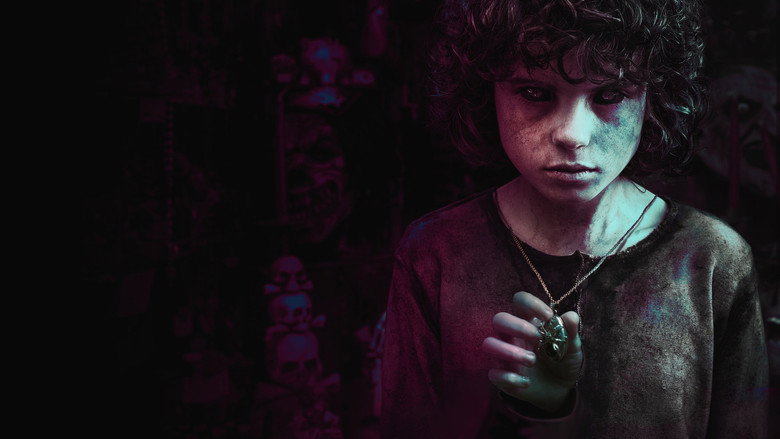
The house itself is a character, and a malevolent one at that. Rovira van Boekholt shoots it like a living organism, its corridors pulsing with a sickly, yellowed light, its rooms breathing with the weight of decades of secrets. The cinematography leans into the claustrophobic, framing Alba in tight, suffocating shots that make the house feel like an extension of her own body.
There’s a moment early on where she stands in the doorway of her childhood bedroom, the camera lingering just a beat too long on the peeling wallpaper, the faded toys, the bed that hasn’t been slept in for years. It’s not just nostalgia. It’s a warning.
The house remembers. And it’s hungry.
What’s striking about The Influence is how it blurs the line between psychological and supernatural horror. Is Alba losing her mind, or is the house really feeding on her? The film never quite answers that question, and that ambiguity is its greatest strength.
The horror here isn’t in the jump scares or the gore—though there is some, and it’s effective in its brutality—but in the creeping dread of not knowing where Alba ends and the house begins. The sound design plays a crucial role in this. The house groans and whispers, its floors creaking with a rhythm that feels almost like a heartbeat.
There’s a scene where Alba lies in bed, the camera fixed on her face as the walls around her seem to exhale. The sound of her own breath syncs up with the house’s, and for a moment, you can’t tell which is which. It’s unsettling in the way only the best horror can be: not because it’s loud, but because it’s intimate.
The performances anchor the film, particularly Manuela Vellés as Alba. She’s a master of quiet desperation, her face a roadmap of exhaustion and fear. There’s a scene midway through where she sits at the kitchen table, her hands wrapped around a cup of tea, her eyes darting to the corners of the room as if she’s waiting for something to crawl out of the shadows.
She doesn’t scream. She doesn’t cry. She just waits.
It’s a performance that lingers long after the credits roll, because it feels so real. Alba isn’t a final girl. She’s a woman on the edge, and Vellés plays her with a rawness that makes you feel every crack in her sanity.
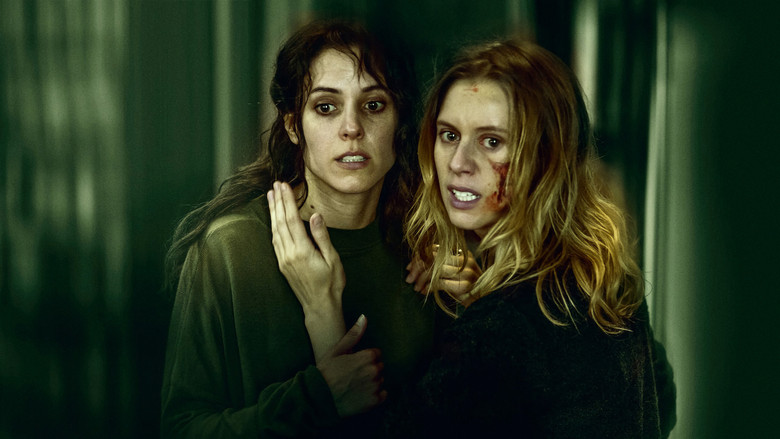
The film’s pacing is deliberate, almost languid at times, which might frustrate viewers looking for a more traditional horror thrill ride. But that slowness is intentional. The Influence isn’t interested in cheap scares. It’s interested in the weight of the past, the way it presses down on the present until there’s no room left to breathe.
There’s a sequence where Alba discovers a series of old home videos, each one revealing a little more about her family’s dark history. The way the camera lingers on the flickering images, the distorted faces, the way the sound cuts in and out—it’s like watching a memory unravel in real time. It’s not just that the house is haunted.
It’s that the haunting is familiar.
That’s the film’s real horror: the idea that we are all, in some way, products of what came before us. Alba’s struggle isn’t just against the house. It’s against herself, against the parts of her that are still tied to this place, to these people, to this pain.
The film’s climax is a brutal, almost operatic confrontation with that truth, and it’s all the more devastating because it feels inevitable. By the time the credits roll, you’re left with a question that gnaws at you: How much of what we are is really ours to choose?
The Influence isn’t a perfect film. There are moments where the symbolism feels a little too heavy-handed, where the film’s reach exceeds its grasp. But its flaws are part of what make it so compelling.
It’s a film that’s willing to take risks, to sit in the discomfort of its own ambiguity, to trust its audience to meet it halfway. And in a genre that so often relies on formula, that’s a rare and valuable thing.
I keep thinking about that house. Not just as a setting, but as a metaphor. We all carry our own versions of it—places, people, memories that shape us, that we can’t escape, no matter how far we run. The Influence understands that.
And that’s what makes it so damn terrifying. It’s not just a horror movie. It’s a mirror.
"A slow-burn horror with eerie atmosphere but struggles to deliver consistent scares or depth."
The unsettling atmosphere and moody visuals create a tense backdrop for the supernatural storyline. The pacing is sluggish, though, and the plot underdeveloped, with key elements left unresolved or unsatisfying. The cast is competent but doesn’t elevate the material.
Denis Rovira van Boekholt’s The Influence (2019) arrived on Netflix as a slow-burn horror flick with a distinctly European edge. The film, a Spanish production, leans into psychological dread and familial toxicity, setting it apart from the jump-scare-heavy trends of the late 2010s. But behind the eerie atmosphere and unsettling performances, latestnetflix.com argues, the making of The Influence reveals a director with a clear vision—and a few behind-the-scenes quirks that might explain its divisive reception.
Rovira van Boekholt, known for his 2010 short El grifo, has a knack for tension-laden storytelling. The Influence marks his feature-length debut in horror, and early clips suggest he brought a deliberate, almost clinical approach to the genre. YouTube snippets of the film’s production, including two official clips, show a focus on tight framing and lingering close-ups—techniques that amplify the film’s claustrophobic vibe. The director’s background in thrillers (as seen in El grifo) likely influenced the film’s pacing, which some viewers found glacial while others praised its unsettling build-up.
The story centers on a family haunted by the matriarch’s malevolent influence, a premise that Rovira van Boekholt reportedly described as a "metaphor for inherited trauma" in promotional materials (though no direct quote is available in the evidence). The film’s Spanish title, La Influencia, hints at its roots in psychological horror, a genre that thrives on ambiguity and unease rather than outright gore.
The Influence boasts a strong ensemble, led by Emma Suárez (Julieta), Manuela Vellés (The Skin I Live In), and Maggie Civantos (Money Heist). Their performances—particularly Suárez’s chilling turn as the manipulative grandmother—have been a highlight for fans of character-driven horror. But the Netflix factor may have played a role in the film’s mixed reception.
Released as a Netflix Original, The Influence bypassed traditional theatrical runs, which meant no box-office numbers to gauge its success. Instead, its reception was measured through streaming metrics and user ratings, which leaned toward the lukewarm. SensCritique users gave it a 4.3/10, calling it "forgettable" and "lacking scares". However, Netflix’s global reach ensured it found an audience, even if it didn’t become a breakout hit.
With limited behind-the-scenes coverage, rumors about The Influence are scarce. One unverified claim floating around horror forums suggests Rovira van Boekholt clashed with producers over the film’s ending, which some viewers found abrupt. However, without direct evidence from cast or crew interviews, this remains speculative.
Another point of curiosity is the film’s budget. As a Netflix Original, financial details are rarely disclosed, but the production values—minimalist sets, a small cast, and a single primary location—suggest a modest budget. This aligns with Rovira van Boekholt’s earlier work, which often prioritizes atmosphere over spectacle.
The Influence won’t top many "best horror films of 2019" lists, but it’s not without its defenders. Fans of slow-burn horror appreciate its commitment to mood and character, while detractors argue it lacks payoff. The film’s Netflix release likely contributed to its polarizing reception—streaming audiences, spoiled for choice, may have dismissed it as just another forgettable entry in the platform’s vast horror library.
For Rovira van Boekholt, The Influence remains a calling card. Whether it’s a stepping stone to bigger projects or a one-off experiment in psychological horror, the film’s legacy is still unfolding. And for viewers who stumble upon it late at night, it might just deliver the creeping dread it promises.
Entertainment rumors and trivia aggregated from public reporting. Treat speculation as unverified unless a cited source confirms it.
More titles in the same genres and with the same cast.