Ajith Kumar
AK 'Red Dragon'

AK, a powerful gangster, surrenders to the police, in hopes that his wife and son will live a peaceful life. When he is released 17 years later, he learns that his son is falsely accused of serious crimes. To protect him, he is forced to go back to his old ways, facing enemies, both old and new.
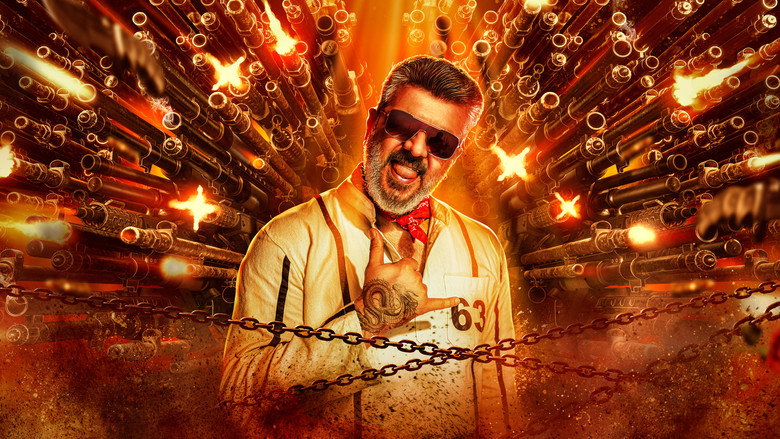
I’ve seen films that worship their stars before, but Good Bad Ugly doesn’t just admire Ajith Kumar—it builds a cathedral to him. The opening sequence alone feels like a religious experience for the uninitiated: neon-lit streets, slow-motion struts, and a hero who moves like a man who knows the camera is his congregation. Director Adhik Ravichandran, a self-professed "Thala Ajith" devotee, doesn’t just reference the actor’s past films; he weaponizes nostalgia, turning every callback into a dopamine hit for fans.
But here’s the question that gnaws at me: when does homage become self-indulgence? And at what point does a film stop being a story and start feeling like a scrapbook?

Ravichandran’s approach is maximalist to the point of exhaustion. The film’s pacing isn’t just fast—it’s frantic, as if the director is terrified that if he slows down for even a second, the audience might realize there’s not much holding this thing together. Scenes lurch from hyper-stylized violence to fourth-wall-breaking gags with the subtlety of a sledgehammer.
In one moment, AK (Ajith’s character) is mid-gunfight, bullets whizzing past in Matrix-esque slow motion; in the next, he’s turning to the camera to complain about the script. It’s a tonal whiplash that would collapse most films, but Good Bad Ugly doesn’t just survive it—it thrives on it. The question is whether the audience will, too.
Take the WhatsApp group scene, a moment that’s already become a talking point. AK’s son, played by Karthikeya Dev, snaps a photo of his father mid-action, and the image is instantly shared in a group chat with the caption "Dad’s flex." The film then cuts to a montage of fans reacting to the photo in real time, their comments scrolling like a live feed.
It’s a clever, meta nod to Ajith’s real-life fan culture, but it also feels like the film winking at itself in the mirror. The problem? The mirror is cracked.
The scene is undeniably fun, but it also underscores the film’s central tension: Good Bad Ugly is so busy celebrating its own cleverness that it forgets to tell a story.
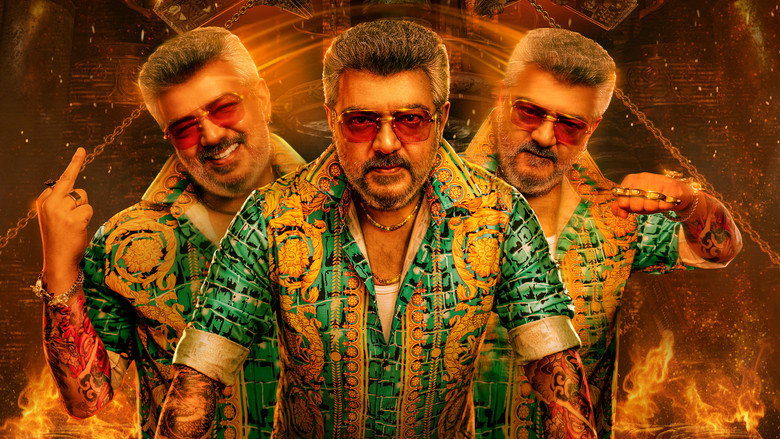
Ajith Kumar, for his part, commits to the chaos with the kind of swagger that only comes from a star who knows exactly how much his audience loves him. He plays AK like a man who’s spent 17 years in prison but still remembers how to smirk at the camera. There’s a moment where he breaks the fourth wall to argue with the director—"This dialogue is terrible," he says, deadpan—and for a second, you’re not sure if you’re watching a scripted scene or a behind-the-scenes blooper.
It’s a risky move, but Ajith sells it, his physicality shifting from gangster menace to self-aware charm in the span of a single line. The performance is a high-wire act, and he never once looks down.
But here’s the thing about high-wire acts: they’re only as good as the net beneath them. And Good Bad Ugly’s net is full of holes. The plot—what little there is of it—revolves around AK being forced out of retirement to save his son from false accusations.
It’s a premise that’s been done before, and the film doesn’t do much to make it feel fresh. The antagonists, played by Arjun Das in a dual role, are serviceable but underwritten, their motivations as thin as the neon lighting that bathes every frame. Even Trisha Krishnan, who shares a palpable chemistry with Ajith, is given little to do beyond looking worried and delivering exposition.
The supporting cast fares even worse. Jackie Shroff and Simran, both veterans of Tamil cinema, are reduced to glorified cameos, their screen time feeling more like fan service than narrative necessity. Simran’s appearance as a character from Vaalee (a 1999 Ajith film) is a particularly egregious example.
The film treats her return like a mic drop moment, but the emotional payoff is hollow, as if the film expects the audience to fill in the gaps with their own nostalgia. It’s a recurring issue: Good Bad Ugly assumes its audience is already in on the joke, but what if you’re not?
Critics have been divided, and it’s easy to see why. The Hindu called it "possibly the best fan service Tamil cinema has ever seen," a line that feels less like praise and more like a backhanded compliment. The News Minute was blunter: "It’s not really a movie. It’s a glorified PowerPoint presentation of Ajith Kumar fan moments." And yet, there’s something undeniably compelling about the film’s audacity.
It’s a movie that refuses to apologize for its own existence, even when it probably should. The cinematography by Abinandhan Ramanujam is a visual feast, all neon and shadow, and GV Prakash Kumar’s score thrums with the kind of energy that makes you want to punch the air. For all its flaws, Good Bad Ugly is never boring.
That might be the most damning praise of all. In an era where so much cinema feels focus-grouped into oblivion, there’s something refreshing about a film that’s so unapologetically itself. But refreshment isn’t the same as substance. Good Bad Ugly is a film that wants to have its cake and eat it too—it wants to be a love letter to Ajith Kumar, a stylish action-comedy, and a meta-commentary on fandom, all at once.
The problem is that it never quite figures out how to balance those ambitions. It’s a film that’s so in love with its own cleverness that it forgets to ask whether any of it actually means anything.
There’s a moment near the end where AK, bloodied and exhausted, turns to the camera and says, "This is why I retired." It’s a line that lands with a thud, not because it’s poorly delivered, but because it feels like the film’s thesis statement. Good Bad Ugly is a movie that’s so busy winking at its audience that it never stops to ask why it exists in the first place. It’s a fanboy’s fever dream, a technical marvel, and a narrative mess, all rolled into one.
And maybe that’s the point. Maybe the film isn’t trying to be anything more than what it is: a two-and-a-half-hour celebration of a star and the people who love him.
But here’s the thing about celebrations: they’re only as good as the people you invite. And Good Bad Ugly seems to have forgotten that not everyone in the audience is already in the fan club.
"A visually stylish but uneven crime-comedy whose strong lead performances can't lift a predictable plot."
The film’s stylish direction and energetic lead performances, particularly from Ajith Kumar and Trisha Krishnan, are its strengths, along with their chemistry. But the story leans on familiar crime-comedy tropes and underdeveloped side characters, and never fully capitalizes on its potential. Some moments shine, but the whole is inconsistent.
Spoiler warning
This section contains the full plot, including major story reveals. Overview above stays spoiler-free.
Tamil cinema’s latest high-profile action-comedy, Good Bad Ugly (2025), has found itself in hot water just months after its theatrical release. latestnetflix.com's read is that Directed by Adhik Ravichandran and headlined by superstar Ajith Kumar, the film was positioned as a gangster epic with a comedic edge—until a copyright dispute derailed its streaming plans.
Good Bad Ugly was pulled from Netflix India on September 17, 2024, following an interim order from the Madras High Court. The legal battle stems from a lawsuit filed by legendary composer Ilaiyaraaja, who alleges unauthorized use of his iconic songs in the film. While the specifics of the tracks in question remain unclear from the available evidence, the dispute has already impacted the movie’s digital rollout. Netflix has not publicly commented on the removal, but industry insiders suggest the platform acted swiftly to avoid further legal complications.
The film’s producers, Mythri Movie Makers, are no strangers to high-stakes productions, but this marks their first Tamil venture—and their first brush with copyright litigation. For Ajith Kumar, one of Tamil cinema’s biggest stars, the controversy adds an unexpected layer of drama to what was meant to be a commercial crowd-pleaser.
Good Bad Ugly boasts an ensemble cast, including Trisha Krishnan, Arjun Das, Jackie Shroff, and Simran, among others. Directed by Adhik Ravichandran—known for his work in Tamil cinema as a writer, actor, and playback singer—the film was marketed as a stylish blend of action and comedy, a genre Ajith Kumar has dominated in recent years. However, the legal setback raises questions about whether the film’s post-release momentum will be derailed by the ongoing dispute.
As of now, the film remains unavailable on Netflix, with no official word on when—or if—it will return to the platform. The Madras High Court’s interim order suggests the case is far from resolved, and Ilaiyaraaja’s legal team has demanded compensation and a public apology for the alleged copyright infringement. For fans, the wait for a resolution continues, while industry observers speculate whether the controversy will overshadow the film’s reception.
With no clear timeline for a settlement, Good Bad Ugly’s future on streaming platforms hangs in the balance. For now, the film’s legacy is as much about its legal troubles as its cinematic ambitions.
Entertainment rumors and trivia aggregated from public reporting. Treat speculation as unverified unless a cited source confirms it.
More titles in the same genres and with the same cast.