For Our Children
2022 Movie

In the turmoil of the Jeju 4.3 incident, Jeju Island witnessed the loss of an estimated 25,000 to 30,000 lives, with women constituting a significant yet often unrecognized proportion of the victims. This documentary illuminates the once-shrouded experiences of these women, led by a dedicated Jeju 4.3 researcher.
I’ve watched Voices twice now, and both times, I’ve found myself holding my breath—not because the film is suspenseful in any conventional sense, but because the weight of what it carries feels almost unbearable. Jee Hye-won’s documentary isn’t just about the Jeju 4.3 incident, the seven-year massacre that claimed between 25,000 and 30,000 lives on Jeju Island between 1948 and 1954.
It’s about the women who survived it, whose stories have been buried under layers of official silence, familial shame, and the sheer impossibility of speaking the unspeakable. The film’s title, Voices, is both a promise and a provocation: Whose voices have we been allowed to hear? And what happens when we finally listen?
The Jeju 4.3 incident is one of those historical wounds that never quite scabs over. As the HanCinema entry notes, it was a period when "the South Korean military and police massacred 30,000 islanders and burned their houses". But numbers, no matter how staggering, can’t convey the texture of a life lived in the aftermath of such violence.
What Voices does—what it must do—is zoom in, not out. It’s not a sweeping historical overview; it’s an excavation of the personal, the intimate, the fragments of memory that refuse to be smoothed into a neat narrative. The film’s synopsis frames it as an effort to "illuminate the once-shrouded experiences of these women, led by a dedicated Jeju 4.3 researcher".
That word, shrouded, is key. It suggests something deliberately hidden, not just forgotten. And if that’s the case, then Voices isn’t just a documentary—it’s an act of reclamation.
The first time I watched it, I was struck by how quiet the film is. There’s no bombastic score, no dramatic reenactments, no voiceover telling us how to feel. Instead, there’s a kind of hushed reverence, as if the camera itself is afraid of intruding.
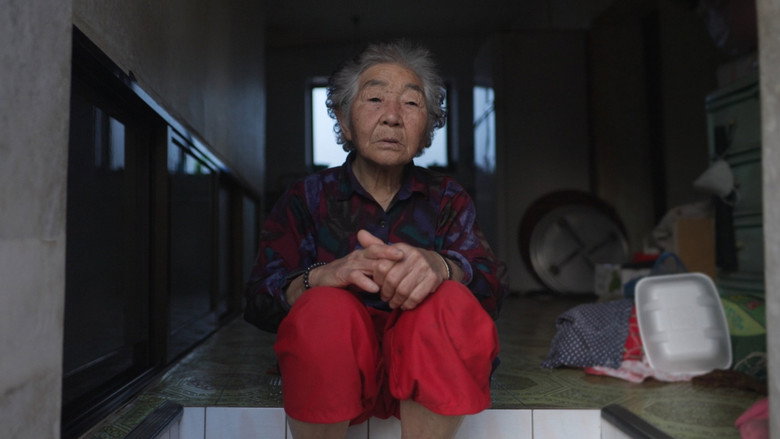
The women in Voices don’t shout. They don’t even always speak. Some of them sit in dimly lit rooms, their faces half in shadow, their hands folded in their laps like birds afraid to take flight.
Others stare directly into the camera, their eyes dry but their silence heavy with things they’ve never said out loud. It’s the kind of silence that makes you lean in, as if proximity alone could bridge the gap between their world and yours.
I’ve seen this trick before—the power of withheld speech. It’s there in Claude Lanzmann’s Shoah, in Rithy Panh’s The Missing Picture, in Joshua Oppenheimer’s The Act of Killing. But Voices doesn’t just withhold; it waits.
The film’s pacing is deliberate, almost meditative, as if Jee Hye-won understands that some stories can’t be rushed. There’s a moment early on where the camera lingers on an elderly woman’s hands. They’re gnarled, the skin thin as paper, the veins like blue rivers beneath the surface.
She’s not speaking. She’s just sitting there, her fingers tracing invisible patterns on the table in front of her. It’s a small gesture, almost imperceptible, but it tells you everything: this is a woman who has spent a lifetime trying to forget, only to realize that forgetting is its own kind of prison.
The film’s structure is loose, almost impressionistic. It doesn’t follow a strict chronology, and it doesn’t try to tie everything up in a neat bow. Instead, it moves between past and present, between the testimonies of survivors and the work of the researcher who’s trying to piece their stories together.
At times, it feels like the film is circling something it can’t quite name—a grief so vast it defies language. And yet, there are flashes of clarity. A woman describes how she hid in the mountains for months, surviving on roots and rainwater, while her family was slaughtered in the village below.
Another talks about the way the soldiers would come at night, how she learned to recognize the sound of their boots on the dirt road. These aren’t just stories; they’re fragments of a world that no longer exists, except in the minds of the women who lived through it.
What’s most striking about Voices is how it refuses to let us look away. There’s no distance here, no safe remove. The camera doesn’t flinch when a woman’s voice cracks, or when she covers her face with her hands, as if she’s trying to push the memories back down.
And yet, for all its rawness, the film isn’t exploitative. There’s a tenderness to the way Jee Hye-won frames these women—not as victims, but as witnesses. They’re not just telling their stories; they’re bearing witness to a history that has been erased, distorted, or simply ignored.
In that sense, Voices is more than a documentary. It’s a corrective.
I wish I could say that the film’s power lies in its universality—that the stories of these women resonate because they’re about the human condition, about resilience in the face of unimaginable horror. But that would be a lie. The truth is, Voices is deeply, unapologetically specific.
It’s about Jeju. It’s about Korea. It’s about the way a nation’s history can be both omnipresent and invisible, like a ghost that haunts every corner but is never acknowledged.
And yet, there’s something universal in the way these women carry their grief. It’s in the way they sit, the way they hold their bodies, the way they look at the camera as if to say, You see me now. Don’t look away.
The audience reactions I’ve read—those few that exist—echo this tension. Some viewers praise the film’s "emotional depth" and "authentic voices," while others find its pacing "uneven" and its structure "disjointed" [opinions_context]. I get that. Voices isn’t an easy watch.
It doesn’t hold your hand. It doesn’t offer easy answers or tidy resolutions. But maybe that’s the point.
History isn’t neat. Memory isn’t linear. And grief doesn’t follow a script.
There’s a moment near the end of the film where the researcher—a quiet, unassuming woman who’s spent years collecting these stories—sits down with one of the survivors. They don’t speak for a long time. Then, the survivor reaches out and takes the researcher’s hand.
It’s a small gesture, but it feels like a passing of the torch. The researcher isn’t just documenting these stories; she’s carrying them forward. And in that moment, you realize that Voices isn’t just about the past.
It’s about the future. It’s about what happens when we finally listen.
I don’t know if Voices will change anything. History suggests that documentaries about historical atrocities rarely do. But maybe that’s not the point. Maybe the point is that these women’s voices—long ignored, long silenced—are finally being heard. And maybe, just maybe, that’s enough.
"A deeply personal documentary that lands through raw emotional honesty."
Intimate portrayal of human experience that evokes strong emotional responses. Pacing can feel uneven and the narrative occasionally disjointed, so cohesion suffers in places.
Jee Hye-won’s Voices (2025) isn’t just another documentary—it’s a reckoning. The film drags one of Korea’s darkest chapters into the light: the Jeju 4.3 incident, a seven-year massacre that erased up to 30,000 lives between 1948 and 1954. What sets Voices apart isn’t just its subject, but its focus: the women who survived, whose stories have been buried under decades of official silence. The film’s 2025 release date suggests a deliberate timing, possibly aligning with the 80th anniversary of the tragedy in 2028. latestnetflix.com's view is that but the delay also hints at the challenges of bringing such a sensitive project to screen.
Jee Hye-won has built a career on amplifying marginalized voices, but Voices might be her most ambitious—and risky—project yet. The Jeju 4.3 incident remains a contentious topic in South Korea, where government acknowledgment of the atrocities only came in the 2000s. The documentary’s synopsis, repeated across sources, frames it as an effort to "illuminate the once-shrouded experiences of women victims". This suggests Jee didn’t just want to document history; she wanted to reframe it.
The HanCinema snippet reveals the scale of the horror: "The South Korean military and police massacred 30,000 islanders and burned their houses". But the film’s focus on women—who made up a "significant yet often unrecognized proportion of the victims"—implies a deeper excavation. Was this a creative choice, or did Jee uncover new testimonies? The evidence doesn’t say, but the specificity of the angle suggests years of research, possibly involving survivors or their descendants.
Here’s where things get murky. Letterboxd lists Voices as a 2024 release, while TMDB and the Korean Film Council peg it for 2025. The discrepancy could be a simple error—or a sign of delays. Documentaries about state violence often face hurdles, from funding gaps to censorship concerns. Jeju’s history is particularly fraught; even today, some conservative groups downplay the massacre’s severity. If Voices faced pushback, it wouldn’t be the first Korean film to get quietly shelved.
Another possibility? The film’s post-production is taking longer than expected. Documentaries relying on archival footage and survivor interviews often run into logistical snags. The HanCinema entry mentions a 2024 listing, but without a confirmed premiere date, it’s unclear if the film has even screened for critics yet.
The biggest gap in the evidence? The voices themselves. Who are the women featured in Voices? Are they survivors, relatives, or historians? The snippets tease "once-shrouded experiences," but offer no names or details. This secrecy could be intentional—protecting subjects from backlash—or a sign that the film’s final cut is still evolving.
Also missing: any mention of the film’s production budget or backers. Documentaries about historical trauma often rely on grants or independent funding. If Voices secured support from organizations like the Jeju 4.3 Peace Foundation, it could explain its bold approach. But without confirmation, this remains speculation.
If Voices delivers on its promise, it could join the ranks of films like The Act of Killing or The Look of Silence—documentaries that force societies to confront buried sins. But in Korea, where historical narratives are still politicized, the film might face resistance. The Jeju 4.3 incident is officially recognized as a tragedy, but some right-wing factions argue the death toll is exaggerated or that the violence was justified as anti-communist action.
Jee Hye-won’s previous work suggests she’s prepared for controversy. But will Voices spark dialogue, or will it be met with silence? The 2025 release date might be the first clue.
Entertainment rumors and trivia aggregated from public reporting. Treat speculation as unverified unless a cited source confirms it.
More titles in the same genres and with the same cast.