Unknown Soldiers
2008 Movie

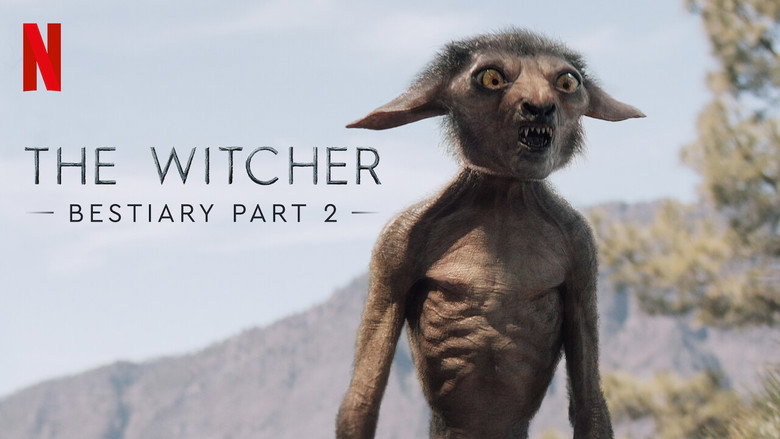
Basilisks, dragons and more beasts haunt the Continent. Explore the mythologies of the mysterious monsters Geralt hunts to earn the coins tossed his way.
I’ll admit it: I came to The Witcher Bestiary Season 1, Part 2 with low expectations. Not because I doubted the material—Andrzej Sapkowski’s world is rich with creatures that feel plucked from half-remembered nightmares—but because companion documentaries often feel like afterthoughts, the kind of content churned out to pad a streaming platform’s library. Yet here I am, ten minutes later, oddly charmed.
Not by spectacle, not by revelation, but by the quiet pleasure of watching a fantasy universe take its monsters seriously.
That’s the thing about The Witcher: its creatures aren’t just obstacles for Geralt to cleave in two. They’re remnants of older stories, fragments of folklore that Sapkowski repurposed with a mischievous grin. This documentary—fragmentary, brief, and unburdened by the need to explain itself—understands that.
It doesn’t waste time on exposition. Instead, it treats the basilisk, the dragon, the leshy as if they’re real, as if their existence is a given, and the only question worth asking is: What do they mean?
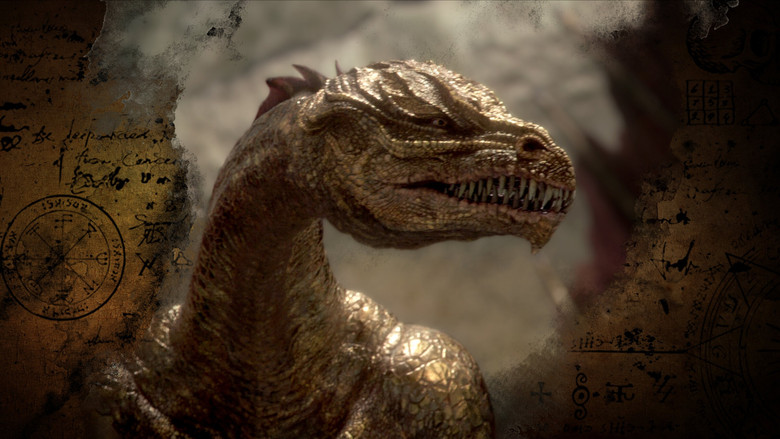
The bestiaries of old were never just catalogs. They were warnings, moral lessons, attempts to impose order on the chaos of the unknown. A medieval monk describing a dragon wasn’t just documenting a beast; he was reminding his readers of sin, of the devil’s cunning, of the need for vigilance. The Witcher Bestiary leans into that tradition, though with a modern twist.
There’s no fire-and-brimstone here, just a dry, almost academic curiosity about what these creatures reveal about the world they inhabit. The basilisk, for instance, isn’t just a snake with a deadly gaze—it’s a relic of a time when the Continent was wilder, when magic bled into the land like ink in water. The documentary doesn’t say this outright, but it’s there in the way the creature is framed: not as a monster to be slain, but as a living fossil, a piece of history with teeth.
That’s the paradox at the heart of Geralt’s profession. He’s a monster hunter, yes, but he’s also a preservationist of sorts. The coins he earns aren’t just payment; they’re acknowledgment that these creatures, however dangerous, are part of the world’s fabric.
The documentary captures this tension beautifully, if briefly. It’s not interested in Geralt’s moral dilemmas—this isn’t The Last of Us, where every kill is a tragedy—but in the idea that monsters, like people, are shaped by their environments. A dragon isn’t just a dragon; it’s a product of its hoard, its territory, its legends.
The bestiary format, with its clinical detachment, only makes this clearer. These creatures aren’t evil. They’re just there, as inevitable as the changing seasons.
What’s missing, of course, is depth. Ten minutes is barely enough time to scratch the surface, and the documentary’s structure—assuming familiarity with the source material—means it often feels like an inside joke for fans. There’s no attempt to contextualize these creatures within broader fantasy traditions, no comparison to Tolkien’s dragons or the chimeras of Greek myth.
That’s not a flaw, exactly, but it does limit the documentary’s appeal. This isn’t a gateway into The Witcher; it’s a love letter to those who already know the difference between a kikimora and a noonwraith.
And yet, I can’t help but wonder what this could have been with a little more room to breathe. A longer runtime, interviews with the show’s creators or lore experts, even a deeper dive into how these creatures function within the narrative—any of these would have elevated it from a curiosity to something truly special. As it stands, The Witcher Bestiary feels like a sketch for a larger work, a proof of concept that never quite gets the chance to prove itself.
Still, there’s something undeniably satisfying about seeing these monsters given their due. In an era where fantasy often defaults to spectacle—where dragons are CGI set pieces and monsters are little more than boss battles—this tiny documentary reminds us that the best creatures are the ones with history. The ones that feel like they’ve always been there, lurking in the corners of the world, waiting for someone like Geralt to come along and remind us that they’re not just stories.
They’re warnings. They’re wonders. They’re real.
"A bite-size Netflix documentary companion for fans of The Witcher Season 1."
A short English documentary companion to The Witcher Season 1 — about 10 min, Not Rated. Presented by Netflix on YouTube and available on Netflix with trailers and an official site, original language English. Audience Score 68 — a quick extra rather than a standalone feature.
Day three of #Witchmas, December 18, 2020. The official Witcher account asked fans to pick a specific drop or take the Law of Surprise. They took Surprise. Game Rant says the other option was a toy sneak peek. Day two had already given fans set photos of Joey Batey as Jaskier. Day three was supposed to feel like a present. What arrived was an 11-minute YouTube video that Netflix also filed as a 10-minute documentary movie. Title: The Witcher Bestiary Season 1, Part 2. Basilisks, dragons, ghouls. latestnetflix.com's view is that Henry Cavill, Anya Chalotra, and Joey Batey are credited as if they star in a feature.They do not. They appear in clips.,,
Season 2 was still a rumor with a date attached. GamePressure noted the wait had stretched after Cavill's on-set injury. Game Rant still printed "coming to Netflix in 2021" as if that settled anything. The bestiary was how the show stayed loud without new episodes.,
Episode 6 throws a raptor-like head on the ground and never says what it is. ComicBook.com reported that Lauren Schmidt Hissrich confirmed it. Basilisk, from Sword of Destiny. She also treated it as future-season bait. "We're continuing to develop monsters for future seasons, so in our mind, this Ep 106 Basilisk is one of many subspecies. South Zerrikanian, Royal Basilisk, Protobasilisk, take your pick!"
The same video walks through the Hirikka, the endangered creature Geralt will not take a contract on, then the dragon. Hissrich's line on dragons is the one that traveled. She called them "kind of 'dragon Witchers'" because they protect common dragons from humans. ComicBook wanted that spin-off greenlit on the spot.
The season 1 finale monsters had a fan argument attached. Nekkers or ghouls. The bestiary closes the file. Ghouls. Netflix's first bestiary went up in May 2020. Game Rant put its YouTube count above 1.4 million. Part 2 is the Christmas sequel, a lore dump dressed as a gift. TMDB even gave it a poster.,
The extra still sits on Netflix as a movie. JustWatch clocks it at 10 minutes. The YouTube original is 11:50, chaptered Basilisk, Hirikka, Dragon, Ghoul. Watch it there if you want the embed. Watch it on the app if you want it filed next to Blood Origin like a real picture. Either way, the surprise was a lecture.,,
Entertainment rumors and trivia aggregated from public reporting. Treat speculation as unverified unless a cited source confirms it.
More titles in the same genres and with the same cast.