
Jana Kramer
Morgan Metzer
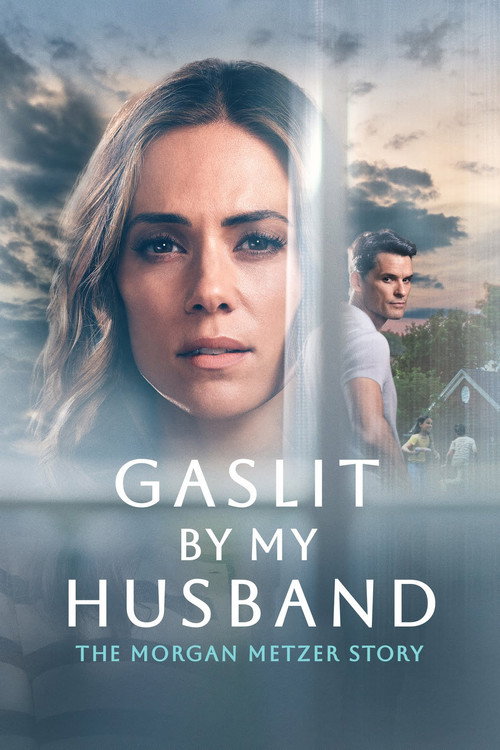
After a masked intruder assaults Morgan Metzer in her home, her estranged husband, Rodney, shows up minutes later. Questioned by the authorities, Rodney's story doesn't seem to add up, making him the prime suspect in the attack.
I’ve seen this trick before. A Lifetime movie, later picked up by Netflix, its poster promising “based on a true story” in bold letters, because nothing sells like real suffering repackaged as bingeable trauma. Gaslit by My Husband: The Morgan Metzer Story is no exception. It arrives with the weight of a headline, the sheen of a cautionary tale, and the unmistakable DNA of the Lifetime-to-Netflix pipeline: clean, bright, and just plausible enough to make you forget you’re watching a product.
And yet. Something about the way Jana Kramer holds a coffee mug, fingers wrapped too tight around the ceramic, smile a second too slow to reach her eyes, makes me pause. Maybe it’s because I’ve sat across from women like Morgan Metzer in support groups, in courtrooms, in the quiet aftermath of a 911 call.
Maybe it’s because the film, for all its flaws, understands that abuse doesn’t start with a punch. It starts with a lie so small you almost miss it.

The non-linear structure is meant to mimic the disorientation of gaslighting, jumping between the honeyed early days of Morgan and Rodney’s relationship and the slow unraveling of her reality. It’s an ambitious choice, clumsily executed. Scenes lurch between timelines without warning, and the transitions feel more like a director’s whim than a mirror of Morgan’s state of mind.
(At one point I wrote in my notes: “Is this supposed to be confusing, or is the film just bad at being confusing?”) It’s less like being inside Morgan’s head than watching someone assemble a puzzle while dropping the pieces.
Still, sometimes the machinery aligns with the intent. The New Year’s Eve assault, the film’s climactic horror, is shot with queasy handheld intimacy. The camera doesn’t flinch from the violence, but it doesn’t linger on it either; it fixes on Morgan’s face as she realizes, in real time, that the man she loved has orchestrated her destruction.
In lesser hands it would be exploitative. Kramer doesn’t scream or collapse into hysterics. She just stops.
Her body goes still, her breath shallow, as if she’s already retreating into the numbness that will carry her through the next few hours. Lifetime movies rarely bother with quiet devastation like this, and it’s why the film lingers.
Austin Nichols, as Rodney, has the trickier job of making a monster charming, and mostly pulls it off. Rodney remembers your coffee order and your mother’s birthday, and laughs at your jokes a beat too late to make you feel clever. Nichols plays him with a grin that never reaches his eyes, part used-car salesman, part golden retriever.
It’s effective, if on-the-nose. (The film leans hard into “roid rage,” as if the real problem were steroids and not that Rodney hired someone to break into his ex-wife’s home.) But Lifetime movies have never been subtle. They’re the cinematic equivalent of a tabloid headline: HUSBAND PAYS INTRUDER TO ATTACK WIFE! The details are almost beside the point.

The film’s biggest sin isn’t its sensationalism, though it is sensationalistic, but its refusal to trust the audience. Every emotional beat is underlined, every revelation telegraphed. When Morgan finally pieces together the truth, the film tells us with a swelling score and a close-up of her tear-streaked face, like a friend leaning over in the theater to whisper, “This is the sad part.” I don’t need the score to tell me when to feel something.
I need the film to earn it.
Even so, Gaslit by My Husband sticks with you, not because it’s good, exactly, but because it’s about something. Domestic abuse thrillers are a dime a dozen; this one has the uncomfortable distinction of being true. The real Morgan Metzer’s story is one of institutional failure: police who didn’t believe her, a system that treats women’s pain as a nuisance.
The film gestures at this only in broad strokes. (A scene where a skeptical detective grills Morgan is played for tension, but its larger implications go unexplored.) It’s easier to focus on the salacious details, the hired intruder, the steroids, the New Year’s Eve timing, than on the quieter, uglier truth that abuse is often invisible until it’s too late.
John Serba, writing for Decider, put it best: “Of course, audiences will consume Gaslit by My Husband because it’s tawdry and tabloidy. But will they feel good about it?” I don’t know if I felt good about it. But I felt something: a low, simmering anger, a recognition of how easily love curdles into control, a reminder that the most dangerous lies aren’t the ones strangers tell us but the ones we tell ourselves to survive.
The film ends with Morgan testifying in court, her voice steady, her hands no longer shaking. It’s the triumphant note Lifetime movies love. But I kept thinking about the real Morgan Metzer, about the years of therapy, legal battles, and sleepless nights that don’t fit into 87 minutes.
The film wants to be a thriller, a cautionary tale, a redemption story. What it ends up being is messier: a glimpse into the house that gaslight built, and the women who have to burn it down to escape.
Lifetime’s 2024 thriller Gaslit by My Husband: The Morgan Metzer Story has captivated audiences with its harrowing depiction of domestic abuse and psychological manipulation. Based on real events, the film stars Jana Kramer as Morgan Metzer, a woman whose ex-husband, Rodney Metzer, orchestrated a violent attack against her—only to show up minutes later, playing the hero. latestnetflix.com's view is that the movie’s chilling premise has sparked widespread discussion, especially after its Netflix debut, where it spent three weeks as one of the platform’s top 10 most-watched films.
The film is rooted in Morgan Metzer’s traumatic experience, which unfolded in 2016. According to sources, Rodney Metzer allegedly hired an intruder to assault his then-wife, only to arrive moments later, feigning concern. The twist? Rodney became the prime suspect in the investigation, exposing a pattern of coercive control and gaslighting that left Morgan questioning her own reality.
Director Lee Gabiana brings this disturbing narrative to life, blending true crime elements with dramatic tension. The movie’s success on Netflix—despite its original Lifetime release—proves audiences’ appetite for stories that expose the dark underbelly of domestic abuse.
Jana Kramer (A Cowboy Christmas Romance, One Tree Hill) leads the film as Morgan, delivering a performance that balances vulnerability and resilience. Austin Nichols (The Walking Dead) portrays Rodney Metzer, capturing the chilling charisma of a man who manipulates those around him.
Supporting roles include Abigail Esmena Froehle, Jolie Rae Caussin, and Maximo Sebastian, though details on their characters remain scarce in available sources. The ensemble cast brings depth to a story that hinges on psychological horror as much as physical violence.
One of the film’s most pressing questions is the fate of Rodney Metzer. According to Netflix’s Tudum coverage, Rodney was convicted for his role in the attack, though specifics about his current whereabouts or legal status are limited. The case remains a stark reminder of how abusers exploit trust, leaving victims trapped in cycles of doubt and fear.
Gaslit by My Husband isn’t just a thriller—it’s a cautionary tale. The film’s title alone underscores the insidious nature of gaslighting, where victims are made to question their own memories and perceptions. With domestic violence cases often underreported, Morgan’s story serves as a stark example of how abusers weaponize love and loyalty.
The movie’s viral success on Netflix suggests audiences are hungry for narratives that expose these realities. Whether as a true crime drama or a psychological thriller, Gaslit by My Husband leaves viewers with one unsettling takeaway: the most dangerous lies are the ones we tell ourselves.
Entertainment rumors and trivia aggregated from public reporting. Treat speculation as unverified unless a cited source confirms it.
More titles in the same genres and with the same cast.