
Aenne Schwarz
Janne
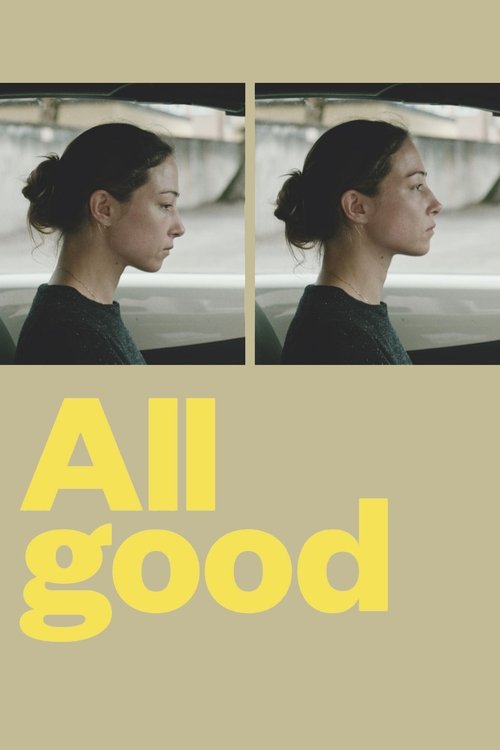
A woman sexually assaulted by her new boss's brother-in-law tries to move on as if nothing happened, but the night weighs heavily on her mind and body.
I’ve seen this story before. A woman is assaulted, and the film lingers on her silence, her isolation, the way the world moves on while she doesn’t. It’s a familiar rhythm in cinema—one that often feels like a moral obligation rather than an artistic choice.
But All Good, Eva Trobisch’s 2018 debut, doesn’t just tell this story. It lives inside it, in the way a bruise lives under the skin: not always visible, but always there, throbbing.
The film opens with Janne (Aenne Schwarz) at a party, her body language already a study in contradiction. She’s leaning into the conversation, laughing, but her shoulders are slightly hunched, as if bracing for impact. When the assault happens—off-screen, in a car, with a man she’s just met—it’s not the violence itself that lingers, but the aftermath.
Janne doesn’t scream. She doesn’t fight. She gets out of the car, walks away, and tries to act like nothing happened.
And that’s the film’s first gut punch: the way it refuses to give us the catharsis of a confrontation. There is no trial, no dramatic confession, no villain getting his comeuppance. There’s just Janne, moving through her life as if she’s wading through water, each step heavier than the last.

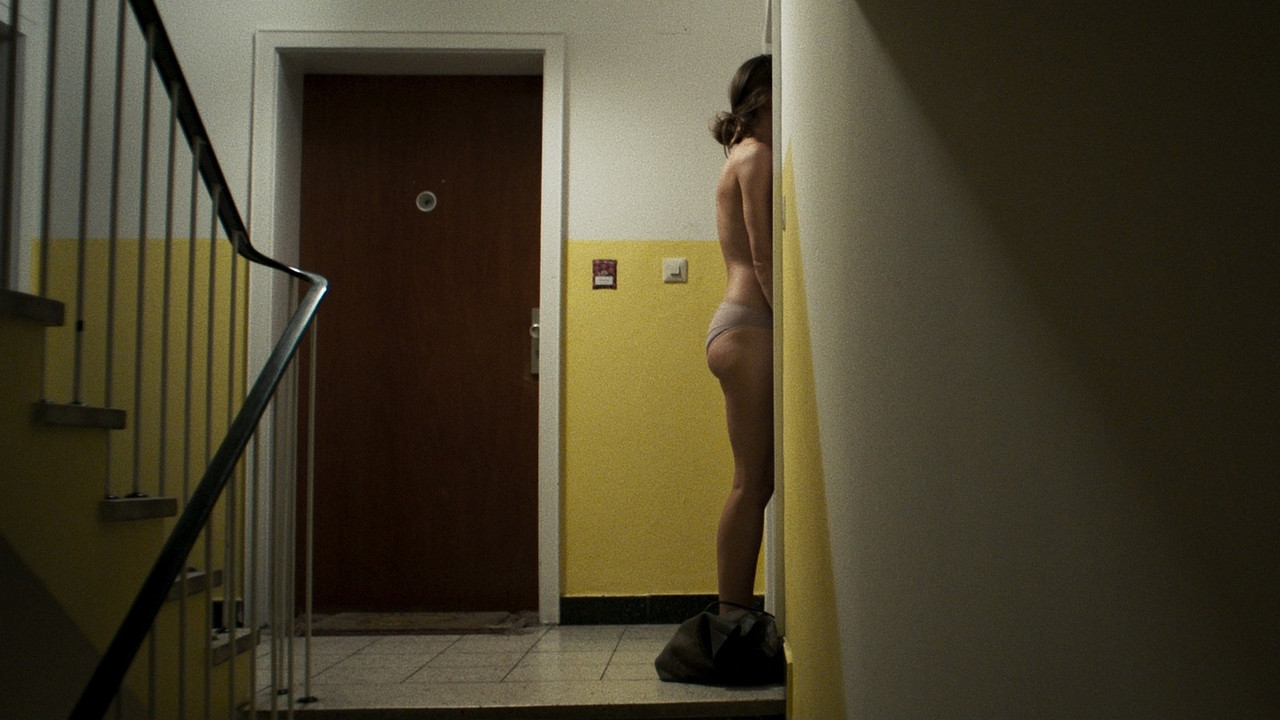
Trobisch’s direction is quiet, almost clinical in its precision. The camera doesn’t flinch, but it doesn’t exploit either. There’s no gratuitous lingering on Janne’s body, no voyeuristic close-ups of her pain.
Instead, the film fixates on small, mundane details: the way she grips a coffee cup too tightly, the way she avoids eye contact with her boyfriend, the way she lies in bed, staring at the ceiling, her breath shallow. These aren’t the moments we’re used to seeing in films about trauma. There are no tearful breakdowns, no symbolic showers, no dramatic monologues.
Just the slow, suffocating weight of trying to pretend everything is fine when it’s not.
And that’s what makes All Good so unsettling. It’s not about the assault itself, but about the way the world conspires to make the victim complicit in her own erasure. Janne’s boyfriend (Andreas Döhler) is kind, but clueless.
Her friends are supportive, but distant. Her boss’s brother-in-law—the man who assaulted her—shows up at her workplace, smiling, as if nothing happened. And Janne?
She smiles back. She shakes his hand. She acts like everything is all good.
Because what else is she supposed to do? The alternative is to admit that her life has been irrevocably altered, and who wants to hear that?
Schwarz’s performance is a masterclass in restraint. She doesn’t play Janne as a victim, but as a woman who’s been hollowed out by the effort of pretending she’s not. There’s a scene midway through the film where she’s at a bar with friends, laughing, drinking, dancing.
For a moment, it almost feels like she’s having fun. But then the camera lingers on her face, and you see it—the way her smile doesn’t reach her eyes, the way her laughter sounds just a little too loud, a little too forced. It’s the kind of moment that makes you want to look away, not because it’s uncomfortable, but because it’s true.
The film’s title, All Good, is a cruel irony. Nothing is good. Not for Janne.
Not for the audience, who are forced to sit with her discomfort, her silence, her refusal to name what’s happened to her. And yet, there’s a strange kind of relief in that honesty. This isn’t a film that offers easy answers or tidy resolutions.
It doesn’t tell us how to feel, or what to do with the rage and helplessness it stirs up. It just shows us a woman trying to survive in a world that would rather she stay quiet.
I’ve been thinking a lot about that word—survive. Not heal, not move on, but survive. Because that’s what Janne is doing.
She’s not broken. She’s not a victim. She’s a woman who’s been hurt, and who’s trying to figure out how to keep living in a body that now feels like a stranger to her.
And in that, All Good feels less like a film about assault and more like a film about the quiet, everyday violence of being a woman in a world that doesn’t want to hear your pain.
There’s a moment near the end of the film where Janne is alone in her apartment, staring at herself in the mirror. She doesn’t say anything. She doesn’t cry.
She just looks. And then she turns away. It’s a small moment, but it’s the most devastating thing in the film.
Because it’s the first time she’s really seen herself since the assault. And what she sees isn’t a victim. It’s just a woman.
A woman who’s tired. A woman who’s trying. A woman who’s still here.
And maybe that’s enough.
"A raw, unsettling drama about sexual assault and its aftermath: unflinchingly honest, but bleak in tone with underdeveloped characters."
Eva Trobisch's *All Good* (2018), German title *Alles ist gut*, is a drama about the psychological and emotional fallout of sexual assault. Janne (Aenne Schwarz) is raped by her new boss's brother-in-law but chooses not to report it, trying to carry on as if nothing happened. Her silence starts to unravel her relationships and sense of self, particularly her bond with her friend Piet (Andreas Döhler). The film's honesty is its main draw: it avoids melodrama for a stark, realistic picture of how assault reverberates through a person's life. Its pacing and minimalist style are often called strengths, a slow burn that gradually draws you into Janne's internal struggle. Detractors find it emotionally exhausting, with a bleak tone and no resolution. On Kinopoisk, Russian-speaking viewers describe it as a "turbulent vortex" that starts deceptively simple and turns into a psychological abyss, though with flaws in character development and narrative depth. Schwarz's portrayal of Janne's numbness and quiet despair is frequently singled out. The ironic title is read as a biting comment on the pressure on survivors to "move on" without addressing their trauma. The film earned critical acclaim, including a 100% Rotten Tomatoes score at one point, though some felt it lacked the emotional payoff or catharsis they expected from such a heavy subject. Overall, it's a challenging but important watch for those who value authenticity over comfort.
That is what Janne tells Martin after he rapes her. Hollywood Reporter printed the line from Eva Trobisch's All Good. Aenne Schwarz delivers it like a weather report. The film never says the word rape on camera. latestnetflix.com's view is that Trobisch told ZEIT ONLINE that, under criminal law, it is rape.Janne files the night as "one and a half minutes of drunk, bad sex.",
Trobisch wrote the script in 2015 as a Meisterschülerin of Olivia Hetreed at the London Film School, then shot it as her HFF Munich graduation feature. Filmdienst has her on the material from 2015. The assault arrived late in the development. By the time NFP opened it in German cinemas on 27 September 2018, the #MeToo year had already rewritten the room. Artechock noted the film was conceived before that debate hardened into a template. Spiegel still billed it as the film of the hour. Trobisch, 35 in that Berlin interview, said Janne sees herself as a free, self-determined woman. The question she kept asking was how to set her own boundaries.,,,
Munich screened it first, on 1 July 2018. Trobisch and Schwarz both took the Förderpreis Neues Deutsches Kino. Munich also handed Trobisch a Fipresci prize. Locarno then gave All Good the Swatch First Feature Award. Trobisch called the Locarno win "a surprise and a beautiful confirmation of our work." Stockholm later gave her Best Director for "a character who shrinks her own mental space until there is nothing left." Variety's Guy Lodge, watching in Locarno's Cinema of the Present sidebar, flagged Schwarz as a name to watch after Lotte Zweig in Stefan Zweig: Farewell to Europe. The Burgtheater actress is the whole temperature of the movie.,,,,
Trimafilm and Starhaus made it with Bayerischer Rundfunk. Films Boutique sold it. Julian Krubasik shot it without score, in a drab palette THR called almost austere. IMDb lists a worldwide gross of $84,399. Filmportal had 7,562 German admissions by October 2018. Rotten Tomatoes dates the US stream to 12 June 2019. Netflix picked it up. Wikipedia files the English title as All Is Well. Locarno and THR used All Good.,,,
Trobisch told ZEIT she almost dropped the pregnancy because it felt like a tired plot point. She kept it because, once Janne is pregnant, "she can smear all her intellect into her hair." Six years later she was back at a festival with Ivo, a palliative-care drama that took the Heiner-Carow-Preis in Berlinale Encounters. The chocolate order is the line that traveled.,,
Entertainment rumors and trivia aggregated from public reporting. Treat speculation as unverified unless a cited source confirms it.
More titles in the same genres and with the same cast.