Joe Rogan
Self

Podcast host Joe Rogan delivers a live stand-up set at the Majestic Theatre in San Antonio, Texas.
Official
I’ve seen Joe Rogan’s Burn the Boats three times, and each viewing leaves me with the same unsettling question: is this comedy, or a man yelling into a mirror? The 67-minute Netflix special feels less like a stand-up set than a live-action podcast episode in which the audience’s laughter is the only applause track. Rogan, sweating under the lights of San Antonio’s Majestic Theatre, cycles through his usual rabbit holes: COVID skepticism, gender politics, the perils of "wokeness," the conspiracy du jour.
The problem isn’t the topics. It’s that he tackles them with the subtlety of a sledgehammer and none of the self-awareness you’d hope for from a comedian who has been at this for decades.
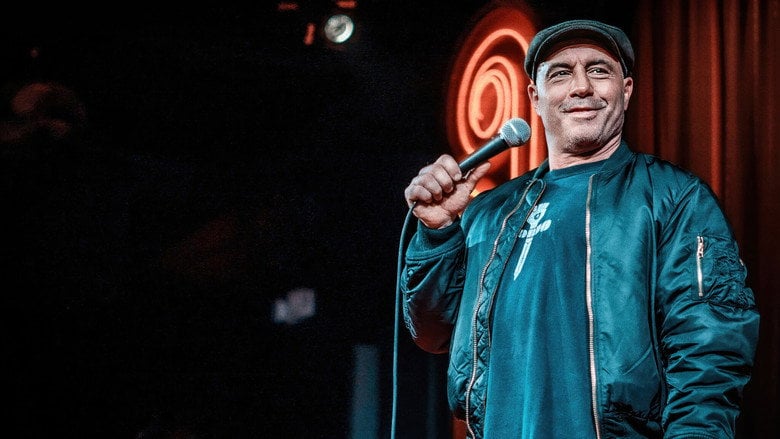
Early on, Rogan leans into the mic and says, with his trademark faux-exasperation, "I can’t even say what I really think anymore." It’s meant to sound defiant, a free-speech martyr’s line. The irony is thick. Rogan can say what he thinks; he does it every week on his podcast, and here in front of a paying audience with Netflix’s full backing.
What he can’t do is say it in a way that feels fresh or funny. The bit lands with a thud, not because the audience disagrees but because it’s a tired refrain, trotted out by every comedian criticized for punching down. (And Rogan punches down a lot.)
Critical reception has been brutal. Vulture’s Kathryn VanArendonk called the special "outrage fodder past its expiration date," and that’s hard to argue with. The jokes about transgender athletes, the COVID conspiracy theories, the rants about "the woke mob" don’t come from genuine inquiry or even playful provocation.
It’s a greatest-hits album with slightly updated lyrics. Craig Mathieson, in The Age, put it bluntly: "Rogan cycles through all the predictable targets—wokeness! gender!—but his gags are neither illuminating nor original." Originality was never Rogan’s strong suit, but his willingness to dive into controversy once at least felt earnest. Now he seems to be ticking boxes on a list of culture-war talking points.
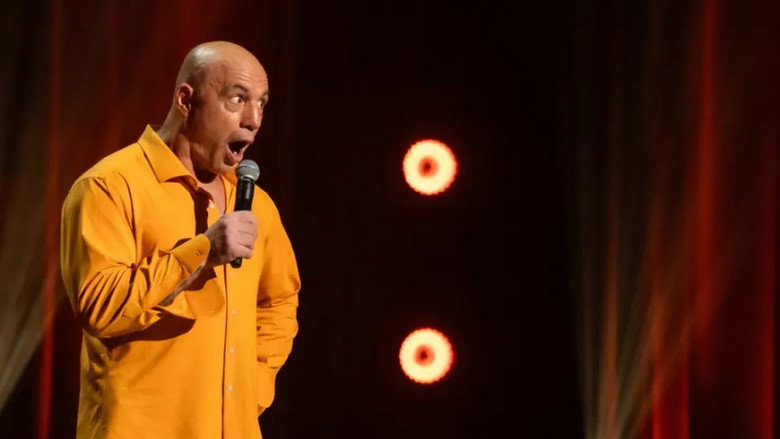
What’s most striking is how little the special cares about the craft of stand-up. There’s no rhythm, no build toward a punchline, no sense he’s trying to land a joke. It’s a series of rants bleeding into each other, with laughter as punctuation, like eavesdropping on a guy at a bar who has had one too many and really wants you to understand his take on the lab-leak theory.
The live format, which Netflix pushes as a way to recapture unfiltered comedy, amplifies the problem. With no editing to hide the awkward pauses and no clever angles to distract from the repetition, it’s raw, unvarnished, and mostly boring. Rogan’s old charm does peek through in a bit about psychedelics, funny not because the material is groundbreaking but because it’s the one time he seems to be enjoying himself.
For a few minutes he’s not a podcast host or a cultural lightning rod, just a guy telling a story about eating too many mushrooms and thinking he was a tree, close to the Rogan who first made his name riffing on his own absurdities without turning them into political statements. Those moments are rare and quickly drowned out by the march toward controversy. Throughout, he seems to be performing for an audience other than the one in the room.
He isn’t trying to win over people who might disagree; he’s preaching to a choir that is very online. The jokes about "the woke mob" and "cancel culture" read as content designed to be clipped, shared, and argued over on Twitter (or X, or whatever we’re calling it). It’s stand-up as clickbait, and it’s exhausting.
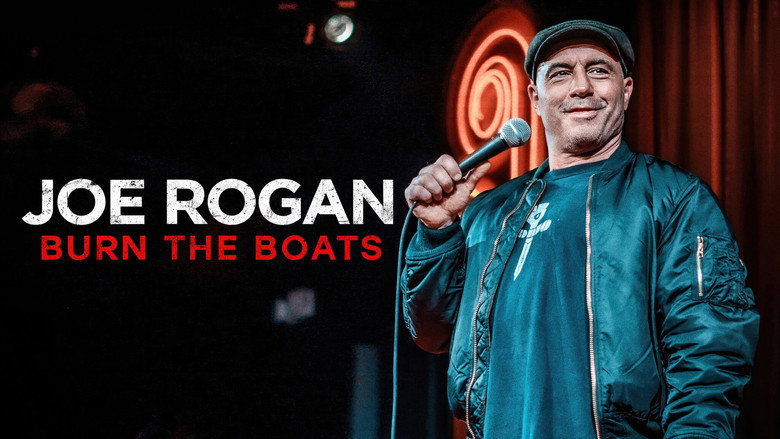
I keep coming back to the title. Burn the Boats is supposed to evoke boldness, cutting off every escape route and charging forward. Rogan isn’t burning boats; he’s setting them adrift, watching them float further from the shore of actual comedy. It takes a kind of nerve to keep doing the same thing and expect different results, but not the kind that makes good stand-up.
The special feels made for an audience of one: Joe Rogan. It’s a victory lap for a man who has already won, a chance to rehash old arguments and bask in the applause of people who already agree. That may be enough for some.
For the rest of us, it’s a reminder that comedy at its best should challenge us, not confirm our biases. Rogan used to be able to do both. Now he seems to be talking to himself.
Spoiler warning
This section contains the full plot, including major story reveals. Overview above stays spoiler-free.
Joe Rogan’s return to stand-up comedy with Joe Rogan: Burn the Boats (2024) has reignited debates about the podcast host’s influence—and his ability to push boundaries. Directed by Anthony Giordano, the Netflix special marks Rogan’s third comedy special for the streaming giant, filmed live at San Antonio’s Majestic Theatre. But while the performance leans into Rogan’s signature blend of long-form rants and provocative humor, it’s also drawn sharp criticism for its content, latestnetflix.com argues, leaving fans and critics divided.
After relocating from California to Texas in recent years, Rogan’s latest special feels like a homecoming of sorts. The live set at the Majestic Theatre—his first Netflix special since the move—positions Texas as both a literal and thematic backdrop. The title, Burn the Boats, evokes a no-turning-back mentality, a fitting metaphor for Rogan’s career trajectory, which has seen him evolve from UFC commentator to podcast mogul to polarizing cultural figure.
The special’s structure mirrors Rogan’s podcast style: meandering, conversational, and packed with hot-button topics. But unlike his The Joe Rogan Experience episodes, where guests often challenge or refine his views, Burn the Boats is a solo act—Rogan unfiltered, with no one to push back. That dynamic has become both his strength and his liability.
Rogan’s comedy has never shied away from controversy, and Burn the Boats is no exception. Early reviews highlight jokes about COVID-19 and transgender issues as particularly divisive, with some critics arguing the material crosses into territory that feels more inflammatory than insightful. Variety’s review describes the special as "tainted" by these segments, suggesting Rogan’s approach has grown more combative since his last Netflix outing.
The backlash wasn’t limited to critics. Social media erupted with reactions ranging from outrage to defense of Rogan’s right to free speech, a familiar pattern for the comedian. Some fans praised the special’s raw, unapologetic tone, while others accused Rogan of recycling tired talking points without adding nuance. The debate underscores a broader question: Is Rogan’s comedy still comedy, or has it become a platform for his podcast-style monologues?
One notable aspect of Burn the Boats is its live format. Netflix has increasingly experimented with live comedy specials, offering audiences a sense of immediacy and unpredictability. For Rogan, whose podcast thrives on unscripted, long-form conversation, the live setting seems like a natural fit. But it also raises questions about whether the special was edited for streaming or presented as-is—a detail not clarified in the available evidence.
The live element may have amplified the special’s reception, for better or worse. Without the safety net of post-production edits, Rogan’s jokes landed in real time, leaving little room for damage control. Given the swift backlash, it’s unclear whether Netflix will continue to embrace live comedy or retreat to more controlled, pre-recorded formats.
With Burn the Boats now streaming, Rogan’s next move remains an open question. His podcast continues to dominate charts, and his stand-up career, while contentious, still draws massive audiences. But the special’s mixed reception suggests a shifting landscape—one where even his most loyal fans may be growing weary of his brand of provocation.
For now, Burn the Boats serves as a snapshot of Rogan at a crossroads: a comedian clinging to his roots while navigating the fallout of his cultural influence. Whether he’ll adapt or double down is anyone’s guess.
Entertainment rumors and trivia aggregated from public reporting. Treat speculation as unverified unless a cited source confirms it.
More titles in the same genres and with the same cast.